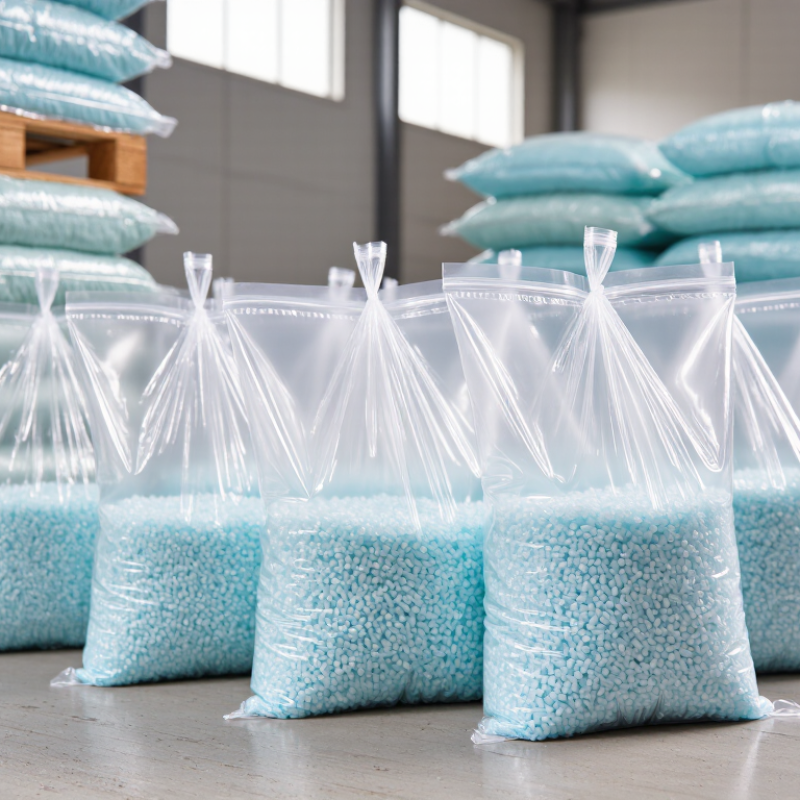
| Product Identity | Amorphous silica gel crystals intended for animal bedding; no intentional addition of asbestos, crystalline quartz, fragrance allergens, or antimicrobial active substances unless separately declared. | Product specification, raw-material declaration, and independent composition report. | Material identity and percentage by mass. | High | Confirm that the product is not confused with crystalline silica sand or another mineral litter category. |
| REACH Status | Supplier must provide a written REACH compliance declaration covering substances, mixtures, packaging, and any applicable Substances of Very High Concern. | REACH declaration referencing Regulation (EC) No 1907/2006 and the current ECHA Candidate List. | For Candidate List article communication, the commonly used threshold is 0.1% weight by weight per article. | High | Check issue date, product scope, legal entity, product code, and whether the declaration covers the supplied formulation and packaging. |
| SDS Availability | A current Safety Data Sheet must be available in the language required by the destination market and must match the imported formulation. | SDS prepared according to REACH Annex II as amended by Commission Regulation (EU) 2020/878. | 16-section SDS format. | High | Review Sections 2, 3, 8, 10, 11, 12, 13, and 14 for hazards, composition, exposure controls, ecological data, disposal, and transport information. |
| Hazard Classification | Classification, labelling, and packaging must be consistent with the actual formulation and destination-market rules. | Regulation (EC) No 1272/2008, commonly known as the EU CLP Regulation, plus supplier classification rationale. | Hazard classes, categories, pictograms, signal word, and H/P statements. | High | Do not accept labels or SDS wording that describes a different material, fragrance system, or additive package. |
| Heavy Metals: Lead | Use a batch-specific result rather than a generic declaration. A prudent private-label purchasing specification should set a strict internal limit and require non-detectable or very low lead wherever technically achievable. | Acid digestion followed by ICP-MS, ICP-OES, or an equivalent validated method; laboratory should state reporting limit and recovery. | mg/kg, dry basis; report result, reporting limit, and method. | High | Verify sample seal, batch number, test date, laboratory accreditation, and chain of custody. |
| Heavy Metals: Cadmium | Require a batch-specific result and a strict internal procurement limit because cadmium is a REACH-restricted substance in specified applications. | ICP-MS or ICP-OES after validated digestion; include the method detection or reporting limit. | mg/kg, dry basis. | High | Confirm that the result applies to the finished litter, not only to an upstream silica raw material. |
| Heavy Metals: Mercury | Require a batch-specific mercury result with a low reporting limit and an explicit statement of the analytical technique. | Direct mercury analysis, cold-vapour atomic absorption, ICP-MS, or another validated method. | mg/kg, dry basis. | High | Reject reports that show only “passes” without numerical results and reporting limits. |
| Additional Elements | Screen arsenic, chromium, nickel, antimony, and selenium where required by the destination market, retailer policy, or risk assessment. | ICP-MS or ICP-OES multi-element scan after validated digestion. | mg/kg, dry basis. | Medium | Request total chromium and clarify whether any chromium result is reported as total chromium or chromium VI. |
| Crystalline Silica | Finished product should be characterized as amorphous silica gel. Any crystalline silica fraction should be declared and risk-assessed, especially for dust exposure during filling and handling. | X-ray diffraction, FTIR, or another validated mineralogical method; airborne exposure assessment where relevant. | % by mass for mineral phase; airborne exposure in mg/m³ where measured. | High | Ask for the analytical scope and lower quantification limit; do not treat “silica” alone as proof of amorphous structure. |
| Dust Content | Set a low-dust requirement appropriate to the intended packing and handling process. A practical purchasing benchmark is to define a sieve-based dust fraction before ordering. | Validated sieve analysis or dust-generation test using a documented sample-conditioning procedure. | % by mass below the agreed particle-size threshold. | High | Specify the sieve size, agitation time, sample mass, humidity conditioning, and acceptance limit in the purchase contract. |
| Particle Size Distribution | Typical retail crystal litter should have a consistent granule range with limited fines and oversize particles. The exact range should match the filling line and consumer format. | Mechanical sieve analysis using a calibrated sieve stack. | Percentage retained in each sieve fraction. | Medium | Compare pre-shipment results with a retained production sample and approved golden sample. |
| Moisture Content | Keep moisture low and consistent to protect absorption performance, prevent caking in packaging, and reduce shipment weight variation. | Oven-drying loss-on-drying method or validated moisture analyser method. | % by mass. | Medium | Define the test temperature, drying time, sample mass, and maximum acceptance value before production. |
| Absorption Capacity | Measure liquid absorption using a repeatable internal method and compare the result with the approved sample. Do not rely only on marketing claims. | Documented gravimetric absorption test with liquid type, contact time, drainage time, and sample conditioning. | g liquid absorbed per g litter or mL/g. | High | Use the same method for supplier qualification, pre-shipment inspection, and incoming quality control. |
| Bulk Density | Control bulk density to maintain accurate fill weight, predictable carton volume, and stable freight calculations. | Calibrated-volume container method under a specified tapping or filling procedure. | g/L or kg/m³. | Medium | Record density by lot because crystal shape and moisture can change shipping weight and pack appearance. |
| Odour and Fragrance | Unscented products should contain no intentionally added fragrance. Scented products require full fragrance disclosure and an SDS review for fragrance components. | Supplier formulation declaration and, where needed, fragrance allergen or restricted-substance assessment. | Qualitative declaration and % by mass for added fragrance. | Medium | Match the actual formula, packaging copy, SDS, and customs documentation. |
| Microbiological Quality | For an inorganic, low-moisture product, routine microbiological limits may be risk-based rather than universally mandated; require testing if moisture, organic additives, or contamination concerns exist. | Risk assessment and, where applicable, total viable count, yeast and mould, and specified pathogen methods. | CFU/g or absence in the tested sample. | Standard | Apply enhanced testing after water exposure, storage incidents, or formulation changes. |
| Packaging Compliance | Packaging must protect the litter from moisture and contamination and must carry accurate net quantity, batch traceability, handling instructions, and destination-market information. | Packaging specification, artwork approval, net-weight verification, and packaging-material declaration. | g or kg net content; batch/lot code. | Medium | Check the weight tolerance, seal integrity, pallet configuration, moisture barrier, and readability of mandatory markings. |
| Transport Classification | Transport status must be confirmed from the current formulation-specific SDS rather than assumed from the product name. | SDS Section 14 and applicable sea, road, rail, or air transport rules. | UN number, proper shipping name, transport class, packing group, or “not regulated” where applicable. | Medium | Ensure transport information matches commercial invoices, packing lists, and freight bookings. |
| Traceability | Every shipment should be linked to a production lot, raw-material lot, test report, packing date, and retained sample. | Batch-record review and document cross-check. | Lot code, production date, test date, and sample identity. | High | Reject certificates that cannot be traced to the exact shipment or finished-product lot. |