




Important Notice: Amprod Acquires Simmtech

Industry InSights

2026 Best Handheld Infrared Sensors for Global Buyers

Choosing the right Handheld Infrared Sensor in 2026 requires more than comparing screen size or advertised temperature range. Global buyers need dependable measurements in workshops, electrical rooms, production lines, farms, and building inspections. A bright display may look impressive, yet poor emissivity settings can distort a simple reading by several degrees. That mistake can be expensive.

Dr. Xavier P. Maldague, a recognized authority in infrared and thermal testing, describes the technology as “a noncontact, nondestructive testing technique.” This principle remains highly practical. A technician can scan a motor bearing without touching moving parts. A maintenance team can also identify a warm terminal before visible damage appears. Useful evidence often begins with a small thermal contrast.

The 2026 market includes compact thermal cameras, infrared spot meters, multispectral devices, and models designed for harsh environments. Buyers should examine detector resolution, spectral range, temperature accuracy, focus options, battery endurance, calibration records, and data-export functions. IP protection matters in dusty factories. Software compatibility matters when reports must reach international teams. Warranty coverage and regional service can matter even more.

Specifications are not the whole story. Real users may struggle with reflective metal, low-emissivity surfaces, rain, steam, or rapidly changing temperatures. Some products perform beautifully in demonstrations but feel awkward after two hours of fieldwork. That deserves attention. No single sensor fits every country, climate, or industry.

This guide compares leading options through a practical lens. It considers measurement reliability, operating comfort, documentation, ownership cost, and supplier credibility. Results can still vary. Careful setup remains essential.
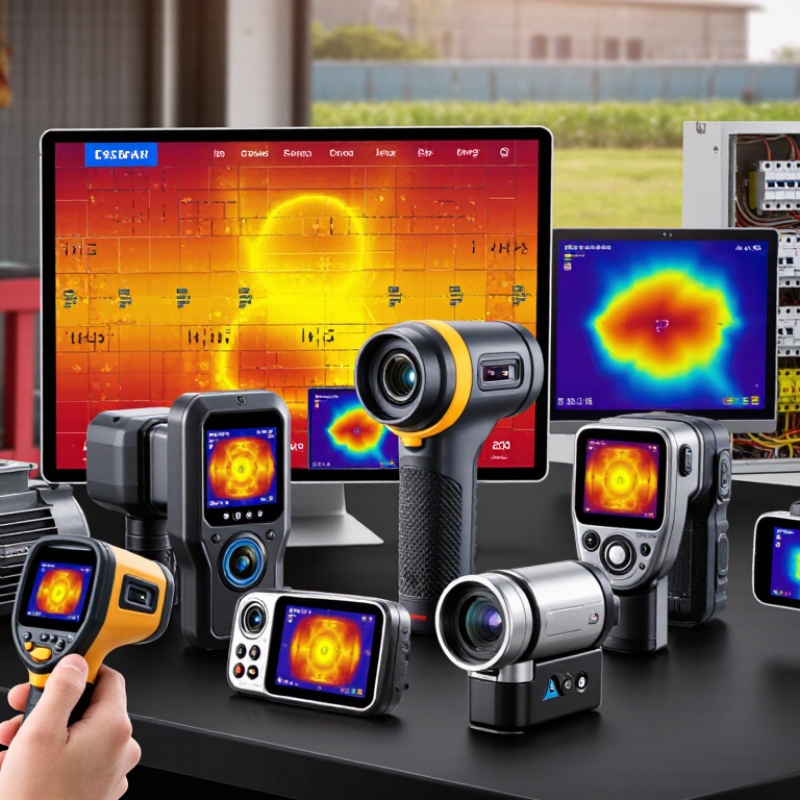
2026 Best Handheld Infrared Sensors for Global Buyers

What Handheld Infrared Sensors Are and How They Work

Handheld infrared sensors detect invisible heat instead of visible light. Most models use thermopile detectors for spot readings or microbolometer arrays for thermal images. They measure infrared energy, convert it into an electrical signal, and display temperature patterns. The 8–14 micrometer band is common because atmospheric absorption is relatively low there. A 2024 MarketsandMarkets report valued the global thermal imaging market at about USD 6 billion and projected strong growth through 2029. Demand is rising in electrical inspection, building maintenance, manufacturing, and medical screening.

Accuracy depends on more than the sensor. Emissivity matters. Black-painted metal and polished aluminum can show different readings at the same temperature. Distance-to-spot ratio also affects results. A narrow target can disappear inside a wider measurement circle.

Technicians should check calibration status, ambient temperature, battery condition, and the target surface. ISO 18434-1 supports thermography practices for condition monitoring, while Allied Market Research reports continued growth in predictive maintenance applications.

Still, a clean screen is not proof. A reflected lamp, wet surface, or loose connector may mislead the operator.

Tips: Set emissivity before measuring. Keep the lens clean. Let the device stabilize outdoors. Compare readings with a trusted reference. Record distance and surface condition. Repeat uncertain measurements. Small errors remain possible.

Key Specifications for Comparing Infrared Sensor Performance

2026 Best Handheld Infrared Sensors for Global Buyers

Comparing handheld infrared sensors requires more than reading the advertised temperature range. Spectral response shows which wavelengths the detector can measure accurately. A suitable range improves readings across skin, machinery, surfaces, and low-emission materials.

Check temperature accuracy at several points, not only at room temperature. Response time matters when inspecting moving equipment or changing surfaces. A slow sensor may miss short heat spikes. Sensitivity, often shown through thermal resolution, reveals how clearly it detects small temperature differences. Display readability, measurement distance, and field of view also affect real results. A narrow field of view helps target small components, while a wider one suits larger areas. I have found that working distance is often underestimated during practical inspections.

Tips: Request calibration evidence with traceable references. Compare accuracy at low, medium, and high temperatures. Test the sensor through gloves and bright lighting if those conditions match your work. Check battery endurance, charging options, storage limits, and housing protection for regional use. Do not rely on a polished specification sheet alone. Environmental reflections can distort readings, especially on shiny metal. Emissivity adjustment helps, but it cannot fix every surface problem. A simple comparison log is useful, although mine sometimes becomes too detailed and slows field decisions.

2026 Best Handheld Infrared Sensors for Global Buyers - Key Specifications for Comparing Infrared Sensor Performance

Representative market specification ranges for handheld infrared measurement and thermal-imaging equipment. Values are intended for preliminary technical comparison and should be verified against the final product datasheet.

Handheld Sensor Category Typical Measurement Use Spectral Band Temperature Range Typical Accuracy Optical Resolution / Distance-to-Spot Response Time Emissivity Adjustment Image Resolution Ingress Protection Typical Battery Runtime Best Buying Priority
Basic Contactless IR Thermometer Routine surface checks, HVAC inspection, food and laboratory screening Long-wave infrared, approximately 8–14 μm −50 to 550 °C Typically ±1.5 °C or ±1.5% Approx. 10:1 to 12:1 Less than 1 second Usually fixed at 0.95; limited adjustment on higher-grade units Not applicable Often IP54 or equivalent Approximately 10,000–20,000 readings Low cost, simple operation, repeatability and calibration availability
Industrial Laser IR Thermometer Electrical maintenance, motors, bearings, process equipment and preventive maintenance Long-wave infrared, approximately 8–14 μm −50 to 1,000 °C Typically ±1.0 °C or ±1.0% Approx. 20:1 to 50:1 Approximately 0.5–1 second Adjustable, commonly 0.10–1.00 Not applicable Often IP54 to IP65 Approximately 10–30 hours of intermittent use Distance-to-spot ratio, accuracy, emissivity control and ruggedness
High-Temperature IR Thermometer Furnaces, kilns, metal processing, glass and high-temperature manufacturing Short-wave or dual-band infrared, approximately 1–5 μm 0 to 2,000 °C Typically ±1% of reading Approx. 30:1 to 100:1 Approximately 0.1–0.5 second Adjustable; dual-wavelength models can reduce emissivity sensitivity Not applicable Usually IP54 or IP65 with protective housing Approximately 8–20 hours of intermittent use Spectral suitability, high-temperature accuracy, response speed and optics
Entry-Level Thermal Imaging Camera Building inspection, electrical fault finding, HVAC diagnostics and maintenance screening Long-wave infrared, approximately 8–14 μm −20 to 550 °C Typically ±2 °C or ±2% Approx. 20:1 to 40:1 Approximately 0.2–1 second Adjustable, commonly 0.10–1.00 Typical detector resolution: 160 × 120 pixels Often IP54 Approximately 4–8 hours Thermal sensitivity, focus quality, image storage and software compatibility
Professional Thermal Imaging Camera Asset management, industrial inspection, predictive maintenance and research support Long-wave infrared, approximately 7.5–14 μm −20 to 650 °C Typically ±2 °C or ±2% Approx. 30:1 to 75:1 Approximately 0.1–0.5 second Adjustable with reflected-temperature and atmospheric correction Typical detector resolution: 320 × 240 pixels Often IP54 to IP65 Approximately 4–6 hours NETD, radiometric accuracy, interchangeable lenses and reporting workflow
High-Resolution Radiometric Thermal Camera Detailed electrical, mechanical, research, quality-control and condition-monitoring inspections Long-wave infrared, approximately 7.5–14 μm −20 to 650 °C; extended ranges available with specialized modes Typically ±1.5 °C or ±1.5% Approx. 50:1 to 150:1 Approximately 0.05–0.2 second Adjustable with reflected-temperature, humidity and distance correction Typical detector resolution: 640 × 480 pixels Often IP54 to IP65 Approximately 3–6 hours Spatial resolution, NETD, radiometric data export, calibration and lens options
Buyer’s verification note: Accuracy depends on ambient temperature, target emissivity, measurement distance, spot size, viewing angle, atmospheric conditions and calibration status. For international procurement, confirm the required temperature scale, charging standard, language support, exportable data format, calibration certificate, warranty coverage and applicable conformity requirements before purchase.

Top Handheld Infrared Sensor Types for Different Applications

2026 Best Handheld Infrared Sensors for Global Buyers

Handheld infrared sensors serve different jobs, and one detector rarely fits every site. Thermal cameras suit electrical inspections, building surveys, and mechanical maintenance. They show heat patterns across panels, motors, pipes, and roof sections. Infrared thermometers work better for quick, single-point checks. They are faster, lighter, and often cheaper. Gas-detection infrared sensors target specific leaks, such as methane or refrigerant emissions. They support industrial safety teams without physical contact. According to Fortune Business Insights, the global thermal imaging market reached about USD 4.64 billion in 2023 and may reach USD 8.24 billion by 2032. This growth reflects wider demand for portable condition monitoring.

Choosing the type requires field experience. A maintenance technician may need a thermal camera with adjustable emissivity and a clear display. A food processor may prefer a hygienic, fast-response thermometer. Outdoor teams need strong ingress protection, readable screens, and stable performance across changing temperatures.

Resolution matters, but distance matters too. A small hot spot can disappear when the target is far away. The United Nations Environment Programme has reported that methane reduction offers major near-term climate benefits, increasing attention on infrared leak detection. Still, readings can mislead. Reflective metal, dust, and incorrect surface settings create false confidence.

Tips: Match the sensor to the target, distance, and environment. Record ambient temperature and surface condition. Calibrate regularly against a trusted reference. Test the device on a known heat source before field use. A practical mistake is trusting the brightest image. It is not always the hottest point.

How Global Buyers Should Evaluate Quality, Safety, and Compliance

2026 Best Handheld Infrared Sensors for Global Buyers

Global buyers should examine measurement quality before comparing prices. A reliable handheld infrared sensor needs stable readings across its stated temperature range. Ask for calibration records, test conditions, and traceable reference equipment. A clear uncertainty statement matters more than impressive accuracy claims. Check response time, emissivity settings, optical resolution, and performance on dark or reflective surfaces. Real surfaces are rarely ideal.

Safety begins with practical design. The housing should resist heat, dust, and ordinary workplace impacts. Confirm the ingress rating through independent test documentation, not a product page alone. Battery protection, charger quality, grip design, and display visibility also deserve attention. Small details prevent mistakes. Operators may use the device near machinery, outdoors, or in low light. Instructions should explain safe distances, storage limits, and cleaning procedures.

Compliance requires country-specific verification. Request declarations, technical files, electrical safety reports, electromagnetic compatibility results, and material compliance documents where applicable. Importers should confirm labeling, language, recycling marks, and power requirements before shipment. Standards can differ between markets, and one certificate may not satisfy every authority. I would not accept vague claims such as “globally certified.” A supplier should provide revision-controlled documents and answer technical questions consistently. No checklist is perfect. Environmental testing may still miss condensation, glare, or rushed user handling. Testing a sample unit in the intended workplace remains essential.

Purchasing, Testing, and Maintaining Handheld Infrared Sensors

2026 Best Handheld Infrared Sensors for Global Buyers

Purchasing, Testing, and Maintaining Handheld Infrared Sensors

A reliable purchase starts with the measurement task, not the lowest price. Check the target temperature range, optical resolution, emissivity settings, and response time. For outdoor work, a sealed housing and readable display matter. Dusty workshops quickly expose weak buttons and loose battery covers. Ask for calibration records with traceable reference standards. Confirm the operating temperature, charging method, data format, and service support before ordering internationally. Small details become expensive after delivery.

Test each sensor against a stable reference source before field use. A calibrated blackbody is ideal, but a controlled surface with known temperature can reveal major errors. Keep the sensor perpendicular to the target. Measure from a fixed distance. Reflections from polished metal can produce convincing but false readings. Repeat the test at several temperatures. Record the ambient temperature, emissivity setting, distance, and operator name. Short notes help.

Maintenance is simple, but often neglected. Clean the lens with approved optical tissue, never a rough cloth. Inspect the housing for cracks after drops or transport. Rechargeable batteries should follow the manufacturer’s storage guidance. Schedule calibration based on use, risk, and past drift. Six months may suit heavy industrial use, while lighter work may allow a longer interval. I have seen careful operators trust one perfect reading too quickly. Infrared sensing still depends on surfaces, angles, and human judgment. Some uncertainty remains.