2026 Top Vacuum Hydrocarbon Cleaning Machine Manufacturers
Vacuum hydrocarbon cleaning is used where precision parts need controlled removal of oils, greases, and machining residues. In 2026, buyers comparing Vacuum Hydrocarbon Cleaning Machine Manufacturers should look beyond advertised cycle times. Chamber size, basket loading, drying performance, and solvent recovery all affect day-to-day results. So does the shape of the part. A narrow passage or blind hole may need a different process from a flat component.
A credible supplier should explain how its equipment handles the buyer’s parts, production volume, and quality requirements. Ask for a process trial using representative components, then review cleanliness criteria and cycle records. Check whether the machine includes clear operating instructions, routine maintenance guidance, and accessible technical support. Energy use, solvent consumption, and the availability of replacement parts also deserve attention. The details matter.
A polished brochure is not proof of repeatable cleaning. Request practical evidence, such as test methods, documented specifications, and references relevant to your application. Compare quoted features carefully; similar terms may describe different capabilities. No supplier is perfect. A manufacturer may offer strong engineering but limited local service, or flexible support with a longer delivery schedule. That trade-off deserves honest scrutiny. This guide introduces leading manufacturers and the questions that help buyers assess fit, performance, and long-term support. The best choice is not always the largest machine or the most feature-rich model. It is the system that can meet verified cleaning needs consistently, with clear limits and dependable service.
How Vacuum Hydrocarbon Cleaning Machines Work
How Vacuum Hydrocarbon Cleaning Machines Work
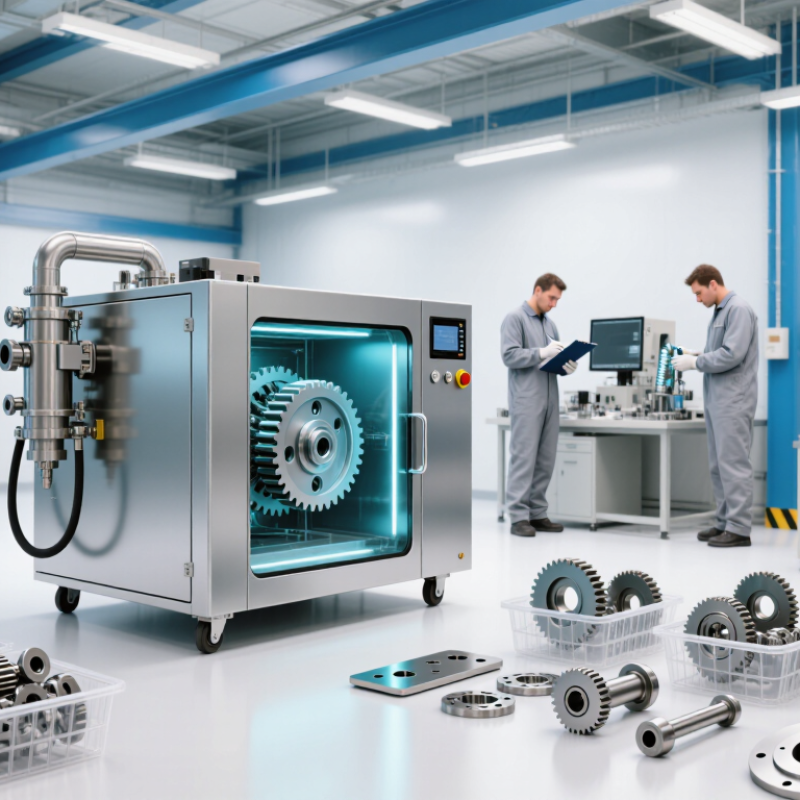
A vacuum hydrocarbon cleaning machine uses a sealed chamber and a reusable solvent to remove oils, grease, and machining residues. Parts are loaded into a basket, and the chamber door closes before air is withdrawn. Lower pressure helps the solvent reach narrow gaps and reduces trapped air around complex surfaces. The cleaning cycle may use immersion, spray, or optional ultrasonic action, depending on the machine and part geometry.
The solvent circulates across the components, loosening contamination and carrying it into a filtration system. Some systems use multiple cleaning stages, with cleaner solvent reserved for a final rinse. Then the machine drains the liquid and applies vacuum drying. Residual solvent evaporates under reduced pressure; a condenser cools the vapor so it can be collected and reused. Small details matter. Basket loading can affect drainage, so overlapping parts may retain more liquid than expected.
Cycle settings should match the material, soil type, and cleanliness target. Operators typically verify results with suitable inspection methods rather than assuming a clear surface is clean. Hydrocarbon solvents require careful handling. Sealed equipment, functioning interlocks, vapor recovery, and scheduled maintenance all matter. Still, no cycle is perfect: blind holes and delicate finishes may need trials and adjustment. A documented process helps reveal those limits before production volumes rise.
Key Criteria for Evaluating Manufacturers in 2026
2026 Top Vacuum Hydrocarbon Cleaning Machine Manufacturers
Key Criteria for Evaluating Manufacturers in 2026
A capable manufacturer should demonstrate cleaning performance under your actual production conditions. Ask for test results using representative parts, soils, and basket loads. Check residual contamination, drying time, cycle repeatability, and solvent recovery. A bright surface is encouraging, but it proves little on its own. Request documented test methods and acceptance limits.
Energy use deserves close attention. The International Energy Agency reports that industry accounts for roughly 37% of global energy consumption. Compare energy per cleaning cycle, not just the machine’s rated power. Also review vacuum stability, leak-test records, filtration design, and maintenance intervals. Ask how technicians verify these figures after installation. Some brochures make this look easier than it is.
Tips: Ask manufacturers to run a witnessed factory acceptance test with your parts. Request a sample maintenance schedule and a clear list of operator training hours. Compare service response times, spare-parts availability, and warranty exclusions in writing. A low purchase price can still mean costly downtime.
Leading Vacuum Hydrocarbon Cleaning Machine Manufacturers
Leading vacuum hydrocarbon cleaning machine manufacturers are judged by more than chamber size or cycle speed. Look for equipment designed around your parts, soil types, and production volume. A practical system should offer stable vacuum control, repeatable fluid handling, and clear cycle records. Ask how the machine manages blind holes, narrow passages, and parts with varied surface areas. These details can affect cleaning consistency.
A polished brochure is not proof. Request a sample cleaning trial using representative components. Review residue measurements, drying results, and cycle time together. Also ask about filtration intervals, maintenance access, operator training, and available technical support. Experienced manufacturers should explain their process limits, not only its strengths.
Tips: Bring real parts and a written cleanliness target to supplier discussions. Compare test results under the same conditions. Check whether operators can inspect filters and service key components without complicated disassembly. Small details matter. A quiet pump or tidy control screen may feel reassuring, but neither guarantees performance. I would still verify the results on a normal production shift, where loading patterns and part variation can expose weaknesses a showroom test misses.
2026 Top Vacuum Hydrocarbon Cleaning Machine Manufacturers
Representative boiling points of common hydrocarbon solvents at 1 atm (°C)
Solvent boiling point is one factor to consider when evaluating vacuum cleaning equipment, since it influences process temperature and solvent recovery. Values shown are for pure compounds; commercial blends may differ.
Comparing Manufacturer Capabilities and Product Ranges
Comparing vacuum hydrocarbon cleaning machine manufacturers means looking beyond chamber size. A capable product range should cover compact batch units, larger production chambers, and options for filtration, solvent distillation, drying, and automated handling. Ask for cleaning results on representative parts, not only brochure specifications. Oil residue in a blind hole is a better test than a polished sample.
The International Energy Agency’s Energy Efficiency 2023 report estimates that industry used about 37% of global final energy in 2022. This is not a machine-efficiency benchmark, but it makes energy per load worth comparing. Request measured cycle time, power use, solvent consumption, and recovery rate under the same test conditions. Small details matter. A large chamber can waste energy when routinely run half empty.
Compare service access, control-system records, spare-parts availability, and the clarity of process documentation across manufacturers. Some suppliers offer broad standard ranges; others adapt chamber dimensions or filtration stages for specific components. Neither approach is automatically better. I would be cautious about impressive recovery claims without test methods and operating conditions. That gap matters. A practical comparison includes trial cleaning, repeatability checks, and a written maintenance schedule.
How to Select a Manufacturer for Industrial Cleaning Needs
2026 Top Vacuum Hydrocarbon Cleaning Machine Manufacturers
How to Select a Manufacturer for Industrial Cleaning Needs
Selecting a vacuum hydrocarbon cleaning machine manufacturer starts with your actual parts, not a catalog headline. Record part dimensions, materials, soil types, and daily batch volume. Ask how the machine handles blind holes, fine passages, and mixed part loads. A clean cycle matters. Request test results using representative components, including residual contamination measurements and drying times.
Compare chamber capacity, filtration, solvent recovery, and automated cycle controls against your production needs. Ask for written details on seals, pumps, maintenance intervals, and spare-part availability. A supplier should explain operating limits clearly, rather than promising that one setup fits every job. Request a factory acceptance test, and agree on measurable criteria before purchase. That gap matters.
Check whether technicians can support installation, operator training, and troubleshooting at your site. Ask for references from facilities with similar parts and throughput, then verify what performance they achieved. Review safety documentation and confirm that the proposed system suits your workplace procedures. A polished brochure can be reassuring, but it cannot replace a practical trial. One honest limitation is useful: published cycle times may change with part geometry, loading, and soil condition. Choose a manufacturer willing to discuss those variables and document the assumptions behind its recommendations.