




10 Best Blockchain API Tips for Global Buyers
Choosing a Blockchain API for global products is not just a speed test. A dashboard may show impressive uptime, yet a request from Singapore can still arrive slower than one from Frankfurt. Buyers should compare network coverage, latency, documentation, support hours, security controls, and pricing under realistic workloads. Small differences matter.
Andreas M. Antonopoulos, a well-known Bitcoin educator and author, described Bitcoin as “the internet of money.” That phrase captures the global ambition behind blockchain services. APIs help teams connect applications to networks, retrieve data, and submit transactions without building every infrastructure component themselves. But access is not the same as reliability. A polished demo can hide limits that appear during peak demand.
This guide presents ten practical tips for evaluating providers across regions and use cases. It focuses on questions buyers can test: How quickly does a sample request return? Are error messages clear? Can teams monitor usage and control costs? What happens when a network endpoint is unavailable? Test it yourself. No benchmark tells the whole story, and a provider that suits one product may not suit another. I would be cautious about choosing on price alone; that shortcut looks efficient until support or capacity falls short. The right decision comes from documented evidence, transparent trade-offs, and a small pilot before a wider rollout.
Understanding Blockchain APIs and Their Role in Global Markets
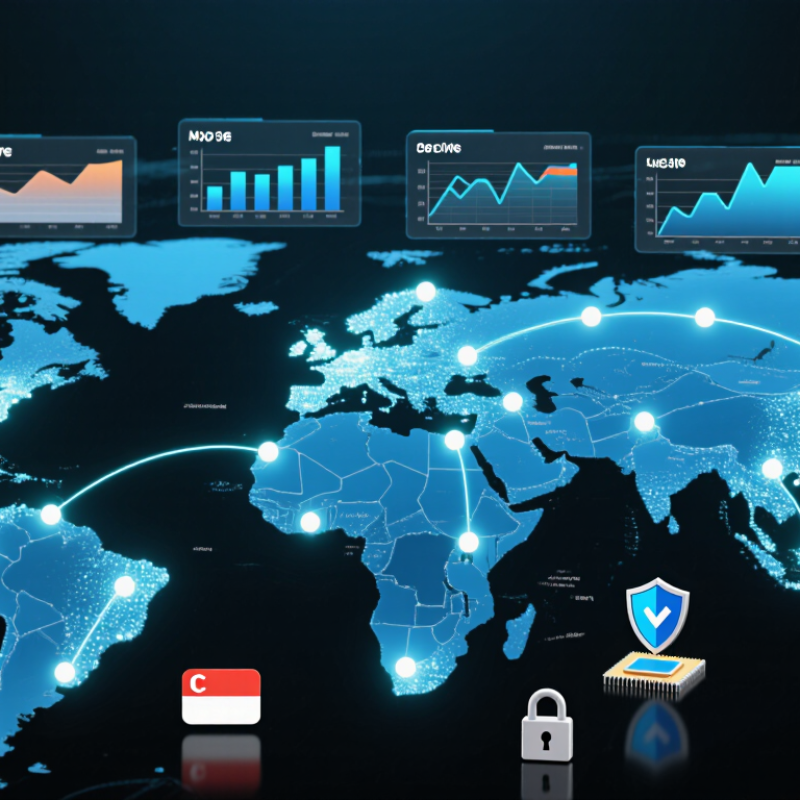
A blockchain API connects an application to network data and transactions without requiring teams to build every node integration themselves. For global buyers, that can mean checking settlement status across time zones, reading balances in a consistent format, or routing a payment request through one interface. The practical details matter: response times, supported networks, data freshness, and clear error messages can shape daily operations. A delayed status update may leave a supplier unsure whether an invoice has been paid.
The market need is real, but APIs are not a shortcut around every friction. The World Bank’s Migration and Development Brief 40 estimated that remittances to low- and middle-income countries would reach $685 billion in 2024. Its Remittance Prices Worldwide data put the average sending cost at 6.35% in the first quarter of 2024. These figures describe remittances, not blockchain API performance. Still, they show why buyers examine speed and cost carefully. That is not automatic. Before choosing an integration, test how it handles network congestion, failed requests, and inconsistent data. Review access controls and audit logs, too. One overlooked issue: a technically sound API may still provide data that needs careful interpretation across markets.
10 Best Blockchain API Tips for Global Buyers — Understanding Blockchain APIs and Their Role in Global Markets
| # | Evaluation Area | Why It Matters | Buyer Tip | Questions to Ask |
|---|---|---|---|---|
| 1 | Network coverage | Blockchains differ in their transaction formats, data models, and operating rules. Support for one network does not imply support for another. | Match supported networks and features to the chains your product actually needs, including any planned expansion. | Which networks, test networks, and API methods are available? |
| 2 | Data freshness and finality | New blocks may be reorganized, and the time to practical or protocol-level finality varies by network. An API response can reflect data that may later change. | Understand confirmation policies and how the API signals pending, confirmed, or reorganized data. | How are chain reorganizations handled, and how is finality represented? |
| 3 | Geographic availability | Network routing, regional infrastructure, and local compliance requirements can affect latency, access, and service availability across markets. | Check service regions, data-processing locations, and any geographic restrictions relevant to your users. | Where is API traffic processed, and are any regions restricted? |
| 4 | Latency and reliability | Applications that monitor transactions or serve users in multiple time zones depend on consistent access, but latency can vary with network conditions and request type. | Review service-level commitments and test response times from the regions where your application operates. | What availability targets, incident notices, and performance metrics are provided? |
| 5 | Rate limits and pricing | API plans may limit request frequency, concurrent connections, historical queries, or data volume. Usage patterns can affect cost and application behavior. | Estimate expected request volume and check how limits, overages, and batch requests are handled. | Which quotas apply, and what happens when a quota is reached? |
| 6 | Historical data access | Some applications need only recent data, while analytics, audits, and reconciliation may require older blocks or indexed records. | Confirm retention depth, archive access, pagination behavior, and any extra charges for historical queries. | How far back can data be queried, and are historical records complete? |
| 7 | Security and access control | API credentials can be misused if exposed. Read-only data access should be separated from sensitive signing or transaction-submission workflows. | Use scoped credentials where available, keep secrets out of client-side code, and review key rotation and access logs. | Can credentials be restricted by permission, origin, or network? |
| 8 | Privacy and compliance | Blockchain data is generally public, but API logs, account details, and usage metadata may be handled under applicable privacy and data-protection rules. | Review data retention, subprocessors, contractual terms, and obligations in each target market with qualified advisers. | What data is logged, how long is it retained, and where is it stored? |
| 9 | Standards and integration | Well-documented interfaces, familiar protocols, and clear error responses can reduce integration effort. Different chains may still require chain-specific handling. | Test the documentation and SDKs with your actual use cases, and avoid assuming that one interface behaves identically across chains. | Are API versions documented, and how are breaking changes announced? |
| 10 | Resilience and exit planning | An application that relies on a single data-access path may be affected by outages or changes in service terms. Independent verification can help detect inconsistent results. | Plan retries and fallback behavior, consider validating critical data independently, and document how to migrate if requirements change. | Can data and application integrations be migrated without proprietary dependencies? |