What Is the Best EV Power Station in 2026?
Choosing the best Ev Power Station in 2026 means looking beyond the largest number on a product page. Charging speed matters, but so do connector compatibility, reliable operation, clear pricing, and access to support. A station that delivers strong power on paper may still disappoint if it is poorly located or frequently unavailable. Small details count: the display should be readable in daylight, and a charging cable should reach without awkward stretching.
The International Energy Agency’s Global EV Outlook 2025 reports that public charging points worldwide grew by more than 30% in 2024, surpassing five million. That rapid expansion gives drivers more choice, but also makes comparisons harder. IEA Executive Director Fatih Birol described electric cars as “the driving force behind the new global energy economy.” His point helps explain why charging infrastructure deserves careful attention. Yet the best station depends on the vehicle, route, and local grid—not just industry growth.
This guide compares the features that matter most, including real-world charging performance, payment options, uptime, and total cost. We will also consider whether fast charging is worth paying extra for on everyday journeys. There is no perfect answer. Even a well-reviewed station can be inconvenient if it sits far from your route or lacks dependable service. By weighing practical evidence against headline specifications, drivers can make a more confident choice in 2026.
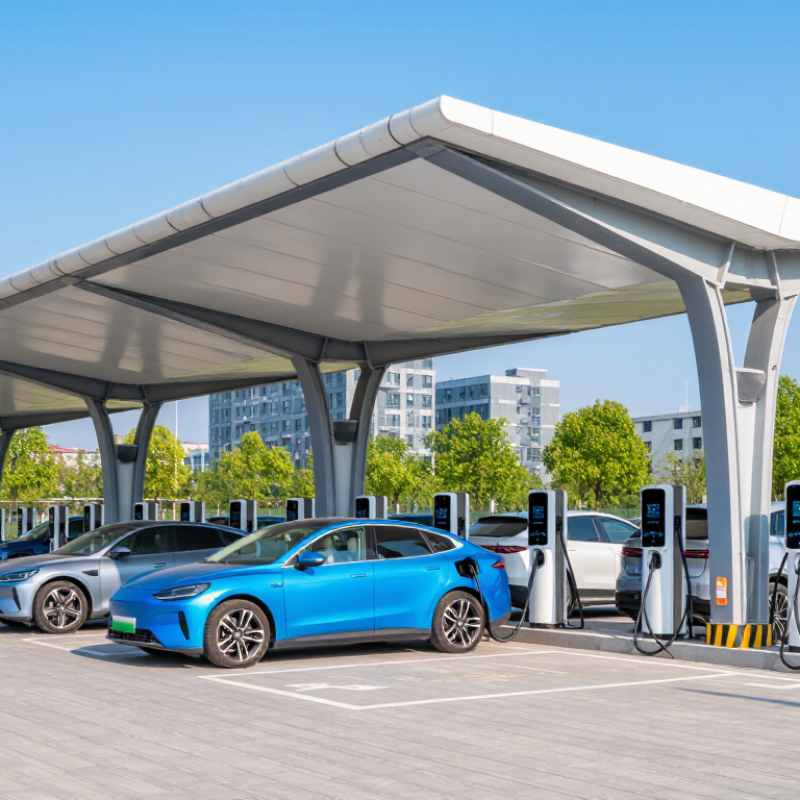
What an EV Power Station Is and How It Differs from a Charger
An EV power station is a source of stored electricity, not simply a cable that plugs into a car. It may be a large battery system with an inverter and dedicated vehicle-charging hardware, or a portable power unit that can supply a compatible charger. The term is used loosely, so check the actual specifications. A socket alone does not make a unit suitable for EV charging.
A charger, more precisely an EV charging unit, manages the connection between the power source and the vehicle. It communicates with the car, monitors the session, and delivers power within supported limits. A power station stores or supplies that power. Think of a water tank and a controlled tap. Related, but not interchangeable. That distinction matters.
For example, a portable station with a standard AC outlet might run small appliances yet lack the continuous output needed for practical car charging. Even when the numbers appear sufficient, connector type, charging protocol, and the vehicle’s limits still matter. Check usable capacity, continuous output, and the charging equipment required. A short test at home can reveal awkward cable reach or unexpected power limits. I would not judge a station by its peak wattage alone; that number can look impressive and still tell only part of the story.
How EV Power Stations Store and Deliver Energy
An EV power station can pair grid electricity with a stationary battery. The battery stores energy chemically, then releases it as direct current. Power electronics manage the flow; an inverter can supply AC to site equipment, while a DC fast charger converts power for the vehicle. The International Energy Agency reported more than four million public charging points worldwide at the end of 2023, with fast chargers growing 55% that year. A battery buffer can help a site meet short demand spikes without relying entirely on its grid connection.
Energy capacity, measured in kilowatt-hours, tells you how much energy is stored; power, measured in kilowatts, describes how quickly it can be delivered. NREL’s 2024 Annual Technology Baseline uses about 85% round-trip efficiency for utility-scale battery storage—a useful benchmark, not a guarantee for every charging site. Heat is the tax. Cooling, conversion losses, battery age, and several cars charging together affect real output. The tidy diagram hides a messy truth.
Tips: Check both usable capacity and continuous output, not just headline numbers. Ask how the system handles heat and peak demand. Leave room for uncertainty; real-world charging rarely follows a perfect schedule.
The Main Types of EV Power Stations Available in 2026
EV power stations in 2026 fall into several practical categories. AC destination chargers suit homes, workplaces, and long-stay parking. They commonly deliver modest power, so a car may need hours to recharge. DC fast chargers convert power before it reaches the vehicle, often adding useful range during a short stop. Speed is not everything.
The International Energy Agency’s Global EV Outlook 2025 reports that public charging points surpassed five million worldwide in 2024, with more than 1.3 million added that year. It also found fast chargers grew by nearly 50%. Those figures show expanding choice, but not equal access: local coverage and grid capacity still shape what drivers can use. High-power corridor chargers target brief highway stops, while depot chargers serve fleets that can recharge vehicles overnight. Some heavy-duty charging systems are designed for much higher power, but they need substantial electrical infrastructure.
For buyers, the best type depends on dwell time, vehicle compatibility, and available supply. A home AC unit can be sensible where a car parks overnight; frequent long-distance travel favors access to reliable DC fast charging. Check the charger’s actual output, not just its advertised peak: a vehicle may accept less, especially when its battery is cold or nearly full. Site ratings also vary, and a busy station can feel slower than its label suggests. That part is easy to overlook.
Key Factors for Comparing EV Power Stations
What Is the Best EV Power Station in 2026?
Key Factors for Comparing EV Power Stations
A useful comparison starts with the vehicle, not the charger’s headline number. Check connector compatibility, maximum AC or DC input, and whether the unit can manage household electrical loads. For a home setup, confirm available circuit capacity and cable reach. A cable that barely reaches the driveway becomes irritating fast. A neat specification sheet can still mislead.
Charging speed depends on the car, battery temperature, and power available. The U.S. Department of Energy’s Alternative Fuels Data Center estimates that Level 2 charging typically adds 10–20 miles of range per hour. DC fast charging can take a compatible vehicle from 20% to 80% in roughly 20 minutes to an hour. Those are broad ranges, not promises.
The International Energy Agency’s Global EV Outlook 2024 reported more than four million public charging points worldwide at the end of 2023, about 40% more than in 2022. This growth makes uptime and access to service worth comparing alongside speed.
Look for clear power ratings, over-temperature protection, weather suitability, and straightforward fault reporting. For shared sites, load management can spread limited electrical capacity across several vehicles. Review warranty terms and repair options, too. I’d weigh dependable operation over a brief peak-power claim, though that trade-off can be hard to judge from published specifications alone.
How to Determine the Best EV Power Station for Different Needs
The best EV power station depends on where and how you plan to use it. For home backup, compare usable capacity, continuous output, and transfer features with the appliances you need to run. A refrigerator may draw modest power once running but surge higher at startup. For roadside emergencies, check whether the unit can deliver compatible AC power to your vehicle’s portable charger. Many portable stations add only a small amount of driving range, and some EVs may not accept power from every setup.
Match the station’s output to your vehicle’s charging equipment, not just its advertised capacity. A higher wattage rating does not guarantee faster charging if the car, cable, or outlet limits the flow. Check twice. Also consider battery chemistry, cycle-life claims, warranty terms, and charging performance in cold weather. These details shape long-term value more than a single headline number.
For camping or mobile work, weight and recharge options may matter more than maximum capacity. Solar input can help, but cloudy days and panel placement affect results. That matters. Compare real-world needs: list the devices you’ll run, estimate their watt-hours, then add a practical reserve. I would not choose a unit from a chart alone; product specifications can be optimistic, and the right trade-off may still feel imperfect. Verify connector compatibility and follow the vehicle and equipment manuals before connecting anything.