10 Best Hand Manual Coffee Grinders to Buy in 2026?
A fresh cup of coffee can begin with a quiet turn of a handle. The right Hand Manual Coffee Grinder can make that ritual easier, whether you brew pour-over at home or pack a small kit for travel. Yet choosing one is not just about appearance or price. Burr design, grind adjustment, capacity, and handling all affect the experience.
This 2026 guide compares ten hand grinders using practical considerations: how easily settings can be changed, how comfortable the handle feels, and how consistently each model can grind for common brewing methods. We also consider portability, build materials, cleaning, and overall value. Small details matter. A slippery adjustment ring or a cramped catch cup can become tiresome during a rushed morning.
No single grinder suits every coffee drinker. Espresso usually calls for finer, more precise adjustment, while French press needs a coarser, even grind. Beans, roast level, and technique also influence results, so product specifications cannot tell the whole story. Where claims vary by model or depend on personal preference, a careful buyer should check current manufacturer details and recent reviews. There are trade-offs. A compact grinder may save bag space but hold fewer beans, and a sturdy metal body may feel heavier than expected. Use this list to narrow your options and match a grinder to your brewing habits, budget, and tolerance for a little hand work.
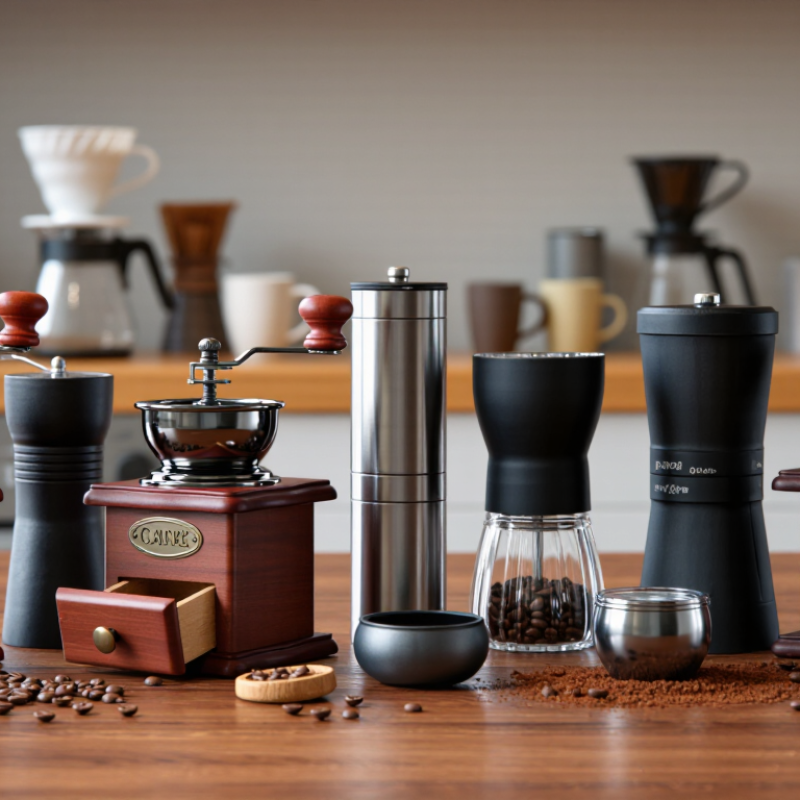
How Hand Manual Coffee Grinders Work
A hand manual coffee grinder turns whole beans into grounds through two burrs. A crank rotates one burr around a central shaft, while the other stays still. Beans drop from the hopper into the narrow space between them. The burrs break the beans apart, and the grounds fall into a small cup. Simple, but physical. The gap between the burrs controls particle size: a wider gap makes coarser grounds, while a narrower one makes finer grounds. Turning the adjustment ring changes that gap, though the direction and markings vary by grinder.
For a pour-over, a medium grind often helps water pass through at a steady pace. Espresso usually needs finer, more uniform grounds, and not every hand grinder can manage that well. Burr alignment, bean freshness, and how steadily you turn the crank all affect the result. Fine grinding can take real effort. Your wrist may notice. If the grounds taste sharply sour, try a finer setting; if they taste harsh or bitter, try coarser. These are useful clues, not strict rules. I’d also check the catch cup for stray grounds and clean the burr area with a dry brush. Small adjustments matter, but dialing in a cup can still involve a little guesswork.
10 Best Hand Manual Coffee Grinders to Buy in 2026? — How Hand Manual Coffee Grinders Work | No. | Grinder Profile | Burr Type | Adjustment Style | Typical Capacity | Best Suited For | Key Trade-Off |
| 1 | Compact travel grinder | Conical, commonly stainless steel | Stepped | About 15–25 g | Single cups, travel, and small brewing setups | Small size is easy to pack, but the compact handle can take more effort to turn. |
| 2 | Everyday all-purpose grinder | Conical, steel or ceramic | Stepped or stepless | About 20–35 g | People who switch between common home-brewing methods | A flexible setting range may require more dialing-in when changing brew methods. |
| 3 | Espresso-focused grinder | Fine-cutting conical burrs | Fine stepped or stepless | About 20–35 g | Espresso brewers who need small grind-size adjustments | Fine grinding and precise adjustment can require more time and hand effort. |
| 4 | Filter-coffee grinder | Conical burrs | Stepped | About 20–35 g | Pour-over, drip, and other medium-to-coarse brews | May offer fewer fine adjustment steps than an espresso-oriented design. |
| 5 | High-capacity hand grinder | Conical burrs | Usually stepped | About 30–45 g | Brewing more than one serving in a batch | A larger body can be less convenient to carry and store. |
| 6 | Lightweight ceramic-burr grinder | Ceramic conical burrs | Stepped | About 20–35 g | Casual brewing and buyers prioritizing a simple, lightweight design | Ceramic burrs can be brittle if dropped or struck against a hard surface. |
| 7 | Steel-burr daily grinder | Stainless-steel conical burrs | Stepped or stepless | About 20–40 g | Frequent home use and a broad range of brew settings | Steel burrs may cost more; burr geometry and alignment still affect results. |
| 8 | External-adjustment grinder | Conical burrs, material varies | External dial or ring | About 20–35 g | Brewers who change grind settings often | Visible adjustment is convenient, but the dial can add bulk to the grinder. |
| 9 | Internal-adjustment grinder | Conical burrs, material varies | Internal dial or nut | About 15–35 g | Brewers who mostly keep one setting or prefer a simpler exterior | Changing settings may require opening or disassembling part of the grinder. |
| 10 | Foldable-handle travel grinder | Conical burrs, material varies | Usually stepped | About 15–25 g | Camping, commuting, and compact packing | The folding mechanism saves space but adds a moving part that may need care. |
How a hand grinder works: Turning the handle rotates one burr against another. The gap between the burrs determines the grind size; adjustment changes that gap. Capacity figures are approximate ranges for these general grinder profiles, not specifications for particular products. Actual capacity, adjustment range, and grind performance vary by design.
What to Look for in a Manual Coffee Grinder in 2026
Choosing a hand grinder in 2026 starts with matching its adjustment range to your brew method. A pour-over usually benefits from repeatable medium settings, while espresso needs finer, more precise adjustments.
Check whether the dial moves in clear steps or turns continuously. Tiny changes can matter when a shot runs too fast. Burr material and alignment also affect grind consistency, but labels alone do not tell the whole story. Look for straightforward cleaning instructions and replacement parts.
Comfort matters more than a polished product photo suggests. Hold the handle, consider its turning resistance, and check whether the body is easy to grip with damp hands. A small hopper may suit travel, but grinding several cups can become tedious. Capacity counts. For everyday use, compare how quickly the grinder works and how much coffee remains inside afterward. No grinder is perfect. Reviews can help, but note whether testers used similar beans and brewing methods. I would also check the warranty and parts availability; these details are easy to overlook when a grinder feels smooth in a shop.
The 10 Best Manual Coffee Grinders to Buy in 2026
A good manual coffee grinder should feel steady, adjust clearly, and produce grounds suited to your brewing method. These ten grinder profiles make a practical 2026 shortlist: a compact travel grinder, an affordable ceramic-burr model, an all-purpose steel-burr grinder, and a fine-adjustment option for espresso. Also consider a pour-over specialist, a large-capacity grinder, a folding-handle design, a dual-bearing model, an easy-clean grinder, and a precision-focused upgrade. These are useful buying categories, not lab-tested product rankings.
Check how each grinder handles in your hand. A loose handle can wobble; a narrow adjustment dial can frustrate you before breakfast. For espresso, choose fine, repeatable settings. For filter coffee, prioritize even grounds and a comfortable turning motion. Ceramic burrs may suit a modest budget, while steel burrs often offer a more consistent feel across settings. Capacity matters too: small chambers are lighter, but may require extra batches.
Very portable. Yet tiny parts can be fiddly. That trade-off is easy to overlook.
Read current reviews for burr alignment, cleaning, and replacement-part availability. Try grinding the same beans at two settings, if possible, and note whether the handle catches or the grounds vary noticeably.
One honest caveat: hand strength, roast level, and preferred brew style all affect the experience. A grinder praised by one reviewer may feel tiring to you. That judgment is imperfect, but it is more useful than choosing by appearance alone.
How the Top Grinders Compare for Different Brewing Methods
A hand grinder should match your brewing method, not just look sturdy on a shelf. For pour-over, look for burrs that produce mostly even, medium-size grounds. Uneven particles can make a cup taste both sharp and dull. A practical check: grind 20 grams and inspect the grounds under bright light. A few larger flakes are normal; lots of powder may slow the brew.
Espresso asks more of a grinder. Fine adjustment steps help you tune a shot without jumping from too fast to too slow. A stable handle and comfortable grip matter when grinding tightly packed beans. But fine grinding takes effort. Not every compact model handles it well. For French press, a broad adjustment range and consistent coarse grounds are useful; too many fine particles can leave grit at the bottom of the mug.
Capacity and portability change the trade-offs. A small grinder suits one morning cup, while a larger chamber reduces repeated batches for several people. Check whether the adjustment mechanism is easy to clean, too. It is easy to overlook. No grinder excels at every method, and I would not judge one from a single brew. Bean freshness, roast level, and technique can shift the result. A little inconsistency is part of the learning.
How to Use and Maintain a Hand Coffee Grinder
A hand coffee grinder gives you direct control over each brew, but a steady routine matters. Measure the beans before grinding, then pour them into the hopper without forcing the lid. Set the grind for your brewing method: finer for espresso-style brewing, coarser for a French press. Turn the handle at an even pace. Go slowly. If the handle catches, stop and check for a trapped bean instead of pushing harder. A slightly uneven grind can still make a pleasant cup, though it may taste less balanced.
After brewing, empty leftover grounds and brush the burrs and chamber with a clean, dry brush. Coffee oils and fine particles build up over time. Avoid rinsing metal burrs unless the grinder’s instructions specifically allow it; moisture can encourage rust. For a deeper clean, follow the maker’s guidance before taking anything apart. Reassemble carefully, and check that the adjustment setting still moves as expected. Store the grinder fully dry, away from steam and splashes. It is tempting to clean only when the coffee tastes stale, but a quick brush after use is easier. Some grounds will cling anyway. That is normal.