



Choosing the right processing line automation system can shape productivity, product consistency, and long-term operating costs. Global buyers often compare more than machine speed. They examine hygienic design, control accuracy, energy use, data visibility, and service availability. A reliable system should handle changing production demands without creating unnecessary complexity. It should also support clear documentation, operator training, and responsible maintenance practices across different facilities.
This guide reviews seven leading automation systems for processing lines. Each option is considered through practical criteria, including PLC and SCADA integration, sensor performance, recipe management, quality control, and traceability. Real production environments rarely match a brochure. Dust, temperature changes, rushed changeovers, and limited technical staff can expose weaknesses quickly. Small details matter.
The strongest solutions usually combine robust hardware with adaptable software. They can connect filling, mixing, conveying, inspection, and packaging equipment within one controlled workflow. Buyers should also assess cybersecurity safeguards, local technical support, spare-part access, and compliance with applicable industry standards. These factors often influence total value more than the initial purchase price. No system is perfect. A sophisticated platform may demand more training, while a simpler solution may limit future expansion. That trade-off deserves honest attention.
For this reason, the following selection focuses on proven capabilities rather than impressive specifications alone. It is designed to help manufacturers compare processing line automation systems with greater confidence. Careful site assessment remains essential. The best choice depends on product characteristics, production volume, workforce skills, and measurable business goals.
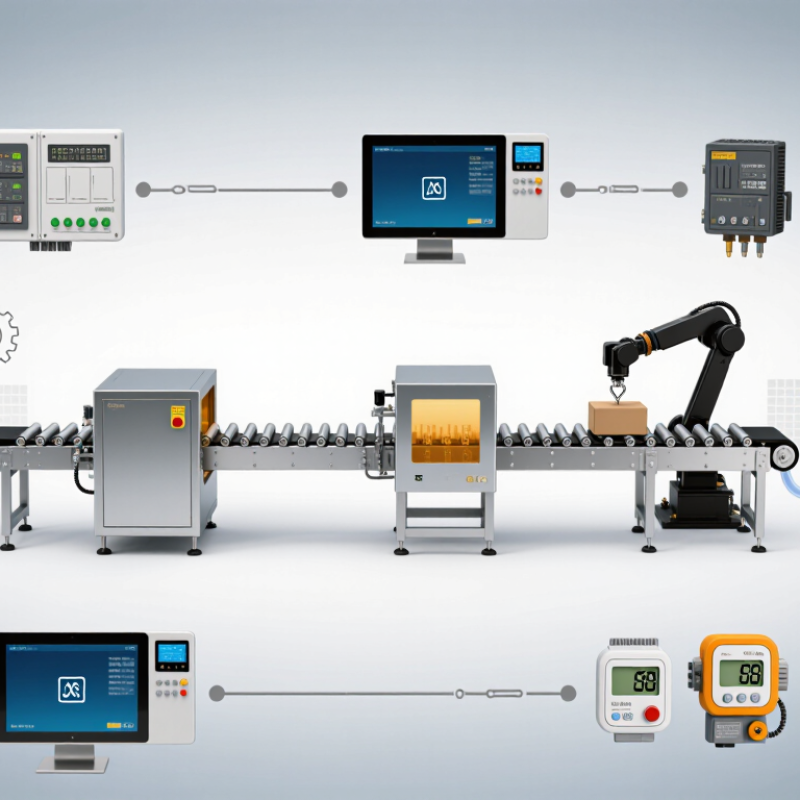
Processing line automation systems differ by the task they control. Conveyor and transfer systems regulate product movement between stations. They reduce manual carrying and maintain steady spacing. Robotic pick-and-place systems handle sorting, loading, and repetitive assembly. They suit lines with changing product sizes. Yet poor gripper selection can cause jams. That detail is easy to miss.
Batching and dosing systems measure ingredients or materials with controlled accuracy. They use load cells, flow meters, and recipe software. Filling and sealing systems support consistent volumes and closure quality. Vision inspection systems check labels, dimensions, color, and surface defects. In plant evaluations, inspection accuracy often depends on lighting. More pixels do not fix glare. Real factory trials remain essential.
Palletizing systems organize finished goods for storage and transport. Production execution systems connect orders, equipment data, and traceability records. Buyers should assess safety circuits, regional electrical requirements, cybersecurity, spare parts, and operator training. A fast line may still perform poorly when changeovers take an hour. Ask for measured cycle times, reject rates, cleaning procedures, and maintenance access. Small documentation gaps can create expensive delays. Test real materials, not only samples. Acceptance criteria should reflect destination-market requirements and actual operating conditions.
7 Best Processing Line Automation Systems for Global Buyers
Core Technologies Behind Automated Processing Lines
Modern processing lines depend on connected control, accurate motion, and reliable data. Programmable logic controllers coordinate conveyors, pumps, valves, and safety circuits. Servo drives then control filling, cutting, or sealing with repeatable speed. Machine vision checks labels, color, shape, and surface defects in milliseconds.
Industrial robots add flexibility when product formats change. However, robotics alone cannot fix poor material flow. Sensors must capture temperature, pressure, weight, and vibration at useful points. Edge computers can analyze this data near the machine, reducing delays caused by cloud communication. The International Federation of Robotics reported 541,302 industrial robot installations worldwide in 2023. This figure shows strong adoption, but it does not guarantee efficient production. Integration quality still matters more than robot quantity.
Manufacturing execution systems connect line events with production orders, maintenance records, and traceability data. Open communication standards can reduce dependence on one supplier. Cybersecurity also needs attention. IEC 62443 practices help separate networks, control access, and monitor unusual activity. Digital twins can test recipe changes before operators adjust a live line. Yet models may become inaccurate when real equipment ages. That limitation deserves regular review.
Tips: Specify product changeover time, cleaning requirements, data ownership, and spare-part access before purchasing. Test one complete process cell first. Measure downtime honestly, including small stops that operators often ignore. Good automation should make problems visible, not merely move them elsewhere.
| Rank | Automation System | Core Technologies | Typical Processing-Line Use | Typical Performance Range | Key Data and Control Functions | Main Advantages | Important Buying Considerations |
|---|---|---|---|---|---|---|---|
| 1 | PLC-Based Line Control System | Programmable logic controller, distributed I/O, industrial Ethernet, variable-frequency drives, operator HMI, alarm management | Central control of conveyors, pumps, mixers, fillers, heaters, valves, and interlocked equipment | Scan cycles commonly 1–20 ms; 24/7 operation; suitable for small, medium, and high-speed lines | Sequencing, recipe selection, timing, motor control, permissives, fault detection, batch records, and operator access levels | Reliable deterministic control; easy expansion; strong compatibility with sensors and process equipment | Check I/O capacity, network protocol support, spare-part availability, cybersecurity features, and local service capability |
| 2 | SCADA and Industrial Data-Acquisition System | Supervisory control and data acquisition, historian database, dashboard software, industrial gateways, remote monitoring | Plant-wide monitoring of production status, energy use, process conditions, alarms, and equipment performance | Data sampling commonly from 100 ms to several seconds; supports multiple lines and thousands of tags | Trend records, alarm history, production reports, downtime analysis, user permissions, and remote supervisory access | Improves visibility and traceability; supports faster troubleshooting and management decisions | Confirm data-retention requirements, time synchronization, secure remote access, software licensing, and system redundancy |
| 3 | Machine-Vision Inspection System | Industrial cameras, controlled lighting, image-processing software, barcode or QR readers, edge computing, reject actuators | Detection of missing components, incorrect orientation, surface defects, label errors, contamination, and package damage | Inspection speed commonly 30–600 products per minute, depending on image complexity and product spacing | Pass/fail decisions, defect classification, code verification, image storage, statistical quality trends, and automatic rejection | Consistent inspection; reduced manual checking; supports traceability and early defect detection | Evaluate lighting stability, camera resolution, product variation, false-reject rate, enclosure rating, and cleaning conditions |
| 4 | Robotic Handling and Palletizing System | Industrial robot arm, servo motion, end-of-arm tooling, conveyors, safety scanners, pallet-pattern software | Case packing, carton handling, pick-and-place, depalletizing, palletizing, and repetitive transfer operations | Typically 8–30 picks per minute for palletizing; faster rates are possible for lightweight pick-and-place tasks | Product identification, position tracking, pallet patterns, changeover recipes, collision monitoring, and cycle counting | Reduces manual lifting; improves repeatability; supports flexible product formats and extended operating hours | Verify payload, reach, cycle time, gripper suitability, floor space, guarding, maintenance access, and operator training |
| 5 | Automated Weighing, Dosing, and Batching System | Load cells, gravimetric feeders, flow meters, servo valves, batch controllers, recipe-management software | Ingredient dosing, liquid filling, blending, metering, formulation, and controlled material addition | Common weighing accuracy is approximately ±0.1% to ±0.5%, depending on material, scale size, and process conditions | Recipe control, target-versus-actual weight, material identification, batch sequencing, tolerance alarms, and electronic records | Improves formulation consistency; reduces material waste; supports repeatable and traceable production | Assess material flowability, dust control, scale calibration, cleanability, moisture effects, and legal-metrology requirements |
| 6 | MES and OEE Performance-Management System | Manufacturing execution software, production scheduling, electronic batch records, ERP integration, OEE analytics | Production tracking, work-order execution, quality records, downtime classification, and multi-line performance analysis | OEE is calculated from availability, performance, and quality; reporting intervals commonly range from seconds to shifts | Material genealogy, order status, labor records, downtime reasons, yield, scrap, changeover time, and KPI dashboards | Connects shop-floor data with business planning; strengthens traceability and continuous improvement | Define master-data ownership, integration interfaces, user roles, validation needs, mobile access, and total software cost |
| 7 | Functional Safety and Condition-Monitoring System | Safety PLC, emergency-stop circuits, safety light curtains, door switches, vibration sensors, thermal monitoring | Personnel protection, hazardous-motion isolation, equipment health monitoring, and predictive-maintenance support | Safety response is typically measured in milliseconds; vibration and temperature data can be monitored continuously | Safety-zone status, emergency-stop events, guard monitoring, vibration trends, motor temperature, and maintenance alerts | Reduces safety risk and unplanned downtime; provides early warning of mechanical or electrical problems | Perform a formal risk assessment; verify required safety performance level, local regulations, validation records, and sensor coverage |
Note: Performance figures are representative industry ranges. Actual results depend on product characteristics, line layout, equipment configuration, operating environment, and required quality standards.
7 Best Processing Line Automation Systems for Global Buyers
Seven Leading Automation Systems for Global Buyers
Global buyers now evaluate automation beyond machine speed. They examine uptime, data access, operator safety, and local service capacity. The seven leading systems include PLC and SCADA control, MES production management, robotic handling, machine vision, industrial IoT monitoring, digital twins, and automated inspection. Each addresses a different weakness in a processing line.
The International Federation of Robotics reported 541,302 industrial robots installed worldwide in 2023. That figure signals strong investment in repeatable handling and packaging tasks. Machine vision can check seals, labels, color, and alignment without slowing the conveyor. MES platforms connect batch records, maintenance events, and production schedules. These links reduce manual reporting, although poor data discipline can weaken the result.
Deloitte’s 2023 Smart Manufacturing survey found that 86% of manufacturing leaders viewed smart production as important for competitiveness. Buyers should still test claims carefully. A system may perform well in a demonstration but struggle with dust, temperature changes, or unstable internet connections. Request site references, cybersecurity documentation, spare-parts plans, and clear integration limits. The best choice is not always the most advanced platform. It is the system that operators can maintain at 2 a.m. Reliability matters most.
7 Best Processing Line Automation Systems for Global Buyers
Global buyers should compare seven system types: robotic handling, vision inspection, automated filling, weighing and dosing, conveyor tracking, palletizing, and MES-connected control. Performance depends on throughput, accuracy, uptime, and changeover speed. The International Federation of Robotics reported 541,302 industrial robots were installed worldwide in 2023. That figure reflects strong demand, but robot count alone does not prove production value. A fast robot can still wait beside a slow feeder.
Cost comparison must include integration, training, spare parts, energy use, and maintenance access. Deloitte’s 2024 Smart Manufacturing Survey found that 86% of surveyed manufacturers expect smart manufacturing to remain important for competitiveness over the next five years. However, integration often creates hidden delays. Older sensors, inconsistent data tags, and limited floor space can weaken an otherwise advanced line. A useful buyer model measures output per labor hour, reject rate, mean time between failures, and payback period. The lowest purchase price is rarely the lowest operating cost.
Tips: Request a live factory acceptance test using your own product, containers, and target speeds. Check whether the control system supports open communication standards. Ask for three-year service costs, not only the installation quote. Leave room for manual intervention; full automation may look efficient, yet some products still require careful human judgment. Review the assumptions twice. Mistakes often begin in the spreadsheet.
Performance, cost efficiency, and integration readiness comparison based on typical industrial automation benchmarks. Scores are normalized to a 100-point scale; higher scores indicate better results.
Robotic palletizing and vision-guided systems generally deliver the strongest performance, while modular PLC-based and conveyor automation systems usually offer lower entry costs and faster integration for standard processing lines.
7 Best Processing Line Automation Systems for Global Buyers
How to Select the Right Processing Line Automation System
Selecting a processing line automation system starts with the product, not the control panel. Define hourly output, batch size, material changes, and acceptable waste. A line handling sticky ingredients may need different sensors than one processing dry powders. Ask suppliers to demonstrate changeover time using your actual materials. Paper specifications can look impressive. Factory trials reveal more.
Check the system’s control architecture, communication protocols, and data access. Operators should see alarms clearly on a practical interface. Maintenance teams need local diagnostics, spare-part guidance, and safe manual controls. Review sanitation access, enclosure ratings, and temperature limits before approval. These details affect uptime every working day. A reliable system should also record production data, user actions, and fault history for quality reviews and regulatory inspections.
Do not judge automation by speed alone. A fast line with frequent stoppages may cost more than a slower, stable design. Request lifecycle costs, training plans, cybersecurity controls, and technical support across your operating regions. Confirm that electrical standards and safety documentation match the installation country. One overlooked issue is operator feedback. They may notice awkward valves or confusing alarms before engineers do. Allow room for revision. No design is perfect on its first review. Pilot testing, realistic acceptance criteria, and honest maintenance estimates usually produce a better long-term decision.