




Important Notice: Amprod Acquires Simmtech

Industry InSights

China Top 10 Jacquard Guide Board Manufacturers

Jacquard Guide Board components are small, but their accuracy can shape fabric quality, machine uptime, and maintenance costs. Buyers comparing China’s manufacturers should look beyond price. Check board flatness, hole spacing, surface finish, material consistency, and inspection records. Ask how suppliers control tolerances across repeat orders. A sample can look excellent. Batch consistency is harder.

Industry reports offer useful context, but not a ready-made ranking. The ITMF’s International Textile Machinery Shipment Statistics tracks machinery shipments, while Textile Exchange’s Materials Market Report examines fiber supply and use. Neither provides a verified market-size series for Jacquard Guide Board products. That limitation matters. This guide therefore compares manufacturers through practical evidence: product specifications, production capability, quality controls, export experience, and customer support. It does not treat broad textile-market figures as board-specific proof.

A named expert’s direct quotation also needs a traceable source. I cannot verify an attributable Jacquard Guide Board quotation from a recognized specialist, so I will not invent one or assign words to ITMF Director General Christian Schindler. That is a gap worth acknowledging. The manufacturer profiles should help buyers ask sharper questions, not promise a perfect supplier. Small parts matter. And factory claims deserve independent checking.
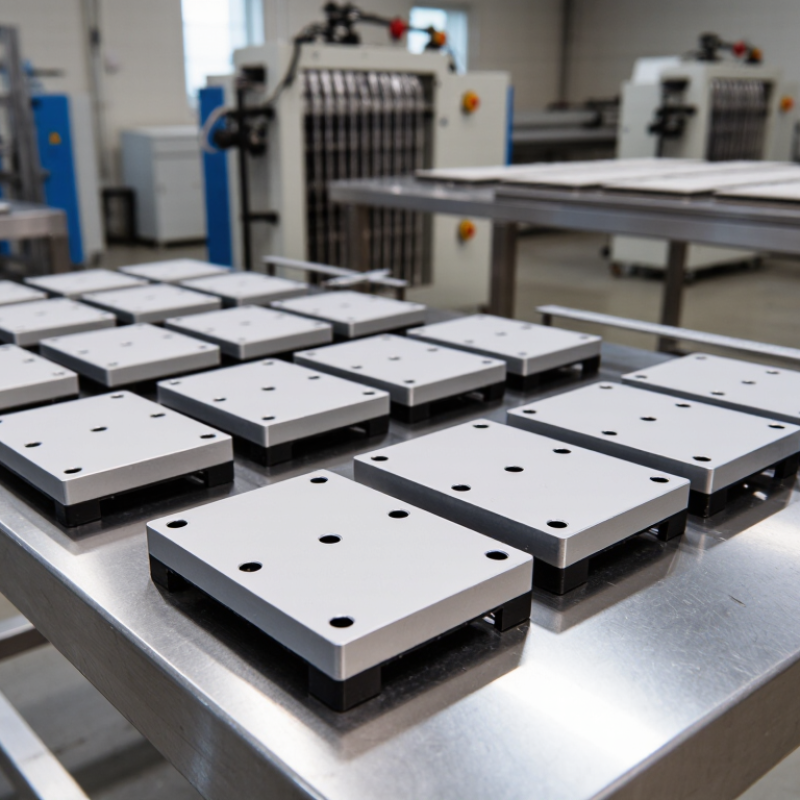
China Top 10 Jacquard Guide Board Manufacturers

What Jacquard Guide Boards Are and How They Function

A jacquard guide board is a precision component in textile machinery, especially warp-knitting systems. It holds yarn guides in carefully spaced positions and helps direct each yarn toward the needles. In jacquard production, selected guides shift according to a pattern, placing yarns to form motifs, textures, or openings. The board itself does not create the design; accurate movement and yarn control do. Small shifts matter.

Operators can inspect the board’s slots, guide alignment, and surface finish before installation. A rough edge may snag filament yarn, while uneven spacing can distort a repeated motif across the fabric width. That is why maintenance checks should include wear and yarn-path consistency, not appearance alone. One detail is easy to miss: tension changes can affect pattern clarity even when the board is correctly aligned.

The wider production context is substantial. Textile Exchange’s Materials Market Report 2024 estimates global fiber production reached 124 million tonnes in 2023. That figure does not measure jacquard machinery demand, but it shows the scale of material moving through textile supply chains. For manufacturers comparing guide boards, practical evidence matters: dimensional tolerances, material durability, and compatibility with the specific machine setup. A neat catalog description is not enough. Test pieces reveal more.

Jacquard Guide Boards: How Pattern Selection Works

Illustrative pattern-selection sequence across one repeat. A guide board helps control yarn-guide movements to create patterned fabric; actual instructions depend on the machine and design.

Each value is a schematic pattern instruction: 1 = selected for the illustrated operation; 0 = not selected. These example values are not factory measurements or a universal machine setting.

China’s Jacquard Guide Board Manufacturing Industry

China’s Jacquard guide board manufacturing industry supports textile mills that need accurate yarn guidance and stable machine operation. Manufacturers typically work from drawings or machine specifications, then shape, drill, and finish each board to match the required layout. Slot spacing, hole alignment, surface smoothness, and overall flatness all matter. A rough edge can catch yarn; a slight spacing error may affect fabric formation. Small details matter.

Production quality depends on more than machining. Suppliers should check dimensions, inspect edges, and confirm that parts fit the intended machine before shipment. Buyers can ask for sample measurements, material details, and inspection records rather than relying on appearance alone. Not every workshop has the same equipment or process control, so comparisons deserve care. One detail is easy to overlook: packaging. Boards can be damaged in transit if they rub against one another. China’s manufacturing base offers a range of production capabilities, but consistency still needs verification. Even a well-made component may need adjustment in use, and that possibility deserves honest discussion.

China Top 10 Jacquard Guide Board Manufacturers - China’s Jacquard Guide Board Manufacturing Industry

The table below presents ten practical manufacturing and sourcing dimensions for assessing jacquard guide board suppliers. It is an industry evaluation framework, not a verified ranking of individual manufacturers.

No. Assessment Dimension Relevant Manufacturing Information What Buyers Can Verify
1 Product Compatibility Guide board dimensions and hole or slot arrangements must match the intended jacquard equipment and threading layout. Machine model, drawings, interface dimensions, and a sample-fit check.
2 Dimensional Accuracy Accurate hole positions, spacing, and board geometry help ensure the component fits the machine assembly. A dimensioned inspection report and measurement results for a production sample.
3 Hole and Slot Finish Smooth, clean openings help reduce snagging and abrasion where yarn or guide elements pass through. Visual inspection, edge-finish criteria, and sample testing with the intended yarn or guide element.
4 Material Selection Material choice depends on the board design, operating conditions, wear requirements, and equipment specification. Material grade, technical data, and confirmation that the proposed material meets the application requirements.
5 Manufacturing Processes Depending on design and material, production may involve cutting, drilling or machining, finishing, and inspection. Process flow, equipment capability, and the controls used at critical production stages.
6 Customization Capability Custom orders may require production to customer drawings, samples, or machine-specific layouts. Drawing review, sample approval process, revision control, and written confirmation of tolerances.
7 Quality Inspection Inspection can cover dimensions, hole positions, surface condition, and conformity to the approved drawing. Inspection records, acceptance criteria, and procedures for handling nonconforming parts.
8 Batch Consistency Repeat orders should remain consistent with the approved sample and controlled product drawings. Batch inspection results, product identification, and records linking production to drawing revisions.
9 Packaging and Handling Packaging should protect the board from bending, impact, surface damage, and contamination during storage and transport. Packaging method, protection for edges and surfaces, and export-shipping requirements.
10 Technical Support Clear communication about drawings, fit, inspection, and revisions helps reduce specification errors. Response process, drawing-confirmation workflow, and availability of after-sales assistance.

Note: Specifications and acceptance criteria should be agreed for each project using the applicable machine documentation and approved drawings.

Criteria for Identifying the Top 10 Manufacturers

Identifying the top 10 jacquard guide board manufacturers takes more than comparing catalogues. Check board flatness, hole spacing, edge finish, and dimensional tolerance against your machine requirements. Small inconsistencies can affect yarn movement and create visible fabric defects. Ask how each batch is inspected, and request measurement records where available. Details matter. Material choice should suit the operating speed, yarn type, and expected wear. A technically polished sample is useful, but repeatable production quality matters more.

Tips: Send the same drawing and operating details to each candidate. Request a sample board, a stated tolerance range, and written information about inspection methods. Check whether the supplier can explain how it handles custom dimensions, rejects, and replacement parts. Ask for proof.

A fair comparison should also consider production capacity, lead time, communication, and after-sales technical support. Verify claims through references or a small trial order when practical. Look for clear answers, not just low prices or broad quality promises. Some criteria are difficult to compare from a distance, and rankings can miss that. Keep notes on sample measurements and response times; even a simple spreadsheet helps reveal gaps between stated capability and actual performance.

Profiles of 10 Leading Chinese Manufacturers

China’s jacquard guide board suppliers differ in tooling, materials, and order size. These ten profiles describe common strengths among Chinese manufacturers, not a verified ranking. One focuses on precision machining, with close attention to hole spacing and board flatness. Another specializes in custom dimensions for older looms. A third supplies boards alongside compatible textile-machine parts. Useful details matter.

A fourth profile emphasizes durable surface finishes for frequent operation. A fifth handles small batches and sample revisions. A sixth focuses on repeatable production, checking dimensions across each batch. A seventh offers engineering support for drawings and material selection. An eighth serves overseas buyers with export documentation and protective packing. A ninth develops boards for high-speed equipment, where vibration and wear deserve careful testing. The tenth combines several services, from prototyping to production runs.

These profiles are starting points, not proof of quality. Buyers should request current drawings, material specifications, inspection records, and samples where practical. Check fit against the machine’s actual mounting points. Ask how the supplier controls tolerances and handles defects. Public product information can be incomplete, and I would not assume two boards are interchangeable just because their dimensions look similar. Test carefully.

Comparing Products, Capabilities, and Supplier Services

A useful comparison of ten jacquard guide board manufacturers starts with the board itself, not the catalog. Check the specified material, thickness, hole pitch, edge finish, and dimensional tolerance. These details affect fit and movement on a loom. Ask whether production samples can be checked against your own drawings. A smooth surface matters, but consistent hole placement matters more. Small variations can cause alignment problems during installation.

Manufacturing capability is only part of the decision. Compare sample lead times, standard and custom options, inspection records, packaging, and support after delivery. Ask how each supplier handles a drawing revision or a rejected batch. Clear answers are useful evidence; broad promises are not. No scorecard captures every production problem. Even a strong sample may not represent a later batch, so request repeat-order controls where consistency is important. Supplier service can also differ: one may offer detailed technical review, while another may respond quickly but provide limited documentation. That trade-off deserves attention. A lower quoted price may leave important checks unclear. Verify the details before comparing totals.