




How to Choose a 3D Sock Knitting Machine
Choosing a 3d Sock Knitting Machine is not simply a matter of comparing headline speed. The right choice depends on sock construction, production volume, yarn range, and the consistency your customers expect. ITMF’s International Textile Machinery Shipment Statistics reported 29,090 shipments of large circular knitting machines in 2022, a 4% increase from 2021. This figure reflects a broad machinery category, not sock machines alone, but it shows why buyers should examine current equipment carefully rather than rely on general market claims.
On the factory floor, the differences are tangible: needle count affects fabric detail, while cylinder size and machine controls influence fit, repeatability, and changeover time. Ask suppliers to knit your target design using your yarn. Inspect the heel and toe shaping, seam or closure, fabric density, and sample-to-sample consistency. Then compare training, spare-part availability, maintenance needs, and the cost of downtime. Small details matter.
A useful rule: choose for the sock, not the sales brochure. No verifiable, attributable quotation from a sock-knitting-machine expert was included in the available source material, so I will not invent one. Instead, this guide focuses on measurable criteria and questions buyers can verify with machine trials, technical specifications, and supplier references. The aim is practical: identify a machine that fits your product, operators, and production plan—not merely one with an impressive specification sheet.
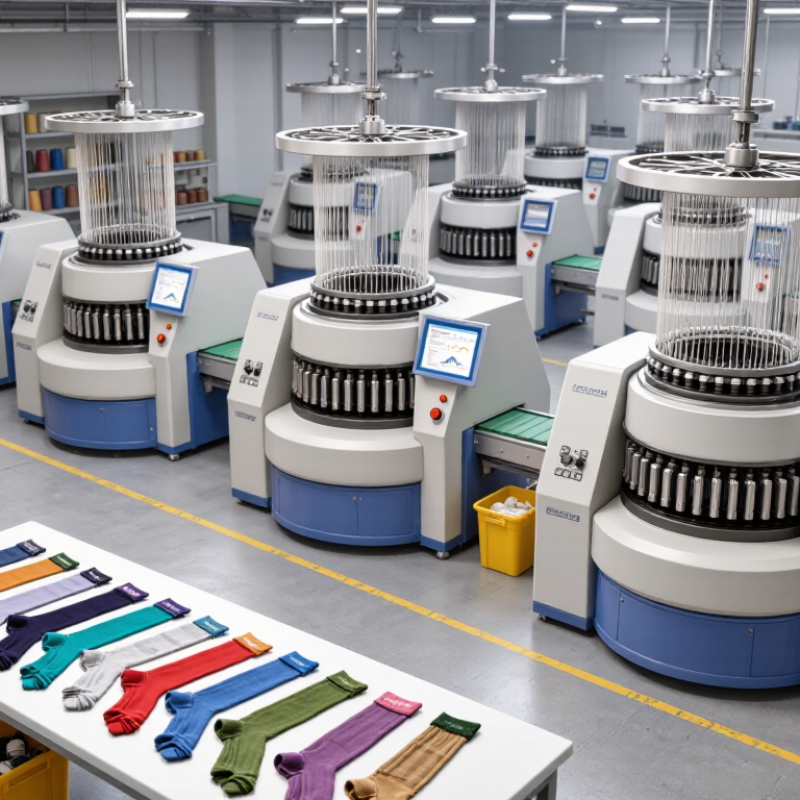
Identify Your Production Goals and Sock Specifications
Start with the job the machine must do, not its headline speed. Estimate pairs per shift, working days, and how many styles will run together. A small workshop changing colors hourly needs different flexibility than a line repeating one athletic sock. Count setup time, operator skill, and acceptable downtime; these are easy to overlook. Write down target sizes, cuff height, and expected yarn types before requesting quotations. Estimates can be wrong.
Then translate the sock itself into measurable details: yarn count, needle gauge, stitch density, and size range. Note where you need ribbing, mesh, terry cushioning, reinforced heels, or shaped toes. Ask whether the machine can hold those structures consistently across sizes, not just produce one attractive sample. Bring actual yarn cones and a graded size chart to a trial, then inspect several pairs after washing. Check defect rate, yarn waste, and changeover time alongside output. I would not trust a catalogue number alone. One missed detail can make a fast machine a poor fit.
How to Choose a 3D Sock Knitting Machine - Identify Your Production Goals and Sock Specifications
| Production goal | Sock specifications to define | Machine capabilities to assess | Production considerations | What to verify before selection |
|---|---|---|---|---|
| Everyday crew socks Consistent, repeatable output for a core product range. | Adult or children’s sizing; crew length; yarn blend and thickness; plain or basic rib construction; target fit and color range. | Confirm cylinder and needle options suit the intended yarn and fabric fineness. Check support for the required heel, toe, rib, and size settings. | A stable, repeatable setup and straightforward style changes can matter more than maximum feature count for a focused product range. | Request a knitted sample using your yarn. Check dimensions after washing, fabric appearance, stretch recovery, and size consistency. |
| Sports and performance socks Products with cushioning, ventilation, or zoned construction. | Cushioned sole areas; mesh or lighter-knit zones; reinforced heel and toe; elastic support zones; intended sport and fit. | Look for programmable stitch and feed control for changing fabric structures. Confirm the machine can produce the specific terry, mesh, and reinforcement placements required. | More construction zones can increase programming, sampling, and quality-control work. Performance claims depend on the finished sock, yarn, and fit—not the machine alone. | Test cushioning coverage, ventilation areas, seam or closure comfort, fit during movement, and durability after repeated laundering. |
| Fine dress socks Lightweight socks with a smooth, refined appearance. | Fine yarn; thin fabric; dress or calf length; color and pattern requirements; desired opacity and hand feel. | Compare available gauge and needle configurations against the yarn and target fabric. Confirm the machine can maintain an even knit at the required fineness. | Fine fabrics may require careful yarn handling, stable environmental conditions, and tighter inspection for dropped stitches or visible irregularities. | Evaluate fabric uniformity, transparency, stretch, recovery, and appearance on the foot. Confirm the sample uses the intended yarn and finishing process. |
| Patterned or multi-color socks Products featuring logos, motifs, stripes, or color blocks. | Number of colors used in each design area; motif size and placement; repeat length; inside-float requirements; colorfastness expectations. | Check the machine’s patterning method, color-feed options, design software, and supported pattern complexity. Verify how floats and color changes are managed. | Complex designs can affect knitting time, yarn consumption, programming effort, and the feel of the sock. Design limits vary by machine configuration. | Run a representative design. Inspect color registration, motif placement, reverse-side floats, yarn changes, and repeatability across sizes. |
| Small batches and frequent style changes Flexible production for varied designs or seasonal orders. | Number of styles and sizes; expected order quantities; color changes; frequency of design updates; sampling needs. | Assess programming workflow, recipe storage, operator interface, setup requirements, and the ease of changing yarns, sizes, and patterns. | For short runs, setup and changeover time can be as important as the machine’s stated knitting speed. Include sampling and learning time in planning. | Ask operators to demonstrate a style change and reproduce a saved design. Compare actual changeover steps and sample consistency. |
| High-volume production Steady output of established styles and sizes. | Forecast quantities by style and size; planned shifts; acceptable defect rate; yarn supply; finishing and packaging requirements. | Review the complete configuration, automation options, monitoring features, maintenance access, and compatibility with downstream toe finishing and inspection. | Real output depends on style complexity, yarn, machine uptime, operator skill, and finishing steps. A rated speed alone does not determine sellable production. | Request a production trial with the intended style. Record good pieces per shift, stoppages, waste, changeover time, and finishing requirements. |
Selection note: Machine capabilities and terminology vary by configuration. Confirm specifications with a representative sample, your intended yarn, and the complete knitting-to-finishing workflow.