How to Choose an Industrial Robotics Integration Partner?
Choosing an industrial robotics integration partner can shape your factory’s safety, productivity, and long-term costs. The decision reaches far beyond selecting a robot arm. It includes process analysis, equipment compatibility, programming, worker training, data visibility, maintenance, and future expansion.
Joseph Engelberger, widely recognized as the father of industrial robotics, once said, “I can’t define a robot, but I know one when I see one.” His words remain useful because successful automation is not defined by hardware alone. It is defined by practical results on the production floor. A capable partner should study your cycle times, product variation, floor space, safety zones, and operator routines. They should also explain limitations clearly. That matters.
Look for proven engineering experience, not impressive promises. Ask for comparable project examples, measurable outcomes, commissioning details, and references from operating facilities. A reliable integrator will discuss failure points before signing a contract. They will identify how robots communicate with conveyors, vision systems, PLCs, and enterprise software. They will also clarify response times after installation.
The right relationship feels collaborative. Your team should understand the system, not depend on a mysterious black box. Watch a live demonstration if possible. Examine cable routing, guarding, gripper changes, and recovery procedures. Small details reveal serious competence.
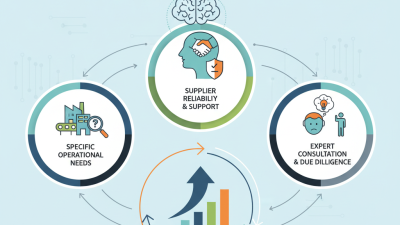
There is no perfect integration partner. Some specialists understand robotics but underestimate change management. Others know production well but lack software depth. Careful evaluation exposes these gaps before they become expensive lessons. The strongest choice combines technical expertise, transparent communication, documented safety practices, and a realistic plan for improvement.
Define Your Automation Goals and Integration Requirements
Choosing an industrial robotics integration partner begins with a precise definition of what automation must achieve. A vague goal, such as “increase efficiency,” rarely guides a sound design. Measure the current process: cycle time, defect rate, changeover minutes, operator movements, and daily output. Watch the line during a busy shift, not only during a scheduled demonstration. Small delays matter.
Then document product dimensions, material weight, tolerances, production volume, and future variants. State the required robot reach, payload, gripper type, vision needs, safety functions, and communication protocols. Include upstream and downstream equipment. A robot may perform perfectly yet create a bottleneck at packaging or inspection. Define acceptance tests with measurable limits, such as 28 cycles per minute and fewer than 1.5 percent handling errors. Leave room for reality. Some targets may be optimistic.
A qualified partner should challenge assumptions and explain integration choices in practical language. Request a process simulation, risk assessment, layout drawing, maintenance plan, training schedule, and documented software ownership. Ask who will troubleshoot a sensor fault at 2 a.m. Reliability depends on response time, spare parts, cybersecurity controls, and clear responsibility. Review similar applications, but verify results with evidence rather than polished claims. Your requirements should also cover ergonomic improvements and safe manual intervention. The best specification is not the longest one. It is the one your team can test, operate, and revise.
How to Choose an Industrial Robotics Integration Partner?
Define your automation goals and integration requirements before comparing potential partners. The chart below presents a realistic example of measurable requirements for a robotic assembly project.
Clear targets for cycle time, availability, payload, reach, changeover, and safety validation help integrators prepare an accurate technical and commercial proposal.
Review System Design, Safety, and Compliance Capabilities
An industrial robotics integration partner should be judged by engineering evidence, not polished demonstrations. The International Federation of Robotics reported 541,302 industrial robots were installed worldwide in 2023. The global operational stock reached approximately 4.28 million units. More systems create more interfaces, hazards, and compliance responsibilities.
Ask the integrator to show a complete system design. It should include cycle-time studies, robot reach analysis, tooling loads, sensor locations, maintenance access, and recovery procedures. Walk through a real fault scenario. What happens when a gripper loses air pressure? Can an operator safely clear a jam without entering a hazardous zone? A glossy simulation is not proof. Small omissions matter.
Safety must appear in the architecture, not as an added enclosure. Check risk assessments against ISO 12100, robot requirements under ISO 10218, and collaborative applications against ISO/TS 15066 where applicable. Guard doors, light curtains, emergency stops, safety scanners, and control-system performance levels need documented validation. Regional obligations may also involve machinery, electrical, and workplace-safety authorities. The integrator should provide test records, technical files, training materials, and revision-controlled drawings. Beware of vague promises. In practice, even experienced teams can underestimate changeover risks or maintenance access. Ask for independent verification when the application is complex, then inspect the physical cell before acceptance.
Evaluate Costs, Risks, and Long-Term Partnership Value
How to Choose an Industrial Robotics Integration Partner?
Industrial robotics integration should be evaluated beyond the purchase price. A capable partner connects robot selection, tooling, safety controls, programming, and production goals. Ask for commissioning records, uptime data, and references from similar factories. A polished demonstration proves little if it cannot handle your materials, cycle times, or floor conditions. Test the details.
Compare the total cost of ownership, not only the quoted equipment. Request separate prices for engineering, installation, training, spare parts, travel, software updates, and future modifications. Include the financial impact of downtime and delayed production. A low bid may conceal weak documentation or expensive change orders. Reliable integrators explain their assumptions and identify uncertain costs before signing.
Risk assessment should cover safety validation, cybersecurity, maintenance access, and worker training. Confirm who owns the application code and who responds after the warranty ends. Long-term value comes from measurable support, such as faster fault recovery and stable cycle times. Ask how performance will be reported six and twelve months after launch. Some partners promise continuous improvement, yet provide no baseline data. That gap deserves attention. No integration plan is perfect, and experienced teams should admit where testing remains incomplete.