




Important Notice: Amprod Acquires Simmtech

Industry InSights

China Top 10 Plastic Extruder Manufacturers?

Choosing among China’s top Plastic Extruder manufacturers takes more than comparing machine prices. Buyers need to assess resin compatibility, screw and die design, output stability, energy use, and after-sales support. A line producing PVC profiles may not suit film, pipe, or sheet applications. Details matter.

Plastics Europe’s “Plastics – the Fast Facts 2024” reports that global plastics production reached 413.8 million tonnes in 2023, with China accounting for 23.8%. This figure covers plastics production, not extrusion machinery sales, but it shows the scale of the material supply base behind many extrusion applications. The ranking that follows should therefore be read as a practical shortlist, not a universal verdict. Factory visits, sample runs, and verified customer references can reveal gaps that brochures hide.

Technical author James L. Throne, known for his work on polymer processing and extrusion, emphasizes in his published work the importance of understanding how polymers flow through processing equipment. Put simply: stable processing matters. That is a paraphrase, not a verbatim quotation. A reliable comparison should connect each manufacturer’s claimed capacity with the intended polymer, product dimensions, and operating conditions. Some evidence may remain difficult to verify. Buyers should say so, rather than mistake confident marketing for proven performance.
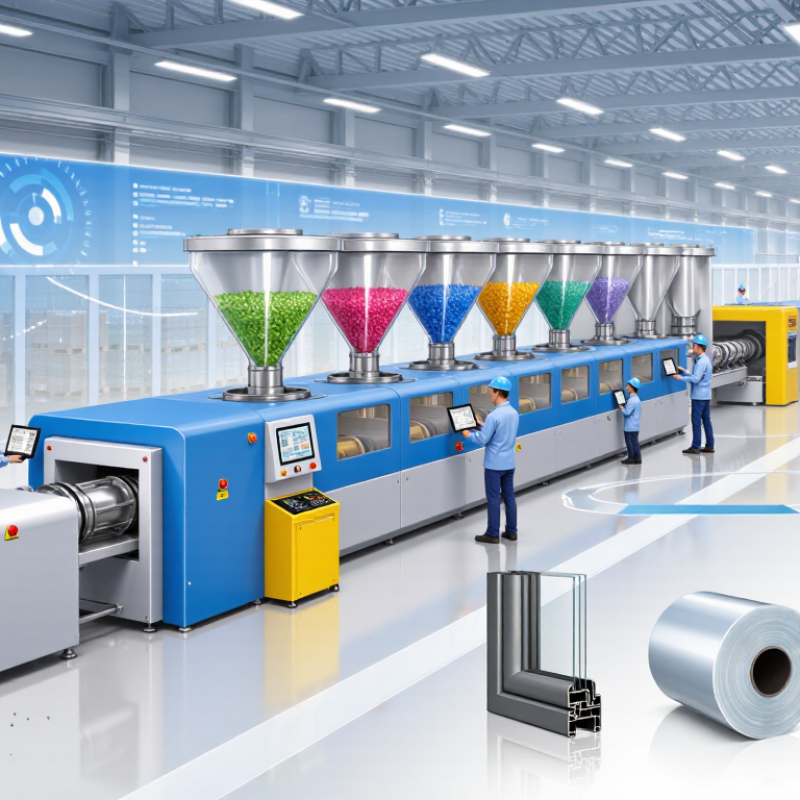
China Top 10 Plastic Extruder Manufacturers?

Overview of China’s Plastic Extrusion Industry

China’s plastic extrusion industry serves construction, packaging, agriculture, automotive, and household-product markets. Manufacturers produce pipes, profiles, films, sheets, and custom components using continuous processes. A typical line includes a hopper, heated barrel, screw, die, cooling section, and haul-off unit. Each stage affects output. Small changes in temperature or screw speed can alter dimensions, surface finish, and material strength.

The sector benefits from established supply networks for machinery parts, resins, tooling, and technical labor. This can make production flexible, but capability varies widely between factories. A polished sample alone proves little. Buyers should review process controls, material traceability, dimensional inspection records, and maintenance routines. For example, pipe production may require regular checks of wall thickness and ovality, while film lines need consistent gauge control. Actual results depend on the product design, resin grade, and operating conditions.

Automation and energy efficiency are receiving more attention, though upgrades require investment and skilled operators. Recycling-compatible formulations also create technical challenges; recycled feedstock can vary in color, moisture, and melt behavior. That sounds straightforward. It isn’t. A useful industry overview should look beyond factory size and quoted output, and ask how a supplier handles trial runs, defects, and process changes. Some answers are less tidy than a brochure suggests.

How Plastic Extruder Manufacturers Are Selected and Compared

Comparing Plastic Extruder Manufacturers in China

A useful comparison starts with the production task, not a supplier’s headline output. Define the resin, product dimensions, target throughput, and operating hours. Then request comparable trial data: kilograms per hour, energy used per kilogram, dimensional variation, and startup scrap. A glossy specification sheet is not enough. Ask for results using material similar to yours, including recycled content if relevant. OECD’s Global Plastics Outlook (2022) estimated that global plastic waste reached 353 million tonnes in 2019. That figure does not rank machinery suppliers, but it highlights why processing flexibility and material efficiency deserve scrutiny.

Inspect the details operators live with: screw and barrel wear, screen changes, temperature stability, control-system records, and access to spare parts. During a factory test, watch the melt leave the die and check the finished profile at several points—not just one favorable sample. Request references from plants with comparable products, then verify response times for technical support. Compare total cost across energy, maintenance, downtime, and expected service life, rather than purchase price alone. PlasticsEurope’s Plastics—The Fast Facts 2024 reported global plastics production of 413.8 million tonnes in 2023, reinforcing the scale and variety of processing needs. Still, no single scorecard fits every line. Some comparisons remain imperfect; real production conditions can expose gaps that a short test cannot.

Profiles of Ten Notable Plastic Extruder Manufacturers in China

China’s plastic-extrusion industry includes manufacturers serving very different production needs. A meaningful comparison should examine machine design, support, and proven applications, not just catalogue breadth. The ten profiles below are organized by specialization, not ranked. Details matter.

One profile centers on twin-screw compounding lines for mixing polymers and additives. Another builds pipe lines, where stable sizing and cooling affect finished dimensions. A third focuses on sheet extrusion for packaging and industrial panels. The fourth makes film lines, with winding consistency as a practical concern. A fifth specializes in custom profiles for construction and furniture. The sixth supplies pelletizing systems for processing production scrap. The seventh develops extrusion equipment for cable insulation. An eighth serves small-batch research and pilot production. A ninth integrates feeding, extrusion, calibration, and cutting equipment. A tenth focuses on upgrades, controls, and energy use.

These profiles suggest useful questions for buyers. Ask for sample output, material specifications, and operating data from comparable installations. Check whether technicians can diagnose screw wear, uneven melt flow, or unstable temperatures. A polished demonstration is helpful, but it cannot replace production records. Supplier capabilities also change over time, so verify current models and service arrangements directly. One limitation remains: specialization labels alone reveal little about build quality. Inspecting a running line can expose details that brochures miss.

China Top 10 Plastic Extruder Manufacturers? — Profiles of Ten Notable Plastic Extruder Manufacturers in China

This capability-based overview contains no company names or ranking claims. Each row describes a common extrusion-equipment specialization; materials and applications are general industry examples, not verified specifications for an individual manufacturer.

Profile Extrusion Specialization Typical Materials Typical Products and Applications Key Evaluation Considerations
01 Plastic pipe extrusion lines Commonly PVC, PE, or PP, depending on line design Plastic pipes for water supply, drainage, irrigation, and other piping systems Pipe diameter range, wall-thickness control, haul-off and cutting systems, and applicable product standards
02 PVC pipe and fitting extrusion equipment Rigid PVC compounds PVC pipes and related profiles used in building, drainage, and conduit applications Screw and barrel configuration, temperature control, calibration, and compatibility with the PVC formulation
03 PE and PP pipe production lines Polyethylene and polypropylene grades suitable for pipe extrusion Pressure and non-pressure pipes, subject to material grade and product specification Melt stability, cooling capacity, dimensional consistency, and support for the intended pipe standard
04 Plastic profile extrusion lines Often PVC, PE, or other thermoplastics selected for the profile design Profiles for construction, cable management, furniture, and related applications Die design, profile calibration, cooling layout, and the ability to maintain cross-section tolerances
05 Plastic sheet and board extrusion lines Material depends on the product; common options include PP, PE, PVC, and ABS Sheets and boards for packaging, fabrication, construction, and thermoforming feedstock Die-width requirements, roll-stack design, thickness uniformity, and surface finish
06 Blown film extrusion lines Commonly polyethylene grades, including LDPE, LLDPE, and HDPE, depending on film requirements Flexible film used in packaging, liners, and agricultural applications Die design, bubble stability, film-width control, cooling, and winding configuration
07 Twin-screw compounding and extrusion systems Thermoplastics and formulation-specific additives or fillers Compounded pellets for subsequent molding or extrusion processes Screw element arrangement, feeding and venting options, mixing needs, and downstream pelletizing method
08 Plastic recycling and pelletizing lines Recyclable thermoplastic feedstock; suitability depends on polymer type and contamination level Reprocessed pellets for use in compatible manufacturing applications Feedstock preparation, filtration, degassing, pelletizing method, and the required output quality
09 Wood-plastic composite profile lines Thermoplastics combined with wood flour or other plant-based filler, according to the formulation Decking, cladding, and other composite profiles Filler feeding, material mixing, wear-resistant components, and profile cooling and calibration
10 Specialty and customized extrusion systems Selected according to the product design and processing requirements Custom tubing, multilayer products, laboratory-scale output, or other application-specific products Written process specifications, trial runs, component selection, automation scope, and after-sales support

Major Extruder Types and Their Industrial Applications

Plastic extruders turn prepared resin into continuous products by heating, conveying, and shaping it through a die. Single-screw machines are common for pipes, sheets, and film made from materials such as polyethylene or polypropylene. Their straightforward design can support steady production and simpler maintenance. But consistency still depends on resin condition, screw design, and temperature control.

Twin-screw extruders are often selected when mixing matters as much as output. Intermeshing screws can disperse pigments, mineral fillers, or additives through a polymer compound. This makes them useful for compounding, masterbatch production, and some PVC processing. Co-rotating designs commonly support intensive mixing, while counter-rotating designs can suit certain profiles and pipes. Details vary by material and machine setup.

The die and downstream line matter, too. A pipe line needs controlled cooling and sizing; a blown-film line depends on stable melt flow and air-ring control. Small temperature swings can show up as uneven wall thickness or film gauge. Not glamorous, but costly. Buyers should compare usable output, changeover needs, energy demand, and service support—not just headline capacity. A high-output machine may be a poor fit if its process window is narrow or the plant runs many formulations. There is no universal winner; trial data with the intended resin is more useful than a brochure promise.

Key Factors for Evaluating Chinese Extruder Suppliers

When comparing Chinese plastic extruder manufacturers, look beyond advertised output and purchase price. Match the screw design, length-to-diameter ratio, and heating zones to your resin and target product. Ask for output figures tied to a stated material, screw speed, and product thickness. Numbers without conditions are hard to trust. Request drawings, component specifications, and a commissioning plan before discussing final terms. A supplier’s response can reveal how carefully it handles engineering details.

Check more than machine performance. Review quality-control records, test procedures, spare-parts availability, and service response times. If possible, inspect a running line using material similar to yours. Listen for changes in motor load and watch melt pressure and product thickness. Ask who trains operators and how faults are diagnosed remotely. A polished video is useful, but it cannot replace a repeatable factory acceptance test. I may give too much weight to tidy documentation; production can still expose gaps.

Tips: Share a product sample, resin data, target capacity, and shift schedule. Ask for a written test protocol. Keep it specific. Compare suppliers with the same checklist, then verify claims through records or a live trial.