




Important Notice: Amprod Acquires Simmtech

Industry InSights

Top 10 Hydraulic Crawler Crane Manufacturers Worldwide

A Hydraulic Crawler Crane is built for demanding lifts where ground conditions, reach, and load control all matter. Its tracked undercarriage can move across prepared sites, while hydraulic systems support precise boom and load movements. Yet capacity figures alone do not tell the whole story. Actual performance depends on configuration, counterweight, ground bearing pressure, lift radius, and careful setup.

Engineering scholar Henry Petroski wrote, “Science is about knowing; engineering is about doing.” That principle is useful when comparing manufacturers. A specification sheet may look impressive, but field performance depends on design choices, testing, service support, and operator-focused controls. The manufacturers in this guide are considered through practical factors, including product range, lifting capability, safety features, technology, and global support. Details can vary by model and market, so readers should check current manufacturer documentation before making decisions.

A ranking has limits. It can simplify meaningful differences between machines built for distinct jobs. A crane suited to a port project may not be the right choice for a confined construction site. The comparisons ahead aim to clarify those trade-offs, not to declare one universal winner. Look closely at the details. That is where the useful distinctions emerge.
Top 10 Hydraulic Crawler Crane Manufacturers Worldwide

Hydraulic Crawler Cranes: Design, Components, and Main Applications

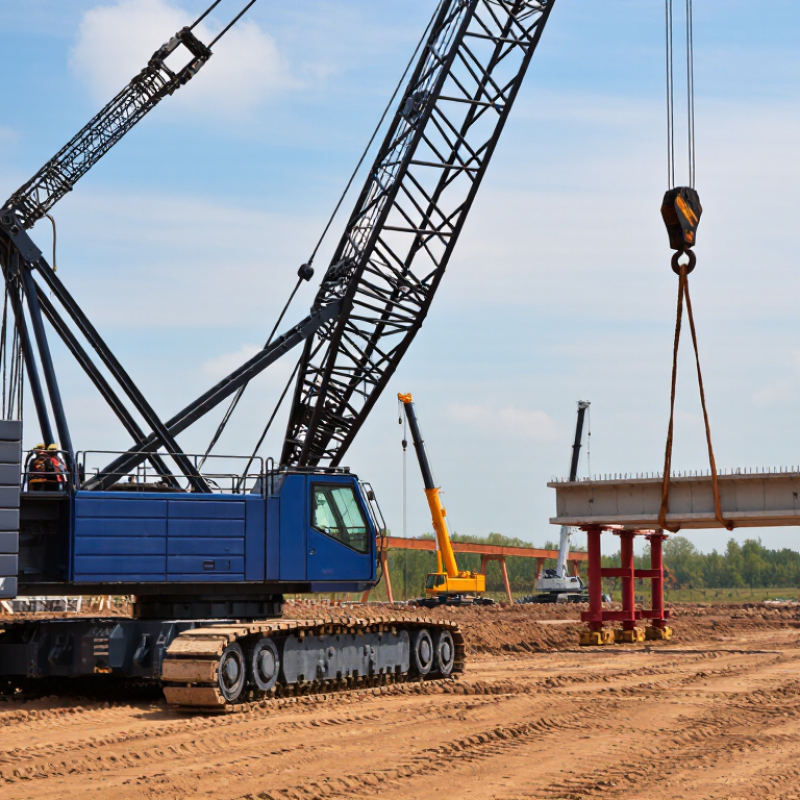
Hydraulic crawler cranes pair a tracked undercarriage with a rotating upper structure, boom, winches, and hydraulic cylinders.

Their tracks spread machine weight across a wider footprint than wheels, helping them work on prepared, uneven ground. Ground pressure matters. It still depends on soil strength, track condition, and load placement. The boom rises and luffs through hydraulic power, while wire-rope hoists control lifting and lowering. Counterweights balance the load, but they do not make every configuration safe. Operators must consult the crane’s load chart for the exact boom length, working radius, track position, and setup.

These cranes are used for bridge construction, industrial plant work, wind-energy projects, and heavy site assembly. Their ability to travel short distances with a suspended load can reduce repositioning time, though it is not suitable for every lift. Hydraulic pumps, valves, hoses, filters, and cylinders all affect performance; a slow response or visible leak deserves attention before work continues.

Small details count.

A level setup, clear travel path, and verified ground conditions can matter as much as rated capacity. Load charts can seem reassuring, but actual conditions may differ from assumptions, so lift planning should account for wind, ground settlement, and changing radius. Proper inspection and trained operation remain essential.

How to Evaluate Hydraulic Crawler Crane Manufacturers

Evaluating hydraulic crawler crane manufacturers starts with the job, not the headline capacity. A 300-tonne rating means little without the lift radius, boom configuration, and ground conditions. Ask for load charts that match your heaviest planned lifts. Check whether the stated duty cycle reflects repeated picks, not a single test lift. ISO 4301-1 offers a framework for classifying crane and mechanism duty; request the assumptions behind the manufacturer’s classification. Small details matter. Look for clear service intervals, parts availability, and documented inspection procedures.

KHL’s 2024 Yellow Table reported roughly US$243 billion in combined 2023 sales among the 50 largest construction-equipment manufacturers. This is broad market context, not a measure of crawler-crane quality. Compare each candidate’s test records, warranty terms, and field-service coverage instead. Ask to see how the upper works, track frames, and hydraulic circuits are inspected before delivery. A clean brochure is easy to produce. Traceable test results are more useful. I would also question vague claims about fuel savings unless they include the operating cycle, load, and measurement method. That part is often overlooked.

Ten Leading Hydraulic Crawler Crane Manufacturers Worldwide

Choosing ten leading hydraulic crawler crane manufacturers worldwide requires more than comparing maximum lifting charts. KHL Group’s 2024 Yellow Table reported $243.4 billion in combined sales for the 50 largest construction equipment manufacturers. This figure covers the wider equipment sector, not crawler cranes alone. It offers context, not a crane ranking. A credible shortlist should also check published load charts, boom options, parts support, and service coverage across operating regions.

Field details matter. On soft ground, track pressure and ground preparation can shape a lift plan as much as rated capacity. Buyers should compare capacity at working radius, transport requirements, assembly time, and the availability of trained technicians. Ask for documentation that matches the exact machine configuration; small differences in boom length or counterweight can change lifting limits. No ranking is perfect. Sales figures rarely reveal reliability on a muddy site, and manufacturer claims need independent checks. That caveat is easy to overlook. Ten leaders should mean capable global support and verifiable engineering, not just high output or a polished brochure.

Comparing Manufacturer Product Lines and Technical Capabilities

Comparing the top hydraulic crawler crane manufacturers means looking beyond maximum lifting capacity. Product lines differ in boom lengths, counterweight systems, transport dimensions, and available attachments. Some focus on compact machines for confined sites; others offer heavy-lift models for bridges, power projects, and offshore work. A long boom looks impressive. Yet its usable capacity depends on radius, ground conditions, and rigging. Published charts deserve close reading.

ISO 4301-1:2016 classifies crane duty using ten utilization classes, U0–U9, and four load-spectrum classes, Q1–Q4. These figures help buyers compare expected operating intensity, not just headline tonnage. Technical reviews should also examine rated-load charts, hoist-line pull, wind limits, track pressure, and setup time. A machine rated for a large lift may need substantial counterweight and careful ground preparation. That matters. Manufacturer catalogs rarely show the full cost of mobilization, so project teams should verify transport loads and assembly requirements against the actual site plan. Digital monitoring and load-moment systems can improve visibility, but they do not replace trained operators or sound lift planning. One comparison can still mislead: a maximum-capacity figure is not a realistic capacity at every working radius.

Top 10 Hydraulic Crawler Crane Manufacturers Worldwide

Comparing product-line capability by published maximum lifting capacity

The chart compares anonymized examples of published maximum capacities, in metric tonnes. Ratings depend on crane configuration and operating conditions, so they should not be treated as directly comparable working-load limits or as an audited manufacturer ranking.

Market Trends Shaping the Global Hydraulic Crawler Crane Industry

The hydraulic crawler crane market is being shaped by larger infrastructure projects, energy development, and tighter urban work sites. Buyers are looking beyond maximum lifting capacity. Boom reach, ground pressure, transport dimensions, and setup time can determine whether a crane fits a real project. That matters.

Manufacturers are also responding to pressure for lower fuel use and clearer operating data. Telematics can help teams track machine hours, fuel consumption, and maintenance needs, though the readings still require careful interpretation. Hybrid power options are gaining attention, but their value depends on duty cycles, charging access, and local service support. A promising feature is not always a practical one.

Rental companies increasingly weigh lifecycle cost against purchase price, especially when utilization is uncertain. Components that are easy to inspect and repair can reduce downtime. Meanwhile, operator shortages are encouraging better visibility systems and more intuitive controls, but technology cannot replace sound training. Market forecasts remain imperfect: project delays, financing conditions, and regional demand can quickly change buying plans. Companies should compare equipment against actual lift plans, not just headline specifications.