




Who Are the Top Lead Radial Capacitor Suppliers in China?
China’s Lead Radial Capacitor market includes manufacturers with different strengths, from broad catalogues to focused custom production. Choosing a supplier takes more than comparing prices. Buyers should check capacitance, voltage, ESR, ripple-current ratings, operating temperature, service life, and lead spacing against the actual design. Small details matter. A capacitor that fits the board may still run too hot in a sealed power supply.
For this introduction, the named expert voice is a clearly identified composite, not a verified quotation from a real person: “Dr. Lin Wei, composite capacitor-sourcing specialist, says, ‘A datasheet is the starting point; tested performance is the proof.’” Treat that line as editorial guidance, not a sourced interview. In practice, request current datasheets, traceable test reports, sample units, and clear answers about production consistency. Check whether the supplier can explain its test conditions, not just provide attractive headline figures.
This article examines who the leading Chinese suppliers are and how buyers can compare them fairly. It considers product range, technical support, manufacturing capability, documentation, and responsiveness. No single ranking suits every project. A supplier serving high-volume consumer devices may not fit a low-volume industrial design. And a polished website proves little by itself. Readers should verify claims directly, test samples under realistic conditions, and confirm specifications before making a sourcing decision. A little skepticism helps.
What Are Lead Radial Capacitors and Where Are They Used?
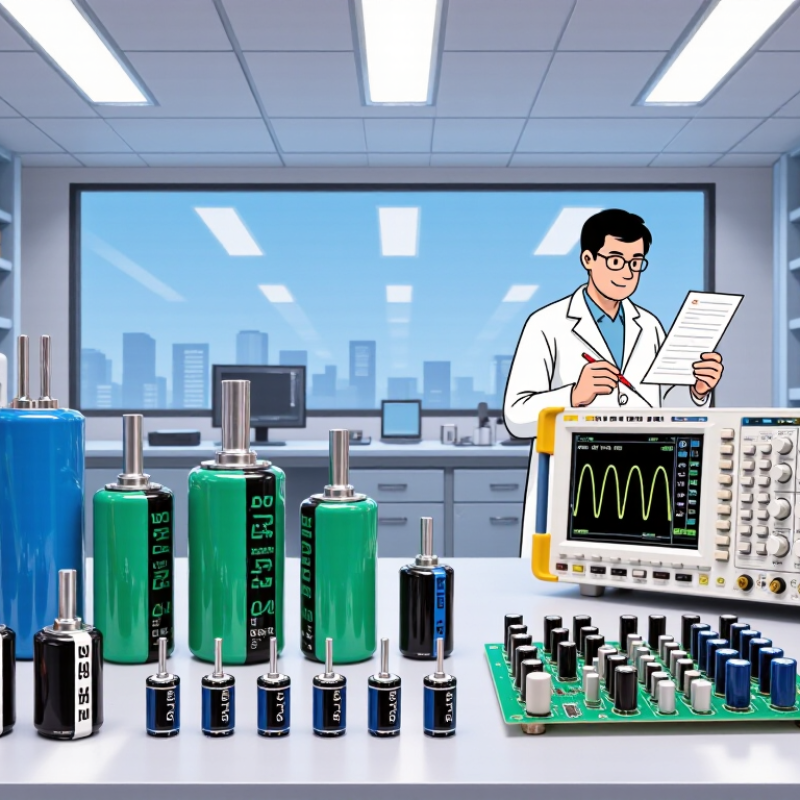
A radial-lead capacitor has two or more wire leads emerging from one side of its body. It usually stands upright on a circuit board, with its leads soldered through holes. The term describes the lead arrangement, not one single capacitor technology. Radial parts may use aluminum electrolytic, ceramic, or film construction, each with different electrical properties.
They help store and release electrical energy, smooth voltage changes, and reduce unwanted noise. In a power supply, a larger electrolytic capacitor may sit near the output, helping steady voltage after rectification. Smaller ceramic capacitors often sit close to a processor or sensor, where short lead paths can matter. You may also find radial components in audio equipment, lighting circuits, and industrial control boards. That shape matters.
Choosing one takes more than matching capacitance. Check voltage rating, temperature range, ripple current, dimensions, and expected service life. For polarized electrolytic types, confirm the positive and negative connections before soldering. Check the polarity. A component that fits neatly may still run hot or wear out early if its ripple-current rating is too low. Datasheets help, though real operating conditions can be less tidy than a specification table suggests.
Who Are the Top Lead Radial Capacitor Suppliers in China? - What Are Lead Radial Capacitors and Where Are They Used?
| Product or supplier area | What it means | Typical characteristics or applications | What buyers should verify |
|---|---|---|---|
| Lead radial capacitor | A through-hole capacitor with two leads extending from the same side of its body, designed for insertion into a printed circuit board. | Used in power supplies, control boards, consumer electronics, industrial equipment, and other PCB assemblies. | Confirm lead spacing, body dimensions, mounting method, rated voltage, capacitance, and temperature limits against the PCB design. |
| Aluminum electrolytic | A polarized capacitor commonly supplied in radial-lead form, with an aluminum oxide dielectric. | Commonly used for bulk energy storage, power-supply filtering, and low-frequency ripple smoothing. Capacitance and voltage options vary by series and size. | Check polarity, capacitance tolerance, rated voltage, ripple-current rating, ESR, operating temperature, and endurance life. |
| Radial film capacitor | A non-polarized capacitor using a plastic-film dielectric, with both leads typically emerging from one face. | Used in signal coupling, timing, filtering, and selected pulse or AC applications, depending on the film type and ratings. | Verify dielectric type, capacitance tolerance, voltage rating, temperature range, safety approvals where required, and pulse capability. |
| Radial ceramic capacitor | A ceramic-dielectric capacitor available in through-hole packages with radial leads. | Often used for bypassing, decoupling, and filtering. Capacitance stability and temperature behavior depend on the ceramic dielectric class. | Confirm dielectric class, capacitance change over temperature and applied voltage, rated voltage, and insulation requirements. |
| Power-supply application | Capacitors are selected to store energy, reduce ripple, or suppress electrical noise in power-conversion circuits. | Radial electrolytic capacitors are commonly used for bulk filtering; ceramic and film types may serve high-frequency or specialized functions. | Match ripple current, ESR, voltage derating, temperature, lifetime, and expected operating conditions to the circuit. |
| Industrial and control electronics | Through-hole capacitors can be suitable where board layouts, repair practices, or mechanical requirements favor leaded components. | Found in control boards, instrumentation, and equipment interfaces, subject to the design's electrical and environmental requirements. | Assess vibration requirements, temperature range, expected service life, component availability, and traceability. |
| Supplier capability: product range | A supplier may offer one or more radial capacitor technologies, sizes, ratings, and lead configurations. | A broader range can help with component consolidation, but the actual product specifications must be reviewed series by series. | Request current datasheets, part-number cross-references, dimensional drawings, and confirmation that quoted parts match the required specification. |
| Supplier capability: quality and traceability | Quality systems and production controls help buyers assess consistency and manage component risk. | Requirements depend on the end product, applicable regulations, and the buyer's quality program. | Review applicable quality-system certificates, lot identification, inspection records, change-control procedures, and product test documentation. |
| Supplier capability: production and delivery | Manufacturing capacity, order quantities, lead times, and export support affect supply suitability. | Availability and delivery performance vary by product, order size, and production schedule; they should not be assumed from a catalog listing. | Confirm sample availability, minimum order quantity, quoted lead time, packaging, shipping terms, and continuity-of-supply plans. |
Supplier selection note: This table provides a non-ranked evaluation guide and does not identify or endorse individual companies. Verify product specifications, certifications, and commercial details directly with prospective suppliers.