




Choosing reliable Solar Battery Box suppliers in China requires more than comparing factory prices. Buyers must examine design quality, production experience, safety testing, and after-sales support. A strong supplier should understand lithium battery protection, cable routing, ventilation, sealing, and installation conditions. These details matter when a box sits in a hot garage, a dusty workshop, or an outdoor energy system.
This guide introduces key suppliers and explains how to evaluate their capabilities. It considers material selection, enclosure strength, moisture resistance, fire-safety practices, and customization options. Factory audits, product samples, inspection reports, and clear technical drawings can reveal more than polished catalog photos. Certifications may support credibility, but buyers should verify their scope, validity, and connection to the actual product.
Supplier communication also deserves close attention. Reliable manufacturers answer questions about dimensions, terminal layouts, testing procedures, packaging, and replacement parts. They should explain limitations honestly. No supplier is perfect. A low-cost option may offer fewer custom features, while a larger manufacturer may require higher order volumes. That trade-off needs careful review.
Real experience often appears in small details. Can the supplier protect boxes during sea transport? Can it reproduce the same dimensions after several production batches? Can its engineers suggest a safer design without exaggerating performance? These questions help separate dependable Solar Battery Box manufacturers from temporary trading companies. The following overview provides a practical starting point for buyers seeking quality, traceability, and long-term cooperation in China.
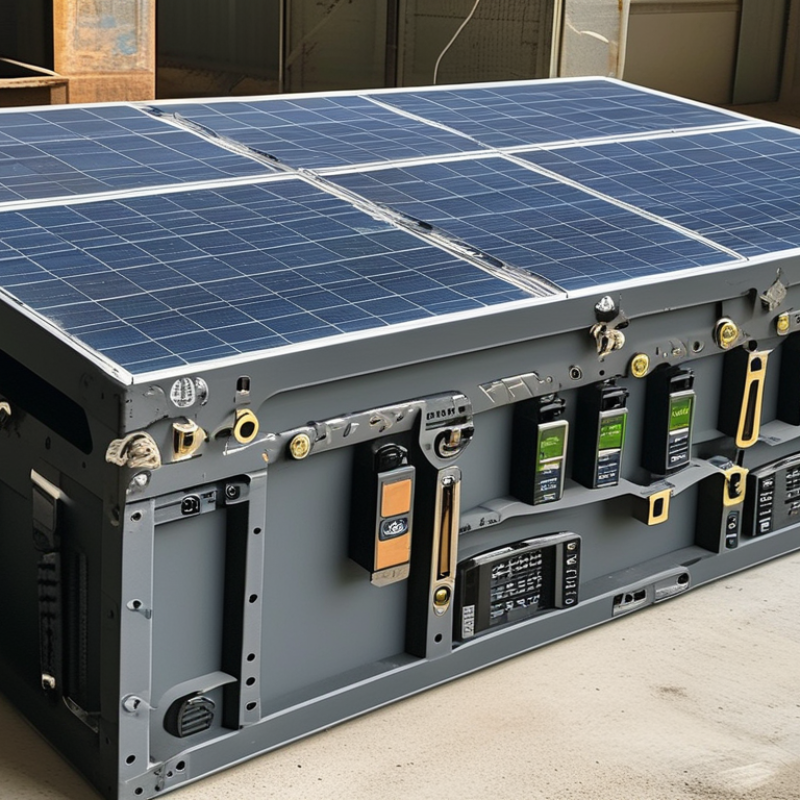
A solar battery box is a protective enclosure for energy storage batteries. It shields cells, wiring, and control parts from dust, moisture, impact, and temperature changes. Its role extends beyond simple storage. A well-designed box supports ventilation, fire-resistant materials, cable management, and safe maintenance access. It can also connect with a battery management system and inverter. Poor heat control may shorten battery life. That detail is often underestimated.
When evaluating suppliers in China, buyers should examine engineering records, material traceability, factory testing, and sample quality. Ask whether the enclosure matches the battery chemistry, capacity, and installation environment. Outdoor projects need suitable ingress protection and corrosion resistance. Indoor systems may require different ventilation and access features. A reliable supplier should provide clear drawings, test reports, installation guidance, and warranty conditions. It is easy to focus on price. That can be a costly mistake. I would also inspect production consistency, because one excellent sample cannot prove stable manufacturing.
Tips: Check welds, seals, hinges, and cable glands. Compare the box with real battery dimensions. Request temperature and protection test data. Confirm spare-part support before ordering. Small details matter. Recheck every document.

Who Are the Top Solar Battery Box Suppliers in China?
In supplier audits, the strongest solar battery box manufacturers show evidence, not polished promises. Begin with cell traceability, production capacity, and documented quality controls. Wood Mackenzie projects global energy storage deployments could reach 159 GW by 2028. That growth makes supplier stability increasingly important. Ask for audited financial information, monthly output, and recent delivery records. A low price can still hide weak testing or unstable materials.
Technical compliance deserves close attention. Review test reports for IEC 62619, IEC 63056, UN 38.3, and relevant enclosure protection ratings. Confirm whether reports cover the exact battery box model. Also examine thermal management, fire separation, BMS communication, and cycle-life testing. The International Energy Agency reported that battery storage deployment expanded sharply in 2023. However, report numbers do not guarantee field performance. Factory acceptance testing and sample validation remain necessary. No checklist is perfect.
Tips: Request three production samples from different batches. Inspect welds, cable glands, seals, labels, and screw torque. Compare measured capacity with declared capacity. Ask how warranty claims are investigated and resolved. Require clear spare-parts support, English technical files, and response-time commitments. A supplier should explain failure risks honestly, including cold-weather limits and installation errors. Those conversations often reveal more than a sales presentation.
| Evaluation Dimension | Recommended Benchmark for a Qualified Supplier | Evidence to Request | Why It Matters |
|---|---|---|---|
| Battery Chemistry | Lithium iron phosphate (LiFePO₄) for most stationary solar storage applications | Cell specification sheet, safety test reports, and material declaration | LiFePO₄ offers good thermal stability, long service life, and suitability for frequent charge-discharge cycles. |
| Common System Voltage | 12.8 V, 25.6 V, 51.2 V, or higher-voltage modular configurations, depending on the inverter system | Nominal-voltage definition, voltage range, and inverter compatibility list | Correct voltage matching is essential for safe integration with hybrid and off-grid inverters. |
| Usable Capacity | Clearly stated usable energy, commonly based on an 80% to 90% depth of discharge | Rated capacity, usable capacity, test conditions, and discharge cut-off voltage | Usable energy is more meaningful than nominal ampere-hours when comparing storage products. |
| Cycle-Life Rating | Typically 4,000 to 6,000 cycles or more under defined laboratory conditions | Cycle-life report specifying temperature, charge rate, discharge rate, depth of discharge, and end-of-life capacity | Cycle-life claims are only comparable when the testing conditions are disclosed. |
| Battery Management System | Protection against overcharge, over-discharge, over-current, short circuit, over-temperature, and cell imbalance | BMS specification, protection thresholds, balancing method, and fault-log examples | A properly configured BMS improves safety, battery life, and system availability. |
| Communication Interfaces | CAN or RS485 with documented communication protocols; optional monitoring through Wi-Fi, Bluetooth, or cloud gateways | Protocol document, inverter compatibility list, wiring diagram, and communication test record | Reliable communication enables state-of-charge reporting, alarms, and coordinated inverter control. |
| Enclosure Protection | IP65 or above for protected outdoor installations; the required rating depends on the installation environment | Ingress-protection test report and enclosure material specification | Higher ingress protection helps limit damage from dust, water, and outdoor exposure. |
| Operating Temperature | A commonly specified range is approximately -20°C to 55°C, subject to charge and discharge limitations | Temperature performance curve, low-temperature charging limits, and thermal-management details | Temperature directly affects available capacity, charging safety, and battery service life. |
| Safety and Compliance | Documentation aligned with applicable requirements such as UN 38.3, IEC 62619, relevant GB/T standards, and destination-market regulations | Valid certificates, laboratory reports, transport test summary, and product marking photographs | Compliance documentation reduces transport, installation, insurance, and market-entry risks. |
| Quality-Control Process | Traceable incoming-cell inspection, module matching, insulation testing, functional testing, and final aging or capacity testing | Quality-control plan, sample inspection records, serial-number traceability, and factory-audit results | Consistent production controls help reduce capacity variation and early field failures. |
| Warranty Terms | Commonly 5 to 10 years, with clearly defined cycle, throughput, capacity-retention, and operating-condition limits | Complete warranty document, exclusions, claim process, and regional service arrangements | A warranty is valuable only when performance conditions and after-sales responsibilities are transparent. |
| Customization Capability | Options for capacity, enclosure, connectors, communication settings, labels, firmware, and mounting configuration | Engineering-change process, sample approval procedure, minimum order quantity, and customization quotation | Flexible customization supports different inverter platforms and installation requirements. |
| Production and Delivery Capability | Stable production planning, documented lead times, export packaging, and secure lithium-battery shipping procedures | Production schedule, capacity statement, packaging specification, shipping documents, and on-time delivery records | Reliable fulfillment is critical for installers, distributors, and large-scale project deployment. |
| After-Sales Support | Technical documentation, remote troubleshooting, spare-parts support, firmware management, and responsive issue escalation | Service-level agreement, support contact structure, troubleshooting guide, and response-time commitment | Effective support reduces downtime and simplifies commissioning and maintenance. |
Note: Benchmark values are indicative industry reference points. Final specifications should be verified against the supplier’s current datasheets, test reports, certificates, warranty terms, and target-market requirements.
China’s leading solar battery box suppliers are supported by a deep energy-storage manufacturing base. The International Energy Agency reported that China held about 80% of global battery cell manufacturing capacity in 2023. Its Batteries and Secure Energy Transitions report also noted rapidly expanding stationary storage demand. This scale can support competitive enclosure production, short lead times, and customized designs.
China’s National Energy Administration reported 277.17 GW of new solar capacity in 2024. That growth increases demand for outdoor Battery Cabinets, wall-mounted boxes, and integrated storage enclosures. Reliable suppliers should provide clear IP ratings, thermal management details, corrosion testing, and documented production controls. In my experience, a factory audit reveals more than a polished catalog. Check welding consistency, cable-gland sealing, emergency access, and sample traceability. A perfect supplier rarely exists. Specifications still need independent verification.
Tips: Ask for test reports covering ingress protection, fire behavior, and electrical safety. Confirm whether testing applies to the complete enclosure or only its components. Review production capacity against your monthly order volume. The IEA data shows manufacturing strength, but capacity does not automatically guarantee quality. Request a pilot order, inspect it physically, and record every design change. That extra step may feel slow. It can prevent expensive field failures.
China’s annual newly installed solar PV capacity indicates the scale of the domestic market served by solar battery box suppliers.
China added approximately 48.2 GW of solar PV capacity in 2020, rising to 277.17 GW in 2024. This rapid expansion reflects strong demand for related equipment, including solar battery boxes, energy-storage enclosures, protection systems, and thermal-management solutions. Data source: China National Energy Administration annual power industry statistics.
China’s leading solar battery box suppliers usually serve three segments: wall-mounted home units, rack-mounted commercial systems, and containerized storage. Product selection is expanding quickly. The International Energy Agency’s Batteries and Secure Energy Transitions report states that global battery storage capacity may need to grow fourteenfold by 2030. This demand is pushing suppliers to improve safety, cycle life, and delivery speed.
Lithium iron phosphate remains common for residential and commercial boxes because it offers strong thermal stability and long service life. High-voltage stacked systems can reduce cable losses, while low-voltage models simplify small home installations. Look for a smart battery management system, cell-level monitoring, CAN or RS485 communication, and clear inverter compatibility. Useful details include IP65 protection, forced-air cooling, and a readable state-of-charge display.
Customization is where supplier quality becomes visible. Buyers can request cabinet dimensions, communication protocols, branded interfaces, heating pads, and parallel battery expansion. BloombergNEF reported that average lithium-ion battery pack prices fell to about 115 dollars per kWh in 2024, but lower prices do not guarantee better value. Ask for third-party test reports, cycle data, factory traceability, and warranty conditions. Some suppliers provide impressive laboratory figures. Field performance can differ. That gap deserves careful checking.
Choosing a Chinese solar battery box supplier requires more than comparing prices. The strongest suppliers usually combine stable manufacturing, clear engineering records, and responsive communication. Request factory photos, production videos, and recent quality reports. Then verify whether those materials match the actual facility.
Look closely at enclosure design. Ask about metal thickness, coating performance, sealing methods, cable entry points, and heat management. For outdoor projects, confirm the stated protection rating through independent test documents. Check compatibility with your battery chemistry, inverter system, mounting structure, and local installation requirements. A capable supplier should provide drawings, tolerances, wiring guidance, and controlled sample changes. Vague answers are warning signs.
Inspect the quality system, not only the finished box. Ask how incoming materials are checked, how weld strength is monitored, and how failed units are recorded. An on-site audit or third-party inspection can reveal more than a polished presentation. I once focused too heavily on a low quotation and overlooked packaging details. Several corners arrived scratched. That mistake changed my evaluation process.
Compare production capacity with your actual order size. A very large factory may not prioritize a small project. A smaller supplier may offer better attention but weaker backup capacity. Discuss lead times, spare parts, warranty handling, and payment milestones in writing. Request a pilot order before committing to long-term volume. No supplier is perfect. Your goal is a traceable, technically suitable, and dependable partnership.