Top 10 Uses of Aerogel Ceramic Fiber Insulation Paper
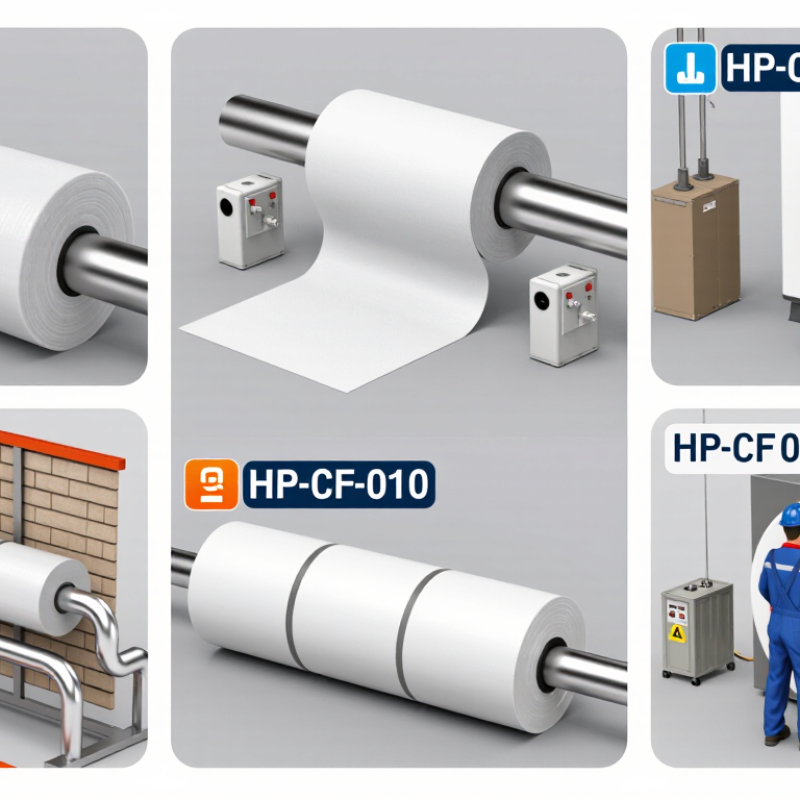
Aerogel Ceramic Fiber Insulation Paper HP-CF-010 is designed for applications where heat control, limited space, and lightweight construction all matter. Its thin, flexible form may help insulate equipment surfaces, pipe sections, furnace components, and other areas exposed to elevated temperatures. Yet material choice should never rely on a product name alone. Operating temperature, compression, moisture, and installation conditions can change real-world performance.
This guide explores ten practical uses, from industrial thermal barriers to insulation around compact equipment. Each application calls for a close look at the system, not just the insulation layer. A narrow gap beside a hot pipe, for example, creates different demands than a broad furnace lining. Details matter. Product specifications, safety guidance, and suitable test data should be checked before installation. The examples are intended to support informed evaluation, not replace engineering review. Some uses may sound straightforward, but actual performance can be less predictable than a catalog suggests. That is worth admitting. By examining common settings and their constraints, readers can better judge whether this paper fits a particular design and what questions to ask suppliers or qualified installers.
Thermal Insulation in Furnaces, Kilns, and Heat-Treatment Equipment
Top 10 Uses of Aerogel Ceramic Fiber Insulation Paper
Furnaces, kilns, and heat-treatment lines need insulation that limits heat loss without taking up much space. Aerogel ceramic fiber insulation paper can serve as a thin hot-face layer, backup insulation, or a barrier around doors and access panels. Its low thermal conductivity can help reduce heat transfer through tight, flat areas. The U.S. Department of Energy’s process-heating sourcebook estimates that process heating uses about two-thirds of manufacturing energy. Small gaps matter. A poorly fitted seam can undermine an otherwise carefully designed lining.
In a furnace, installers may place paper behind a more durable refractory lining, where it helps slow heat moving into the shell. In kilns, it can suit compact joints and removable panels, while heat-treatment equipment may use it around covers or insulated enclosures. The International Energy Agency’s Energy Efficiency 2023 report estimates that industry accounts for roughly 37% of global energy consumption, making efficient heat management a significant opportunity. But insulation is not a substitute for sound furnace design. Check the material’s tested service temperature, atmosphere compatibility, compression behavior, and installation guidance. I would not assume a thinner layer always performs better; repeated cycling and damaged edges can change results.
Heat Protection for Industrial Pipes, Tanks, and Process Systems
Industrial pipes, storage tanks, and process equipment lose heat through exposed surfaces. Aerogel ceramic fiber insulation paper can help protect these hot zones where conventional insulation is too bulky. Its thin, flexible form suits tight pipe runs, tank nozzles, and uneven transitions. Hot to the touch? A properly designed insulation layer can lower surface temperatures, but it does not replace guards or safe access planning.
The U.S. Department of Energy’s Improving Process Heating System Performance sourcebook estimates that process heating uses about two-thirds of manufacturing energy. Its steam distribution guidance also reports potential energy-cost savings of 3% to 13% from insulating steam lines. These figures describe insulation opportunities, not guaranteed savings from aerogel paper. Actual results depend on operating temperature, coverage, and installation quality.
In the field, crews should check the paper’s temperature rating against startup and upset conditions, not only normal operation. Keep seams tight, stagger joints where practical, and protect the layer with suitable cladding in wet or dusty areas. Small gaps matter. Inspect around supports and flanges, where heat bridges and compression can undermine performance. Aerogel is not magic; poor detailing can still leave hot spots, and the best insulation thickness may conflict with access or maintenance needs.
Fire Barriers in Buildings, Electrical Cabinets, and Equipment
Aerogel ceramic fiber insulation paper can provide a thin thermal barrier where space is limited. In buildings, it may help protect nearby surfaces around heating equipment, ducts, and service areas. The paper’s low heat transfer can slow temperature rise, but performance depends on thickness and installation. Details matter. It should be used within a fire-rated assembly tested for the intended application, not as a substitute for approved firestopping at wall or floor penetrations.
Electrical cabinets often contain components that produce concentrated heat. A properly selected layer can help shield adjacent wiring or enclosure surfaces. Keep ventilation paths clear, and follow the equipment maker’s required clearances. Cutting or handling fibrous materials can create dust, so consult the product safety information and use suitable protective measures. A cabinet is a system; insulation alone does not guarantee fire safety.
On industrial equipment, the paper can line hot zones or separate heat sources from sensitive parts. Check operating temperatures, joint design, compression, moisture exposure, and vibration before specifying it. Gaps can become weak points. Product data and relevant test reports should guide selection, especially where a fire barrier must maintain performance over time. I would also inspect edges and seams after installation, since real-world wear is easy to underestimate.
Thermal Management in Batteries and Electronic Devices
Top 10 Uses of Aerogel Ceramic Fiber Insulation Paper: Thermal Management in Batteries and Electronic Devices
Battery packs have little room for bulky insulation. Aerogel ceramic fiber paper can provide a thin thermal barrier between cells, modules, or nearby structural parts. In a real pack, placement matters: a narrow gap near a cell edge may allow heat to travel around the barrier. Designers should assess the complete assembly, not just the material’s advertised thermal conductivity. Space is tight.
The paper may also help slow heat transfer toward sensors, wiring, and enclosure walls. In electronic devices, it can be fitted around heat-sensitive components or used to separate warm power electronics from adjacent circuits. It does not replace a heat sink or cooling system. Those manage operating heat; insulation helps control where that heat moves. A useful detail is the cut edge: rough trimming can leave gaps that reduce coverage.
Material grade, thickness, compression, and exposure to moisture can change performance. Engineers should check test data for the intended temperature range and verify fit after vibration and aging tests. Electrical insulation should also be confirmed for the specific grade; ceramic content alone is not enough. Even a well-tested layer cannot guarantee that battery heat will stay contained. That limitation deserves attention during pack-level safety testing.
Lightweight Insulation in Automotive, Marine, and Aerospace Systems
Aerogel ceramic fiber insulation paper suits applications where heat control and low mass must coexist. In automotive systems, it can line EV battery modules, battery-pack enclosures, cabin floors, and firewall zones. It may also shield nearby components from exhaust heat. The IEA reported nearly 14 million electric cars sold worldwide in 2023, about 18% of total car sales. More battery packs mean more attention to thermal barriers, though insulation alone cannot prevent every failure. Weight matters.
Marine uses include engine-room bulkheads, exhaust ducts, and hot-fluid pipes. The IMO’s Fourth Greenhouse Gas Study estimated that shipping produced 2.89% of global human-caused greenhouse gas emissions in 2018. Better insulation can help reduce heat loss around machinery, but installation quality and maintenance still matter. In aerospace systems, potential uses include cabin wall panels, avionics equipment bays, and thermal shielding around ducts or engine-adjacent zones. Thin insulation can preserve space, yet vibration, moisture, and temperature cycling need testing.
Tips: Check the paper’s temperature rating, thickness, and compression behavior against the actual assembly. Seal cut edges, inspect for gaps, and test under vibration and thermal cycling. A neat fit helps; it is not a substitute for system-level safety testing.