




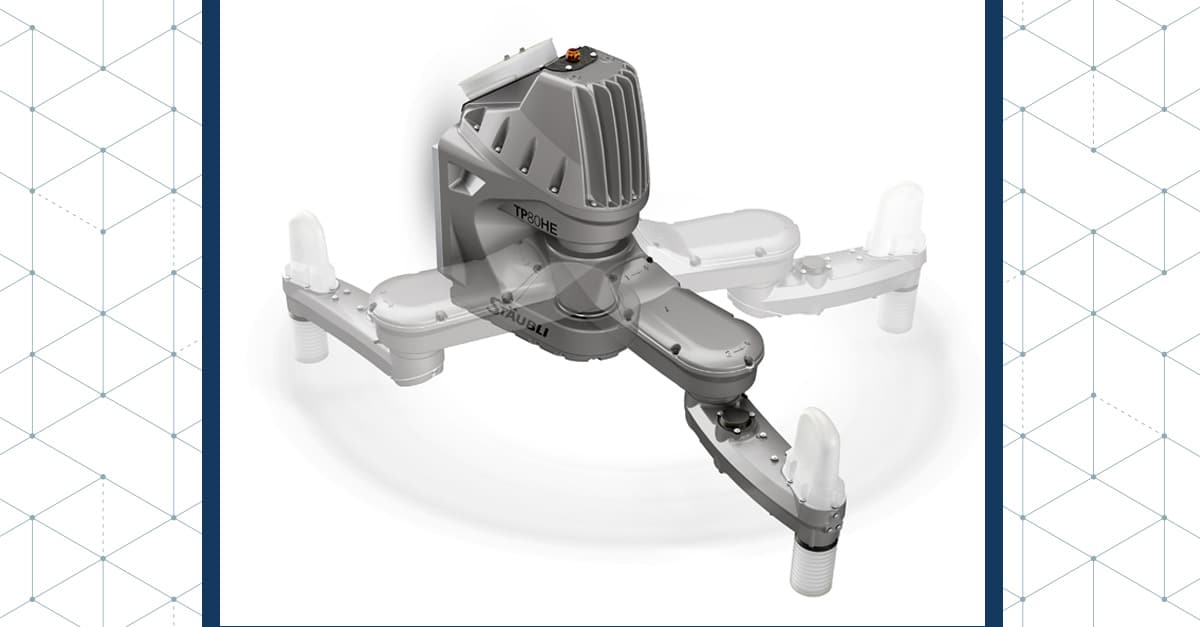
This article is part two of three in a series focused on helping food processors learn more about HE robotics integration, including the history behind food-grade robotics, the benefits of robotics and tips on vetting integrators and robotics producers. Click here to read part one–The History of HE Robotics.
Labor isn’t getting any easier to find. Labor costs aren’t going down. And downtime continues to be a huge issue for food processors.
As food processors are searching for ways to overcome these issues, one key solution is becoming more and more popular–robotics.
Now that you’ve learned about EnSight Solutions and Stäubli Robotics and the history of HE robotics, it’s time to delve deeper into mechatronics and look into some of the biggest questions food processors ask when considering robotics.
What’s the ROI?
Every organization wants to know their return on investment (ROI) for any capital expenditure, so it’s no surprise it comes up in regard to integrating robotics.
Quality solutions aren’t cheap! Let’s just get that out of the way right now. Not only are they extremely complex machines, they require a great amount of skill and experience to build and program correctly. Just like any other machine, organizations get what they pay for. This is especially true for food processors, as food-grade robotics are designed to withstand their tough environments.
Instead of focusing on the price tag of the robotics, food processors should look at the ROI on those costs.
In most cases, organizations can easily prove the ROI of a robotics integration.
To start, organizations can look at their labor costs. How much is the organization paying someone to do a repetitive and/or dangerous job for one shift a day? If a robot was installed in that position, the organization could move their team member to a more value-added position. They can also run the robot for a second shift, possibly even a third, and more days a week. How much more product can the organization produce by doing making that change? How much less downtime would that organization have if they were running robots in key processes?
ROI depends on more than just labor costs and manufacturing efficiency, too!
Product quality and worker safety are two other key components of ROI. Robotics are able to perform the exact same tasks over and over again, which eliminates the quality risks associated with tired workers. This in turn means consistent quality from the beginning all the way through the end of the shift. Safety is enhanced because workers aren’t performing repetitive movements through an entire shift.
How will robotics affect current team members?
One concern that many organizations and employees express is how the robotics are going to affect team members.
Robots aren’t “replacing” people and they’re not “taking” jobs.
Instead, robots allow organizations to place a robot in dangerous or highly repetitive (which in itself can be dangerous) areas that aren’t a great fit for a human worker. From picking and placing small foods into containers, reorienting product or deboning meat, robots can perform a number of these types of duties–and thanks to Stäubli, they can follow the same washdown and sanitation procedures as the rest of the machines in the line.
So, what happens to those human workers? Does the organization just get rid of the employee?
Absolutely not. In fact, EnSight and Stäubli have integrated robotics systems into a number of food processing organizations. Instead of firing the employees when their positions in the process were automated, the organization retrained and relocated those employees, putting them in better, safer positions that also brought more value to the organization. In some of those cases, the team members were trained in how to program and maintain the robots!
How does robotics integration affect productivity?
Robots don’t take sick or vacation days. They don’t get tired. They don’t call in due to inclement weather.
Humans do.
There is nothing wrong with that, but when organizations are having issues filling positions, any time off can result in downtime. And downtime often results in lost earnings.
Robots can help with that. Organizations can place them in key positions to ensure that jobs get done no matter what.
Depending on the position, robots can sometimes work faster than humans, especially in regard to pick-and-place situations. This is especially true in repetitive situations where human workers will get tired as the shift goes on.
Plus, as mentioned earlier, organizations can run robots for multiple shifts without any issues, which means they can produce more than ever.
How hard are robots to use and keep?
Repeatability is one of the greatest things about a robot. Day in and day out, the robots will do what they’re programmed to do over and over again.
In that aspect, robots are easy to use! You just tell them what to do, and they do it until you tell them to stop.
As for programming the robots to do their jobs, yes, it can be complex. But, reputable robotics manufacturers and integrators will help with that initial programming, and they can help with reprogramming them down the road, if needed.
The same goes for maintenance. The robotics manufacturer and integrator can provide details on the robot’s maintenance needs up front and down the road. Many offer maintenance plans, too.
In summary, robotics systems can help food processors overcome labor shortages and improve efficiency in today’s volatile industry, while also helping organizations prepare for future challenges.
EnSight and Stäubli can help as well. We can apply our vast industry knowledge and experience to help processors take a close look at their processes to identify points for improvement. Then, our teams can recommend automation solutions that fit the organization’s needs. In the end, the organization will have a unique automation solution that can help them, their employees, their product and their bottom line for years to come.
If you’re interested in learning more about EnSight, Stäubli and our robotics integration services, please contact us.