



Choosing among the 7 best case packing systems requires more than comparing brochures or hourly output. Global buyers need equipment that matches product shape, carton dimensions, factory space, labor skills, and regional service support. This overview examines proven packing approaches, including robotic, intermittent-motion, continuous-motion, and wraparound systems. Each option serves a different production reality. Rigid cartons may need controlled loading. Fragile containers may require gentle robotic placement. High-volume lines often favor repeatable automation, but speed alone can hide costly weaknesses.
The evaluation focuses on changeover time, packing accuracy, machine access, energy use, guarding, and system integration. It also considers conveyors, case sealers, vision inspection, and warehouse connections. Supplier experience matters too. Buyers should review testing records, spare-parts availability, operator training, and remote support across time zones. Request samples using your own products and cartons. Small trials reveal problems that factory videos rarely show. A machine may reach its rated speed yet struggle with dusty surfaces, uneven cases, or frequent size changes. That may not reflect poor technology. It may signal a weak application fit. Claims should be checked through acceptance tests, maintenance records, and long-term cost estimates. No single system suits every market. Careful review still matters. This guide offers a practical starting point for selecting reliable case packing systems, while allowing room for local engineering judgment and honest reassessment before purchase.
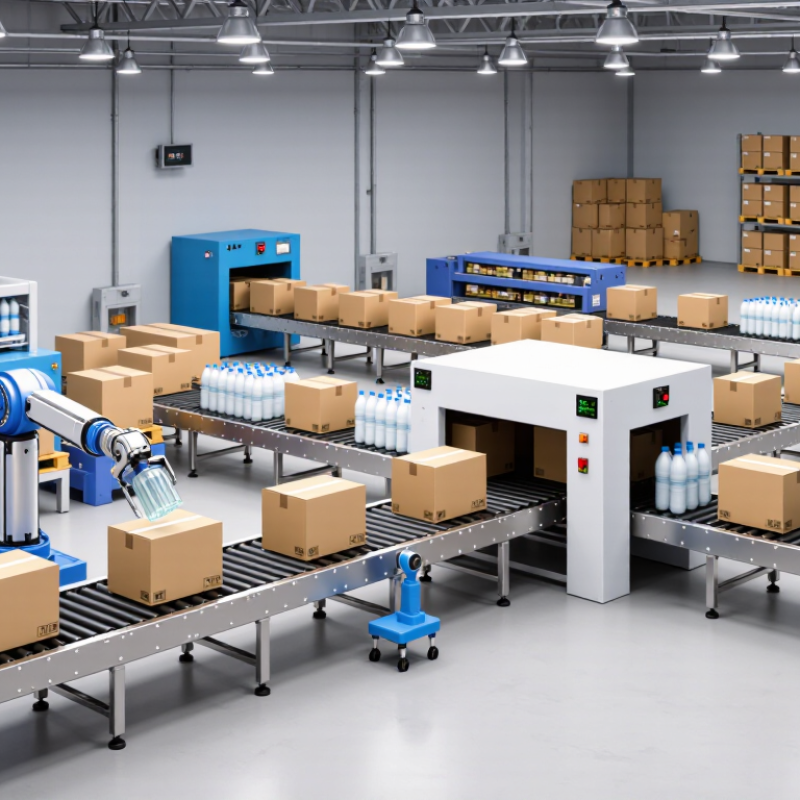
The seven best case packing systems depend on product geometry, speed, and changeover discipline. An RSC case packer erects regular slotted cartons, loads products, and seals them efficiently. It suits stable case sizes and familiar distribution routes. Tray packers leave products partly exposed, improving shelf visibility and reducing corrugated material. Wraparound systems fold one printed blank around grouped products, creating strong retail-ready packs.
Drop packers place products vertically into open cases through controlled motion. They work well for bottles, cans, and rigid containers. Top-load packers lower products into cases from above, while side-load systems insert products horizontally. Robotic case packing adds flexible picking, useful when formats change frequently. It also demands careful gripper design. Small product shifts can damage the entire packing pattern.
PMMI’s 2024 State of the Industry report valued U.S. packaging machinery shipments above 10 billion dollars in 2023, showing the scale of automation investment. The International Federation of Robotics reported 541,302 industrial robots installed worldwide in 2023. These figures support automation, but they do not make every system economical. A robotic cell may reduce labor pressure, yet a simple RSC machine can win on maintenance and payback. I have seen elegant layouts fail because operators could not access case magazines safely. A neat spreadsheet can still lie. Test real products, damaged cartons, wet floors, and rushed changeovers before selecting the equipment.
Representative nominal throughput by system type
Throughput is shown in cases per minute. Values are representative industrial benchmarks for standard case sizes and operating conditions; actual performance depends on product format, case dimensions, pack pattern, and automation level.
Global buyers should compare output, not just machine labels. Robotic pick-and-place systems suit mixed products and can reach 20–80 cases per minute. They offer flexible changeovers, but programming and gripper testing require skilled technicians. Wraparound packers often run 40–120 cases per minute with compact layouts. They need accurate carton blanks and stable product spacing.
Top-load systems handle fragile or irregular items with gentle loading. Their usual range is 20–60 cases per minute, with moderate changeover time. Horizontal side-load packers can run 30–100 cases per minute and use fewer operators after setup. Tray packers support retail-ready formats, but tooling changes may slow smaller batches. Drop packers are simple and affordable for uniform products, usually reaching 20–70 cases per minute. They need careful height control.
Floor space can change the decision. A compact intermittent machine may fit beside an existing conveyor, while a high-speed robotic cell needs safety clearance and pallet access. Labor demand is not zero. Operators still inspect cartons, replenish blanks, clear faults, and verify seals. Measure changeover with real cartons, not an empty test cycle. In practice, the advertised 120 cases per minute may fall near 85 when sizes vary. That gap deserves attention. A timed factory trial, including cleaning and minor jams, gives more reliable data than a sales sheet.
For global buyers comparing case packing systems, OEE offers a clearer view than speed claims. ISO 22400 defines OEE through Availability, Performance, and Quality. Availability measures productive runtime against planned time. Performance compares actual output with ideal cycle speed. Quality tracks accepted cases against total production. The three values multiply into one practical indicator.
Deloitte’s 2023 Smart Manufacturing and Operations Survey found that 86% of manufacturers expect smart operations to become a major competitiveness driver within five years. That expectation makes reliable machine data essential. A case packer may run at 30 cases per minute, yet frequent changeovers can weaken Availability. Misaligned cartons reduce Performance. Damaged packs lower Quality. Buyers should request timestamped loss records, not only maximum-speed figures. ISO 22400 also helps compare systems across plants, although local definitions still require careful review.
Tips: Install sensors at infeed, packing, and discharge points. Record micro-stops separately from planned downtime. Review OEE by product size and shift. A weekly average can hide difficult changeovers. My practical caution is simple: perfect OEE data is rare. Operators may miss manual rejects, and software may classify stops incorrectly. Validate the dashboard against physical counts before approving a system. Industry benchmarks often cite 85% OEE as “world class,” but that figure is not universal. It should guide questions, not replace site-specific evidence.
| Rank | Case Packing System | Typical Case Format | Best-Fit Applications | Indicative Rated Speed | Availability ISO 22400 KPI |
Performance ISO 22400 KPI |
Quality ISO 22400 KPI |
Calculated OEE | Typical Changeover | Key Buying Consideration |
|---|---|---|---|---|---|---|---|---|---|---|
| 1 | Robotic Top-Load Case Packer | RSC cases, trays, wraparound cases, mixed layer patterns | Flexible secondary packaging with multiple SKUs, pack patterns, or product orientations | 10–30 cases/minute | 88–94% | 80–90% | 99.0–99.8% | 70–85% | 15–45 minutes | Strong flexibility and recipe control; verify robot payload, end-of-arm tooling, and vision requirements. |
| 2 | Intermittent-Motion Top-Load Packer | Pre-formed or erected cases with regular product patterns | Medium-speed lines requiring repeatable layer loading and compact equipment footprints | 15–40 cases/minute | 90–95% | 85–93% | 99.2–99.8% | 76–88% | 20–40 minutes | Good balance of cost, control, and reliability; confirm product accumulation and case squareness. |
| 3 | Side-Load Case Packer | Cartons, pouches, bottles, cans, and flow-wrapped products | Products that load efficiently through the side of a regular-slotted container | 15–60 cases/minute | 89–95% | 82–94% | 99.0–99.7% | 73–89% | 15–35 minutes | Efficient for consistent product dimensions; check friction, product stability, and case flap control. |
| 4 | Wraparound Case Packer | Flat blanks formed around grouped products | Beverage multipacks, cans, cartons, jars, and retail-ready packaging | 20–80 cases/minute | 88–95% | 85–95% | 99.2–99.8% | 74–90% | 20–60 minutes | Reduces pre-erected case handling; assess blank quality, glue performance, compression, and board tolerances. |
| 5 | Continuous-Motion Case Packer | High-volume regular cases or wraparound cases | Stable, high-throughput production with limited SKU variation | 40–120 cases/minute | 90–96% | 88–97% | 99.3–99.9% | 78–93% | 30–90 minutes | Highest throughput potential; requires accurate timing, reliable product spacing, and disciplined maintenance. |
| 6 | Case Erect, Pack, and Seal Integrated Cell | RSC cases erected from blanks, automatically loaded and sealed | End-to-end automation where labor reduction and line integration are priorities | 12–50 cases/minute | 86–94% | 82–93% | 98.8–99.7% | 70–87% | 25–60 minutes | Reduces manual handling; evaluate blank feeding, adhesive or tape consumption, guarding, and downstream interfaces. |
| 7 | Flexible Robotic Collating and Case-Packing Cell | Mixed products, mixed counts, trays, cases, and retail-ready formats | High-SKU environments, contract packing, frequent product changes, and customized case configurations | 5–25 cases/minute | 84–93% | 75–90% | 98.5–99.7% | 62–84% | 5–25 minutes | Excellent format flexibility; confirm software validation, recipe management, gripper changeover, and operator training. |
Global buyers often compare seven case packing systems by speed, footprint, and changeover time. Compliance deserves equal attention. A fast machine is not useful if its records cannot survive a customs or safety review. For ISO 9001, request controlled drawings, inspection plans, calibration records, and corrective-action evidence. Do not accept a certificate alone. Traceability should connect each packed case to materials, settings, and inspection results.
CE verification requires documented conformity assessment, risk evaluation, a technical file, and an appropriate declaration. The machine should include safety labels, guarding, emergency stops, and readable instructions. UL requirements may involve electrical construction, components, wiring, and the intended installation market. Ask for the exact standard scope. An impressive logo proves little without test reports and current documentation. Packaging regulations add another layer. Check case materials, recycling marks, timber treatment, labeling, dimensions, and destination-specific waste rules.
During supplier reviews, test the system with your real cartons, film, product weights, and line speed. Record jams, seal quality, barcode readability, and operator access. Small failures become expensive after shipment. Request sample documents before purchase, not after installation. Some suppliers answer quickly but provide incomplete evidence. That weakness should remain visible in your evaluation. Independent inspection can confirm claims, although it adds time and cost. I would rather delay a decision than inherit unclear compliance responsibility.
Global buyers should rank the seven best case packing systems by five-to-ten-year total cost of ownership, not purchase price. Build the model around annual cases, operating shifts, labor, utilities, maintenance, and expected downtime. The IEA’s Energy Efficiency 2023 report identifies industry as responsible for about 37% of global final energy consumption. Energy is not free. Measure motor loads, compressed-air demand, standby consumption, and changeover losses during factory acceptance testing. The U.S. Department of Energy reports that compressed-air leaks can waste 20–30% of compressor output. A small leak can quietly become a large operating expense.
Service evidence matters more than polished brochures. Request five years of uptime records, response-time commitments, technician coverage, and a complete spare-parts bill of materials. Price critical components separately, including sensors, drives, belts, grippers, and safety devices. Compare local inventory with international shipping times and customs exposure. The DOE Operations & Maintenance Best Practices guide supports planned maintenance, yet actual savings vary by plant, training, and workload. That caveat matters. A spreadsheet can still lie. Use your own failure history, then test each supplier’s assumptions against a pilot run. Include software support, obsolete-part risk, operator training, and energy-price scenarios. Service wins quietly. A cheaper machine may become expensive after one unavailable drive or repeated carton jams.