




10 Best Industrial Automation Systems for Manufacturers
Industrial automation systems have moved beyond isolated machines. They now link programmable logic controllers, sensors, robots, supervisory control software, and production data. At a packaging line, that can mean a photoelectric sensor detecting a misaligned carton, a controller stopping the conveyor, and an operator seeing the fault on a nearby screen. Small details like these shape uptime, product quality, and worker workload.
The International Federation of Robotics reported 4,281,585 industrial robots operating in factories worldwide at the end of 2023. Its World Robotics 2024 report also recorded 541,302 new installations that year. These figures show the scale of factory robotics, though robots are only one part of automation. Still, adoption alone does not prove a system is right for every plant.
This guide compares 10 industrial automation systems for manufacturers, from control platforms to robotics and manufacturing execution software. The practical differences matter: existing equipment compatibility, integration effort, support availability, cybersecurity, and the skills required to maintain each system. A polished demonstration may not reveal the downtime involved in deployment. That deserves scrutiny. No single platform fits every factory, and published performance claims should be checked against site-specific trials, reference customers, and total lifecycle costs. The best choice is the one that works reliably on the actual production floor.
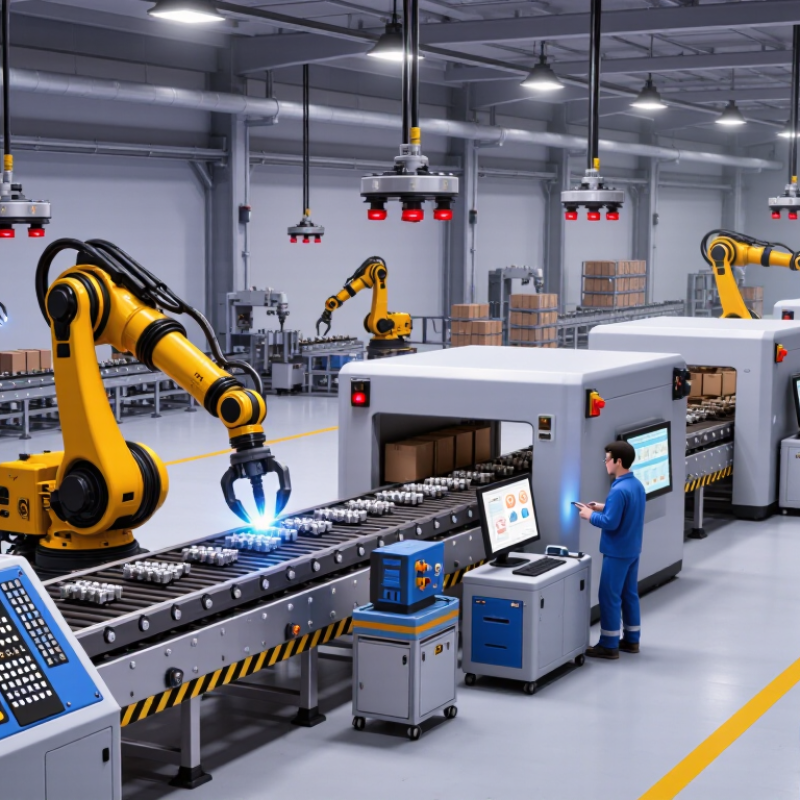
Industrial Automation Systems Defined: ISA-95’s Five Levels, 0–4
ISA-95 organizes manufacturing activity into five levels, from the physical process to business planning. It is a useful way to discuss how information moves through a factory, not a ranking of equipment. The boundaries can blur in real facilities.
Level 0 is the process itself: a filling line moves liquid into containers. Level 1 includes sensors and actuators that measure temperature or open a valve. Level 2 covers monitoring and supervisory control, where operators see readings and adjust setpoints. Small changes matter here. A delayed temperature reading can affect a batch before anyone spots the trend.
Level 3 handles manufacturing operations, such as production scheduling, quality records, and maintenance coordination. Level 4 supports business planning, including demand forecasts and inventory decisions. In practice, a work order may travel from Level 4 to Level 3, while production data flows back upward. ISA-95 helps teams define those exchanges and clarify responsibilities. It does not prescribe one perfect system design. Some modern applications span several levels, which can make diagrams look cleaner than the actual plant. Teams should check who owns each data point, how quickly it must update, and what happens when a connection fails. Those details are easy to overlook.
| System Type | Primary ISA-95 Level | Main Function | Typical Data or Actions | Best-Fit Manufacturing Use | Common Integration |
|---|---|---|---|---|---|
| Sensors and actuators | Level 1, interacting with the Level 0 process | Measure physical conditions and carry out commands on equipment or materials. | Temperature, pressure, position, flow, presence, motor speed, valve position, and on/off states. | Machine and process feedback, product detection, and basic equipment actions. | Connect to PLCs, remote I/O, or other control devices. |
| Programmable logic controllers (PLCs) | Level 2 | Execute deterministic control logic for machines, lines, and discrete processes. | Input and output states, interlocks, sequence steps, alarms, and equipment status. | Packaging, assembly, material handling, and machine-level control. | Exchange control and status data with sensors, drives, HMIs, and supervisory systems. |
| Distributed control systems (DCS) | Level 2 | Coordinate continuous or batch process control across distributed controllers and operator stations. | Process variables, control-loop values, alarms, trends, and operator setpoints. | Continuous-process operations such as chemical, energy, and other process manufacturing. | Integrate with field instruments, process equipment, historians, and operations systems. |
| Supervisory control and data acquisition (SCADA) | Level 2 | Provide supervisory monitoring and control for geographically distributed or large-scale operations. | Telemetry, equipment status, alarms, operator commands, and historical trends. | Utilities, infrastructure, remote assets, and distributed production sites. | Collect data from PLCs, remote terminal units, and other control equipment. |
| Human-machine interfaces (HMIs) | Level 2 | Let operators view equipment or process status and perform authorized control actions. | Process displays, alarm acknowledgements, setpoint entry, and operator prompts. | Machine operation, line supervision, and local process oversight. | Typically communicate with PLCs, DCS controllers, or SCADA applications. |
| Manufacturing execution and operations management systems (MES/MOM) | Level 3 | Manage and monitor production operations between business planning and shop-floor control. | Work orders, production progress, labor and resource use, genealogy, and performance records. | Production dispatching, work-in-process tracking, and operational visibility. | Exchange schedules and results with Level 4 systems and production data with Level 2 systems. |
| Batch management systems | Level 2 and Level 3, depending on function | Coordinate batch execution and manage recipes, equipment procedures, and batch records. | Recipe parameters, phase execution, batch status, and production records. | Repeatable batch production where recipes, sequencing, and traceability matter. | Coordinate process control with Level 2 systems and production workflows with Level 3 systems. |
| Quality management systems (QMS) | Primarily Level 3 | Support quality planning, inspection workflows, nonconformance handling, and corrective actions. | Inspection results, specifications, defects, holds, and corrective-action records. | In-process quality control, inspection management, and product traceability. | Use production and genealogy data from Level 3 systems and exchange quality information with Level 4 systems. |
| Computerized maintenance management systems (CMMS) | Primarily Level 3 | Plan and record maintenance work and manage asset-related maintenance information. | Work requests, preventive maintenance schedules, work orders, and maintenance history. | Asset upkeep, maintenance planning, and coordination of repair work with production. | May use asset and status data from operations systems and share purchasing or cost information with Level 4 systems. |
| Enterprise resource planning and advanced planning systems (ERP/APS) | Level 4 | Plan business resources and production requirements, and coordinate enterprise-level operations. | Demand, orders, inventory, materials, capacity plans, and production schedules. | Business planning, supply coordination, and high-level production scheduling. | Send production plans to Level 3 systems and receive operational results for planning and reporting. |
Related Posts
-
Top Trends in Industrial Robotics Integration for 2026?
-
2026 Best Robotic Automation Systems for Global Buyers
-
How to Choose the Best Industrial Equipment Solutions for Your Needs?
-
China Top Industrial Processing Solutions Suppliers?
-
How to Choose an Industrial Robotics Integration Partner?
-

What Are Industrial Equipment Solutions for Global Buyers?