



Important Notice: Amprod Acquires Simmtech

Industry InSights

Why Are Food Automation Systems Essential for Buyers?

For food manufacturers, a missed temperature check or uneven fill can quickly become a costly problem. Food automation systems help buyers control repetitive tasks, from weighing ingredients to sealing packages. They can also capture production data that supports quality checks and traceability. The need is clear, but the solution is not simply to buy more machines. Equipment must fit the product, line speed, cleaning routine, and workers’ daily tasks.

The scale of food loss makes process control worth examining. The United Nations Food and Agriculture Organization reported that 13.2% of food was lost after harvest and before retail in 2021 (FAO, Tracking Progress on Food and Agriculture-related SDG Indicators, 2023). Automation cannot prevent every loss. Yet accurate dosing, consistent handling, and timely alerts may help reduce avoidable errors on a production line. The details matter.

Buyers should compare more than headline output rates. They should ask how a system performs during changeovers, whether operators can resolve common faults, and what maintenance costs look like over time. A line that runs quickly but is difficult to clean may not serve the plant well. Nor should automation be treated as a substitute for trained staff. It is a purchasing decision with operational consequences—and sometimes the best choice is a smaller, well-integrated upgrade.
Why Are Food Automation Systems Essential for Buyers?

What Food Automation Systems Are and How They Operate

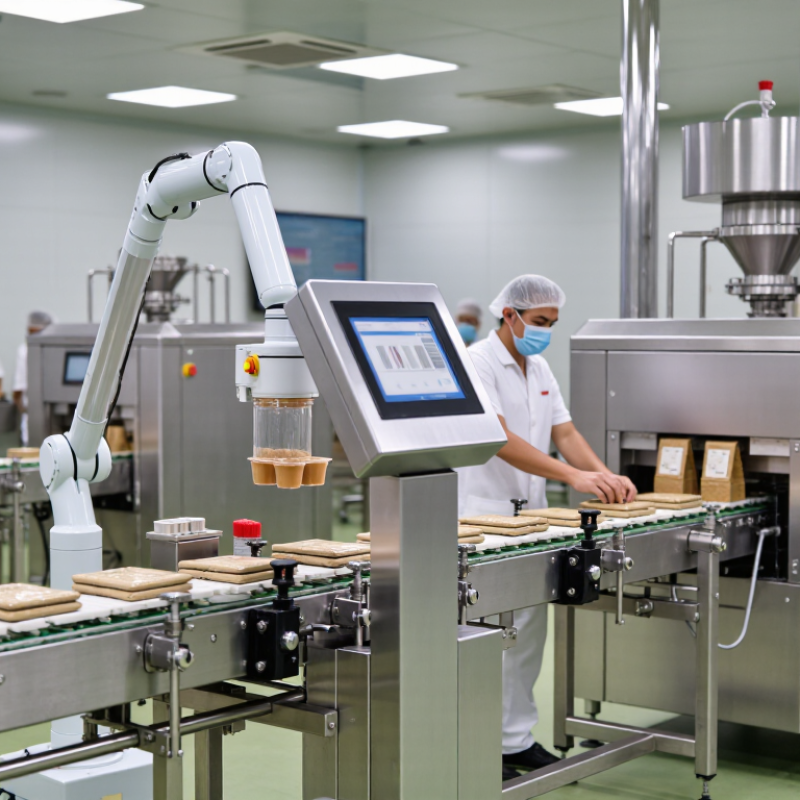
Food automation systems combine sensors, control software, conveyors, and machines to move products through processing and packaging. A camera can inspect a bun’s color, while a sensor checks its position on the belt. The controller then directs a robotic arm to sort, place, or reject it. These systems may also regulate mixing times, temperatures, and filling volumes. Small adjustments matter.

In practice, automation follows a repeated feedback loop: detect a condition, compare it with a set target, and adjust an operation. Operators set recipes, monitor alarms, and check product quality. The International Federation of Robotics reported about 6,000 robot installations in the food and beverage industry in 2022, a 12% rise from 2021, in World Robotics 2023. The figure shows adoption, not guaranteed returns. A poorly configured line can still waste ingredients or stop production.

For buyers, the useful question is how a system fits the actual workflow. Can it handle sticky dough, changing package sizes, or frequent washdowns? Will it connect with existing equipment and provide clear fault messages? These details affect uptime as much as robot speed. Automation can reduce repetitive handling, but it does not remove the need for trained staff. That part gets overlooked. I’ve seen the appeal of a fast demo; real shifts are less tidy, and changeovers can expose weak points.

Key Technologies and Components in Food Automation

Food automation depends on several systems working together, not on one impressive machine. Sensors monitor temperature, fill levels, product position, and line speed. In a bakery, a photoelectric sensor can detect a tray entering an oven zone, while a temperature probe checks whether the heating process stays consistent. Small details matter.

Programmable controllers coordinate motors, valves, conveyors, and safety interlocks. Their settings determine how quickly equipment responds when a line slows or a product changes size. Machine-vision cameras can inspect package seals, label placement, or product shape; weighing systems can flag portions outside a set range. These checks help operators spot variation sooner, but they cannot replace careful setup and routine verification.

Robotic arms and automated conveyors handle repetitive tasks such as sorting, loading, and transferring products between stations. Washdown-ready enclosures and accessible cable routes also matter, because cleaning is part of daily operation in food plants. Buyers should examine how components communicate, how quickly worn parts can be replaced, and whether operators can understand alarms without guessing. A system may perform well in a demonstration yet struggle with sticky dough, condensation, or frequent product changeovers. That gap deserves attention. Automation can reduce repetitive handling, but poor sensor placement or rushed calibration may create new sources of error.

How Automation Addresses Buyers’ Production Needs

Food buyers need steady output, predictable staffing, and products that meet exact specifications. Automation can help by linking weighing, filling, sealing, and inspection into a coordinated line. A sensor can flag an underfilled tray before it reaches the case packer. That prevents small errors from multiplying across a shift. It adds up.

The right system also supports changing demand. Adjustable conveyors and programmable settings can shorten changeovers between package sizes, while automated data logs help teams spot recurring slowdowns. Buyers should check whether equipment suits their product’s texture, temperature, and cleaning routine. A sticky sauce and a dry snack create different handling problems. Small details matter.

Automation still needs trained operators, maintenance time, and a realistic installation plan. Buyers can compare cycle times, changeover duration, reject rates, and cleaning access during a production trial. They should also ask how the system handles a jam or sensor fault. Not always simple. A fast line may be a poor fit if it disrupts existing equipment or makes routine service difficult. Sometimes the less impressive option is easier to run reliably.

Operational and Business Benefits for Food Buyers

For food buyers, automation can make supply more predictable, not merely faster. Automated weighing, sorting, filling, and inspection help reduce variation between batches. That matters when a buyer needs consistent pack sizes, dependable delivery windows, and traceable production records. The International Federation of Robotics reported that global manufacturing robot density reached 151 robots per 10,000 employees in 2022, up from 74 in 2016. This broad industry measure is not specific to food plants, but it shows how quickly automated production is becoming standard. For buyers, the practical question is whether a supplier can document fewer interruptions, stable output, and repeatable quality—not simply how many machines it owns.

Automation can also help limit avoidable losses. FAO’s 2019 report, The State of Food and Agriculture, estimated that 14% of food is lost between harvest and retail. That figure spans many stages and does not prove that factory automation alone prevents waste. Still, sensors, controlled portioning, and timely maintenance can help processors spot deviations before they create rejected batches. Small gains matter. Buyers may benefit through steadier availability and less costly quality variation. Yet automation requires skilled operators, reliable sanitation routines, and planned maintenance. A line can be highly automated and still become a bottleneck when a sensor fails or changeovers take too long. Buyers should ask suppliers for measured results, such as downtime, rejection rates, and delivery consistency, then review them over time.

Why Are Food Automation Systems Essential for Buyers?

Illustrative staff hours required for selected purchasing tasks per 100 purchase orders

This example illustrates how automating order processing, invoice matching, and inventory checks may reduce routine workload, giving food buyers more time to focus on supplier coordination and purchasing decisions. Figures are illustrative estimates, not industry benchmarks.

Factors Buyers Should Assess When Choosing a System

Buyers should begin with the product and production conditions, not a machine’s advertised speed. A line handling sticky dough may behave differently from one packing dry snacks. Compare expected output with peak demand, changeover time, and the range of product sizes. Ask for a demonstration using your ingredients and packaging. Small details matter: a belt that is hard to clean can add minutes to every shift.

Assess how the system fits existing equipment, floor space, and staff routines. Check whether operators can reach controls safely and clear minor jams without awkward movements. Cleaning access, spare-part availability, and local technical support affect real uptime. A polished performance estimate is useful, but request assumptions behind it. What happens when a sensor gets dirty?

Cost includes more than purchase price. Buyers should compare installation, training, maintenance, energy use, and likely downtime across the system’s working life. A pilot can reveal bottlenecks that a sales presentation may miss. It takes effort. Still, even a short trial can show whether product quality stays consistent at target speed. No assessment removes uncertainty; production conditions change, and forecasts are sometimes wrong.

Why Are Food Automation Systems Essential for Buyers? — Factors Buyers Should Assess When Choosing a System

Assessment factor Why it matters What buyers should evaluate Evidence or measure to request
Food safety and hygienic design Equipment must be cleanable and suitable for the food, process, and cleaning regime. Poorly designed areas can make inspection and sanitation more difficult. Product-contact materials, accessible surfaces, drainage, seals, disassembly requirements, and compatibility with the plant’s cleaning chemicals and procedures. Cleaning and sanitation instructions, material specifications, a site-specific hygiene review, and a witnessed cleanability assessment.
Throughput and line balance A fast machine does not improve total output if upstream or downstream equipment becomes the bottleneck. Required units per minute or kilograms per hour, product changeovers, planned operating hours, and the capacity of connected equipment. A production trial using representative products; measured good output over time, including routine stops and changeovers.
Product quality and handling Automation should improve repeatability without damaging, deforming, or otherwise compromising the food. Product size and weight variation, fragility, temperature, moisture, packaging format, and acceptable defect limits. Trial results showing yield, reject rate, product damage, and quality checks across representative product variations.
Labor requirements and ergonomics Automation can reduce repetitive manual handling, but still requires people to operate, monitor, clean, and maintain the system. Staffing by shift, task changes, manual handling points, operator training, and access for safe intervention. A task-by-task staffing plan, ergonomic risk review, and training requirements for operators and maintenance staff.
Flexibility and changeover time Food plants may run multiple recipes, sizes, or packaging formats. A system that is difficult to adjust can constrain scheduling. Supported product range, adjustment method, tool requirements, recipe settings, and cleaning or changeover steps. Demonstrated changeovers between the buyer’s actual products, with changeover time and required labor recorded.
Integration and controls Reliable data exchange and coordinated operation help the system work with existing production equipment and processes. Available interfaces, control architecture, production data requirements, alarms, recipe management, and cybersecurity practices. Integration drawings, interface specifications, a controls test plan, and a review with the plant’s engineering or IT team.
Reliability and maintainability Unplanned downtime can interrupt production and affect delivery schedules. Maintenance access and spare-part availability influence recovery time. Expected duty cycle, wear components, preventive maintenance tasks, fault diagnostics, service access, and spare-parts lead times. Maintenance schedule, recommended spare-parts list, service response terms, and a defined method for tracking downtime.
Total cost of ownership The purchase price alone does not represent the full cost of operating a system over its useful life. Installation, utilities, integration, training, maintenance, consumables, software or support fees, and expected operating life. A cost model using the buyer’s operating hours, labor costs, energy rates, maintenance assumptions, and production plan.
Utilities and facility fit Insufficient floor space or utility capacity can delay installation or require additional site work. Equipment footprint, access and service clearances, electrical supply, compressed air, water, drainage, and environmental conditions. Site layout, utility-load data, installation requirements, and a documented facility-readiness check.
Safety and compliance Equipment must fit the workplace’s risk controls and applicable food-processing and machinery requirements. Guarding, emergency stops, lockout procedures, operator access, risk assessment, and relevant local regulatory obligations. Risk assessment, safety documentation, operator procedures, and review by the buyer’s safety and compliance teams.
Validation and acceptance criteria Clear acceptance tests help both parties confirm that the installed system meets the intended production requirements. Product mix, operating conditions, quality limits, throughput definition, test duration, and how interruptions are recorded. A written factory and site acceptance test plan with measurable pass/fail criteria agreed before purchase.

Buyer note: Performance and cost outcomes depend on the product, line configuration, operating conditions, and maintenance practices. Confirm claims with trials using representative products and site-specific calculations.