China Best Food Manufacturing Equipment Suppliers?
Finding the best food manufacturing equipment suppliers in China requires more than comparing prices or browsing polished websites. A reliable supplier must understand production realities, from stainless steel surfaces and hygienic welding to cleaning access and maintenance schedules. Small details matter. A poorly positioned valve can slow an entire shift.
This guide examines suppliers through practical and verifiable criteria. These include manufacturing experience, equipment range, customization capability, factory quality systems, export support, and after-sales service. We also consider whether suppliers can provide clear specifications, material certificates, testing records, and installation guidance. Equipment for mixers, filling lines, packaging systems, ovens, and processing tanks must match the product, capacity, and local requirements.
No supplier is perfect.
A strong reputation does not replace careful verification. Buyers should request factory videos, reference projects, sample documentation, and realistic delivery commitments. Site audits can reveal details that brochures omit, such as workshop organization, welding consistency, spare-parts storage, and testing procedures. Some suppliers communicate confidently but offer limited technical support after payment. That risk deserves attention.
The goal is not to name a single winner. It is to identify manufacturers that offer dependable food manufacturing equipment for specific production conditions. Readers should compare evidence, ask precise questions, and consider the total cost of ownership. Energy use, downtime, cleaning labor, training, and replacement parts can change the final decision. This evaluation may not capture every regional supplier, but it provides a practical starting point for responsible sourcing.
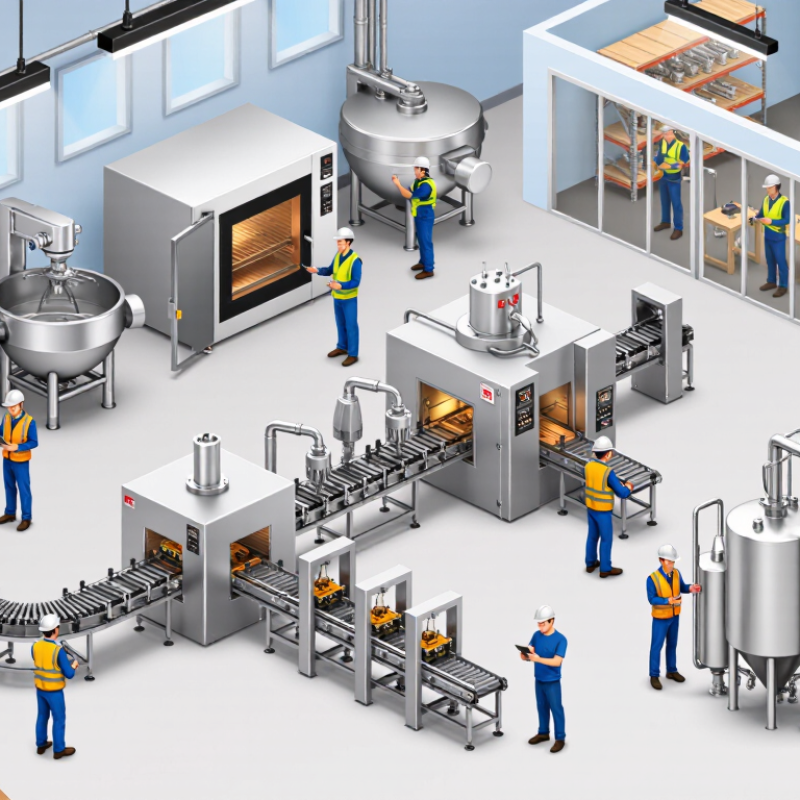
What Defines a Leading Food Manufacturing Equipment Supplier in China
A leading food manufacturing equipment supplier in China is defined by more than competitive pricing. It should understand hygienic design, process stability, and local production conditions. Grand View Research valued the global food processing equipment market at about USD 52.7 billion in 2023. This growth increases pressure on suppliers to prove performance, not merely display advanced machinery.
Reliable suppliers provide stainless-steel contact surfaces, clean-in-place systems, accurate temperature control, and documented validation records. They should also support installation, operator training, spare parts, and remote diagnostics. The United Nations Environment Programme reported that 1.05 billion tonnes of food were wasted in 2022. Better filling accuracy, sealing control, and batch monitoring can reduce avoidable losses. Small details matter. A loose sensor can disrupt an entire shift. PMMI industry research also identifies automation, labor efficiency, and flexible production as continuing investment priorities. Yet automation alone is not enough. I would question any supplier that promises zero downtime without showing factory acceptance tests, maintenance data, and customer references. A pilot line may reveal problems hidden in a polished presentation. The strongest evaluation includes product trials, sanitation checks, energy measurements, and a clear response-time agreement. China-based suppliers with engineering teams, audited quality systems, and export compliance experience are better positioned for long-term cooperation. Mistakes still happen. The difference is how openly they are recorded, corrected, and prevented.
Key Types of Food Manufacturing Equipment and Their Applications
Food manufacturing equipment suppliers must understand how each machine fits a real production line. Mixing systems combine ingredients evenly in sauces, bakery dough, and prepared meals. Cutting and grinding equipment controls particle size for meat alternatives, vegetables, and fillings. Thermal equipment, including ovens, steamers, and pasteurizers, reduces microbial risks while protecting texture. Filling and sealing machines support accurate portions and longer shelf life.
The FAO’s State of Food and Agriculture 2019 reported that about 14% of food is lost between harvest and retail globally. Better processing, cooling, and storage equipment can reduce part of this loss. The UNEP Food Waste Index Report 2024 estimated 1.05 billion tonnes of food waste in 2022. This figure makes efficient portioning and packaging more important. Still, faster machines are not always better. Excessive heat can damage nutrients, while poor cleaning access can create hidden hygiene problems.
Tips: Match equipment capacity with actual demand, not optimistic forecasts. Check stainless-steel grades, drainage, sensor accuracy, and cleaning procedures. Request trial runs using your ingredients. Record product temperature, yield, downtime, and cleaning time. Small details matter. Operators should also inspect dead corners around valves and conveyors. A line may look modern but remain difficult to maintain. Reviewing these weaknesses before purchase improves reliability and supports safer daily production.
China Best Food Manufacturing Equipment Suppliers? Key Equipment Types and Applications
The chart compares representative industrial throughput benchmarks for major food manufacturing equipment categories commonly used in processing lines. Actual capacity depends on product characteristics, recipe, automation level, and line configuration. Washing and sorting equipment is typically used for raw-material preparation, while cutting, blanching, frying, baking, roasting, and freezing support different processing applications.
Major Food Equipment Manufacturing Regions and Industry Clusters
China Best Food Manufacturing Equipment Suppliers?
Major Food Equipment Manufacturing Regions and Industry Clusters
China’s food equipment industry is concentrated in several practical manufacturing regions. Jiangsu and Zhejiang support stainless-steel processing lines, filling systems, mixers, and conveying equipment. Their factories often benefit from nearby machining, electrical, and metal-forming suppliers. This shortens production cycles and makes replacement parts easier to source.
Shandong has strong capabilities in meat, seafood, vegetable, and grain-processing equipment. Many workshops serve large agricultural and food-production areas. Guangdong focuses heavily on beverage, bakery, packaging, and automated handling systems. Its mature electronics supply chain can support sensors, control cabinets, and machine-vision components. Guangdong also offers faster access to export logistics. Useful, but not always cheaper.
Shanghai and neighboring industrial cities provide engineering services, testing resources, and international logistics. They are suitable for complex production lines requiring process integration. Henan and nearby central regions are known for grain, flour, and drying equipment. Local suppliers may understand raw-material conditions better, especially where dust, humidity, and seasonal harvests affect production.
A reliable supplier review should examine factory capacity, weld quality, food-contact materials, and documented testing procedures. Ask for production videos, inspection records, and references from similar facilities. Regional reputation helps, but it cannot replace technical verification. Some suppliers advertise complete solutions while outsourcing critical components. That deserves careful questioning. Pilot testing is wise, although it may increase the initial budget. Clear drawings, sanitation requirements, electrical standards, and after-sales responsibilities should be confirmed before purchasing.
The Process of Selecting, Ordering, and Importing Equipment from China
China Best Food Manufacturing Equipment Suppliers?
The Process of Selecting, Ordering, and Importing Equipment from China
Selecting a Chinese equipment supplier requires more than comparing prices. I usually begin with product capacity, material requirements, and local safety standards. Request technical drawings, food-contact certificates, power specifications, and recent inspection records. Stainless steel grades matter, especially around wet cleaning areas. A cheaper machine may create higher maintenance costs later.
Ask suppliers to explain production time, testing procedures, spare parts, and installation support. Require a written quotation with clear payment terms and warranty conditions. Before ordering, confirm the machine’s dimensions against your factory layout. I once saw a buyer overlook door width, causing an expensive delivery problem. Small details become serious during installation.
Tips: Use video calls to inspect the workshop. Request sample products before final approval. Hire an independent inspector before shipment. Check the commercial invoice, packing list, transport documents, and tariff classification carefully. Your freight agent can help, but verify every detail yourself. Import rules differ by destination, so consult the relevant customs authority before payment. I would also keep a written record of every change. Verbal promises are easy to misunderstand, especially across languages and time zones.