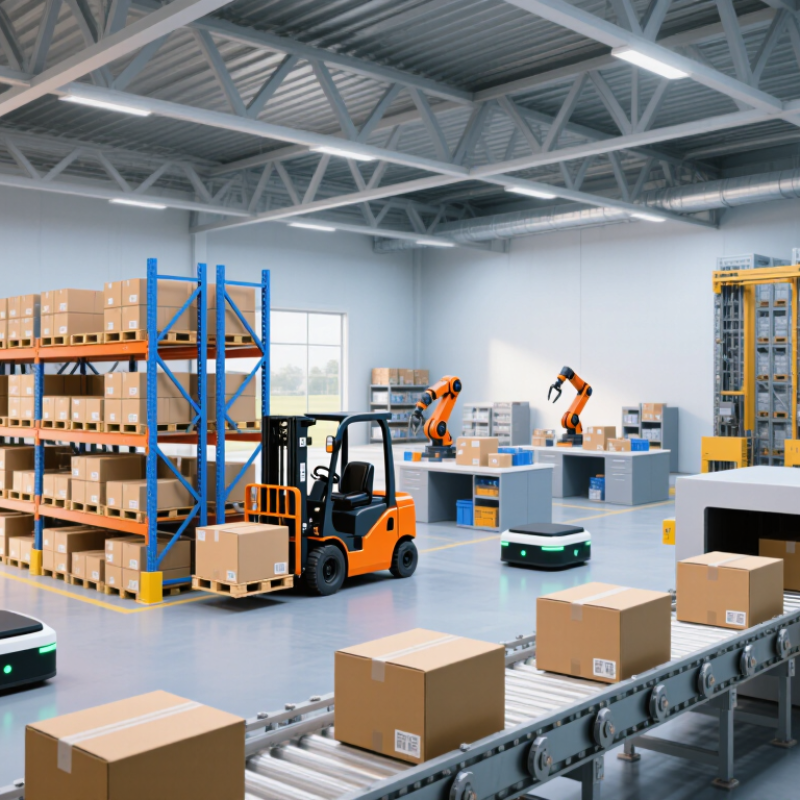
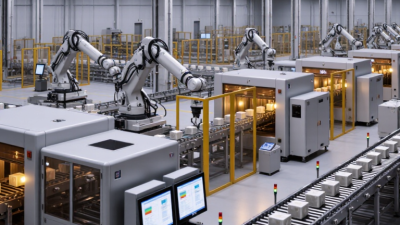
Material handling systems shape how products move through a facility, from receiving docks to storage, picking, packing, and shipping. The right setup can reduce unnecessary travel, protect goods, and help teams meet changing demand. A conveyor may carry cartons across a warehouse floor. A forklift may move a pallet between a truck and a rack. Different jobs call for different tools.
Russell M. Meller, an industrial engineer known for research on facility logistics, offers a useful perspective: “Material flow should be designed around the work it must support.” This is a practical paraphrase, not a verified direct quotation. It captures an important planning principle: equipment should fit the product, process, building, and people using it. A system that looks efficient on paper may struggle when aisles are narrow or order sizes vary.
This guide examines ten widely used material handling systems, including conveyors, automated storage and retrieval systems, forklifts, and robotic solutions. Each option brings trade-offs in cost, flexibility, capacity, and maintenance. Some facilities benefit from automation; others need simpler equipment and room to adapt. There is no universal winner. That can be easy to overlook. The goal is to compare systems clearly, identify where each works best, and ask what evidence supports the choice.
Material handling systems are the methods, equipment, and procedures used to move, store, protect, and control materials. They support the flow of goods from receiving docks to storage areas, workstations, and shipping bays. A system may include shelving, conveyors, carts, lifts, or digital tracking tools. The right combination depends on the material’s size, weight, fragility, and travel distance. It also depends on how often workers need to access it.
Their role is practical: reduce unnecessary handling, improve workplace flow, and help keep items available where needed. For example, clearly marked storage locations can help staff find a carton without searching across a crowded warehouse. A conveyor may carry boxes between nearby work areas, while a lift moves heavier loads between levels. These tools can reduce repetitive effort, but they do not solve every problem. Poor layouts, unclear procedures, or rushed maintenance can still cause delays. Sometimes the simplest setup works better.
Tips: Map the path materials take during a normal shift. Note bottlenecks, awkward lifts, and repeated trips. Ask workers what slows them down; their observations may reveal details a floor plan misses. Check that equipment suits the load and available space, then review the setup after real use. A small mismatch can matter.
Material handling systems are classified by what they move, how they move it, and where the work happens. A conveyor carries items along a fixed path, while a crane lifts loads through open space. Forklifts and pallet trucks offer mobile, operator-guided movement. Automated guided vehicles follow defined routes; autonomous mobile robots can adapt their paths around obstacles. Storage and retrieval systems combine shelving with equipment that places or collects goods. They are often grouped with material handling systems because they connect storage to operations.
Other common types include sortation systems, which divert parcels or cartons into separate lanes, and unit-load systems, which handle grouped items such as palletized boxes. Bulk-handling equipment moves loose materials like grain or aggregate, often using hoppers, belts, or elevators. Manual handling tools, including carts and lift tables, support smaller loads and short distances.
Ten familiar categories, then: conveyors, cranes, forklifts, pallet trucks, guided vehicles, mobile robots, storage-and-retrieval systems, sorters, bulk handlers, and manual equipment.
The categories overlap. A conveyor may feed a sorter, and a robot may serve a storage system. Classification is useful, but real facilities rarely fit into neat boxes. That can complicate planning.
Material handling systems move, store, and control goods inside factories and warehouses. Common options include belt and roller conveyors, overhead cranes, hoists, forklifts, pallet trucks, automated guided vehicles, automated storage systems, sorters, lifts, and robotic handling cells. The right choice depends on load weight, travel distance, floor space, and how often materials move. A roller conveyor can carry cartons along a packing line, while a hoist lifts a motor above a maintenance bay. Cranes handle heavier loads overhead; industrial trucks offer flexible movement between aisles. Flexibility has a cost: trucks need clear routes, trained operators, and room to turn.
Investment decisions deserve care. MHI and Deloitte’s 2024 Annual Industry Report found that 55% of surveyed supply chain leaders planned to increase investment in innovation. That figure reflects respondents’ plans, not a guarantee that automation will pay off at every site. Measure travel time, congestion, load frequency, and near-miss reports before choosing equipment. A system that looks efficient on a diagram may struggle with uneven floors or changing product sizes.
Tips: Match equipment to the heaviest routine load, not just the average. Check turning clearance and pedestrian crossings on the actual floor. Keep maintenance access in the layout. Small details matter. Teams should review performance after installation; real workflows rarely match the first plan exactly.
Material handling systems move, store, identify, and protect goods inside a facility. The right setup depends on product size, order volume, building layout, and staffing. A busy aisle needs different equipment from a compact parts room. Small details matter.
Common options include automated guided vehicles, which follow mapped routes, and autonomous mobile robots, which can navigate around changing obstacles. Industrial robots handle repetitive lifting or palletizing, while conveyors move cartons between work areas. Automated storage and retrieval systems use cranes or shuttles to place goods in dense storage. Pallet racking offers simpler, accessible storage. Vertical lift modules bring trays to an operator, and sortation systems direct parcels toward specific destinations. Overhead cranes move heavy loads above floor traffic. Pick-to-light systems guide workers with illuminated locations, while voice-directed picking uses spoken instructions.
These systems are not interchangeable. A conveyor may speed up a steady flow but create a bottleneck when packing falls behind. Robots can reduce repetitive handling, yet they still need clear safety zones, maintenance, and sensible task planning. Storage density also has trade-offs: tighter layouts can limit access. Start with observed travel paths, order patterns, and peak-hour congestion. Then test assumptions with real operating data. A tidy diagram is useful, but the floor often tells a less tidy story.
What Are the Top 10 Material Handling Systems?
Key Factors for Selecting a Material Handling System
Choosing among conveyors, forklifts, pallet racks, automated storage systems, sorters, mobile robots, cranes, lifts, picking systems, and robotic cells starts with the work itself. Measure what moves, how often it moves, and where it must go. A narrow aisle may favor compact equipment, while fragile cartons may need gentle, controlled transfers. Start with real order data, not a best-case estimate.
Fit matters. Check floor loading, ceiling height, aisle width, dock access, and available power. Then compare throughput, storage density, labor needs, and maintenance requirements. A system that handles peak volume may sit underused during ordinary shifts. That is worth questioning. Ask operators to test the proposed workflow with actual totes or pallets, and note awkward reaches, blind corners, and waiting points.
Consider how easily the system can adapt to changing product sizes, seasonal demand, or future layout changes. Review safety features, training needs, spare-parts access, and the time required to restore service after a fault. Calculate total ownership cost, including installation, energy, upkeep, and downtime—not just purchase price. Estimates can be imperfect. Make assumptions visible, and validate them with a small pilot before committing to a full installation.
| Material Handling System | Typical Applications | Loads and Flow | Throughput Profile | Space and Layout Needs | Flexibility | Key Selection Factors |
|---|---|---|---|---|---|---|
| Belt and Roller Conveyors | Moving cartons, totes, parcels, or unit loads between fixed work areas. | Continuous movement of compatible items along a defined route; belt or roller type depends on the load and transfer requirements. | High and steady when products arrive at a consistent rate. | Requires a planned route and can occupy floor or overhead space. | Low to moderate; rerouting or reconfiguring installed lines can require significant work. | Product dimensions and weight, route length, accumulation needs, transfer points, noise, guarding, and expected operating hours. |
| Automated Guided Vehicles (AGVs) | Repeated transport of pallets, carts, or other loads along established routes in warehouses and factories. | Moves defined loads between pickup and drop-off points using programmed guidance. | Consistent for predictable, repetitive transport tasks; performance depends on route traffic and charging or battery arrangements. | Needs navigable aisles, suitable pickup and drop-off areas, and safe interaction zones. | Moderate; routes can be updated, but major workflow changes may require reconfiguration. | Load size and weight, route stability, traffic, floor conditions, safety controls, charging strategy, and integration with doors or lifts. |
| Autonomous Mobile Robots (AMRs) | Flexible transport of totes, carts, or materials in changing warehouse and production environments. | Typically handles unit loads or carts; navigation systems can adjust routes around obstacles. | Scalable for repeatable transport tasks, with actual output affected by congestion, task assignment, and charging. | Requires passable travel paths and clear handoff locations; fixed guide paths are generally not required. | High relative to fixed-route equipment; workflows and fleet size can often be adjusted as needs change. | Payload, path width, pedestrian traffic, fleet management, handoff design, connectivity, battery charging, and site safety requirements. |
| Automated Storage and Retrieval Systems (AS/RS) | High-density storage and automated retrieval of pallets, trays, totes, or cases. | Load-handling equipment stores and retrieves compatible unit loads within a designed storage structure. | Well suited to frequent, controlled storage and retrieval; capacity depends on system design, load type, and transaction pattern. | Can use vertical space and narrow aisles, but requires a dedicated, engineered installation. | Low to moderate after installation; storage configuration and load specifications need careful planning. | Inventory profile, required storage density, retrieval rate, load dimensions, building height, software integration, uptime, and lifecycle cost. |
| Forklifts and Powered Industrial Trucks | Loading, unloading, stacking, and moving pallets across docks, warehouses, and production areas. | Handles palletized or otherwise compatible loads using appropriate attachments and truck types. | Flexible and operator-dependent; output varies with travel distance, lift height, traffic, and task mix. | Needs maneuvering clearance, suitable floor conditions, and appropriate aisle widths for the selected truck. | High for varied tasks and changing layouts, within the truck’s rated capacity and operating environment. | Load center and capacity, lift height, aisle width, indoor or outdoor use, energy source, operator training, pedestrian safety, and maintenance. |
| Overhead Cranes and Hoists | Lifting and positioning heavy or bulky loads in manufacturing, maintenance, and fabrication areas. | Moves suspended loads within the crane’s rated capacity and coverage area. | Effective for intermittent heavy lifts; cycle time depends on travel distance, rigging, and positioning. | Uses overhead building space and requires suitable structural support and clear lifting zones. | Moderate within the installed coverage area; not suited to general floor-level transport across a site. | Load weight and shape, span and lift height, building structure, duty cycle, load control, operator access, and inspection requirements. |
| Sortation Systems | Directing parcels, cartons, or totes to shipping lanes, order destinations, or process areas. | Routes identifiable items to designated destinations using compatible induction and diversion equipment. | High-volume sorting is possible when item presentation, identification, and destination logic are reliable. | Needs room for feed, sorting equipment, destination lanes, and downstream accumulation. | Moderate; destinations and operating logic can be configured, while physical capacity is set by the installed system. | Item size range, peak and average volume, identification method, number of destinations, reject handling, accuracy, and downstream capacity. |
| Robotic Palletizers and Depalletizers | Building or breaking down pallet loads at production, packaging, and distribution operations. | Handles cases, bags, or other defined products in planned layer patterns; grippers must suit the product. | Consistent for repeatable products and patterns; changeovers and product variation affect output. | Needs a defined cell with space for conveyors, pallets, guarding, and operator access. | Moderate; multiple patterns may be programmed, but product and tooling changes can require setup. | Product dimensions and stability, pattern requirements, pallet types, gripper design, changeover frequency, guarding, and upstream supply rate. |
| Vertical Lift Modules (VLMs) | Compact storage and retrieval of small parts, tools, and inventory trays in picking or production areas. | Stores items on trays and presents a selected tray to an access opening. | Useful for organized, repeated picking; item access and tray presentation determine practical throughput. | Uses vertical building space and a relatively small floor footprint, subject to unit height and access requirements. | Moderate; tray layouts can be changed, but stored-item dimensions must suit the equipment. | Item size and weight, tray configuration, retrieval frequency, access-opening ergonomics, inventory software, and service access. |
| Pallet Racking Systems | Organized storage of palletized goods with access provided by suitable lift trucks or other handling equipment. | Stores pallet loads in rack positions; select a configuration based on access, selectivity, and storage density needs. | Storage capacity is determined by the layout and operating method; retrieval rate also depends on the handling equipment and workflow. | Uses vertical space but requires aisles, clearances, and a layout matched to the building and handling equipment. | Moderate; rack layouts can be modified, though changes may affect capacity, access, and safety provisions. | Pallet dimensions and weight, inventory selectivity, turnover, aisle width, building height, floor capacity, rack protection, and inspection practices. |

Selection note: Throughput and capacity are site- and configuration-dependent. Confirm them through a workflow assessment that considers load characteristics, demand patterns, layout, safety, integration, and total lifecycle cost.