




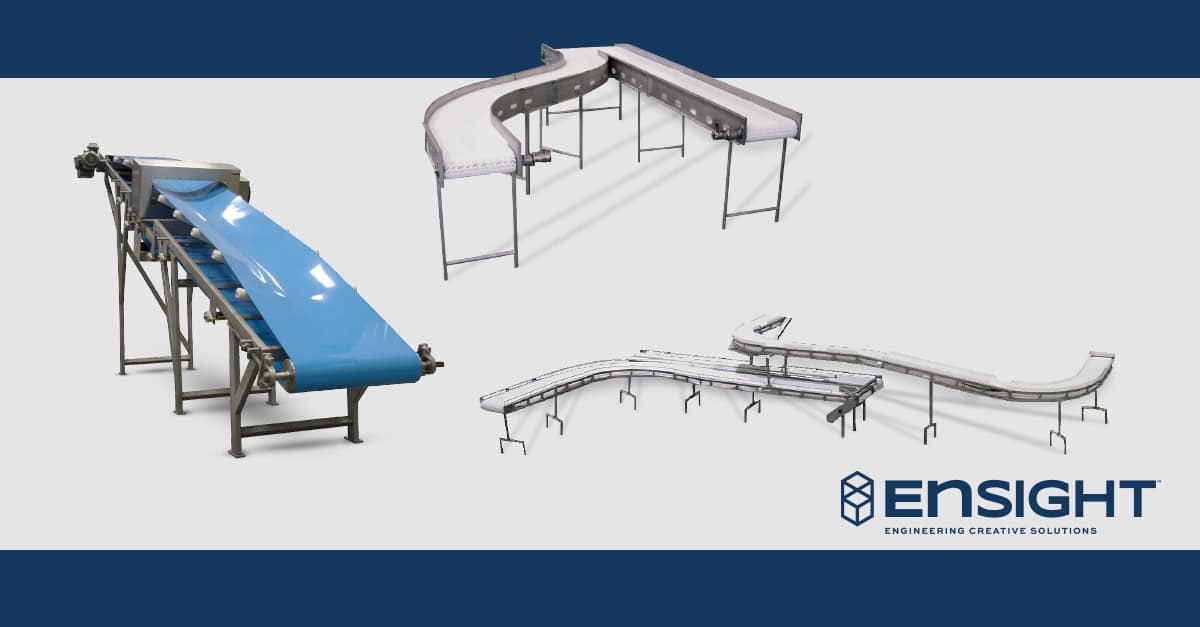
Conveyors perform a very basic, but still extremely necessary, function–move items from one place to another.
In the food industry, processors can purchase conveyors in a wide array of shapes, sizes and construction methods. These conveyors can be used to transport everything from fresh fruits and veggies, frozen foods, eggs, raw meat and more.
Choosing the right food-grade conveyor is extremely important to the entire process–a wrong conveyor could impede processes, cause worker or food safety issues and more. A good conveyor, though, can help a processor increase production, improve efficiency, minimize downtime and even reduce operating costs.
Let’s take a look at the various factors processors should consider when researching conveyors.
What to Look for in a Food-Grade Conveyor
Sanitation
Food processing facilities are heavily regulated, which means food processors must consider sanitation when selecting any machine. A conveyor is no different.
If an organization wants a food-grade conveyor that is easier to sanitize, they look one with fewer moving parts, limited horizontal surfaces seamless welds. These designs are generally easier to clean, and they also provide less places for water to stand and bacteria to grow. Organizations can mitigate the risk of contamination further by looking for a conveyor with self-draining locations and no places that liquid can collect, e.g., hollow frames, flat surfaces, etc.
Finally, the conveyor should be constructed of stainless steel.
Maintenance
Less maintenance means less downtime and more production. As with sanitation, it helps to find a machine with fewer moving parts. Moving parts that are exposed to the elements of food processor will require more maintenance.
Processors should also consider how hard the conveyor is to perform maintenance on. Conveyors that don’t require tools to lift/remove the belt are ideal, as are those that can be quickly dismantled, cleaned and put back together.
Safety
Processors should always discuss safety feature options with the conveyor OEM. Effective safety features can translate into fewer team member injuries, reducing production costs. Again, few moving parts and pinch points are ideal.
In addition, organizations can consider pairing their conveyors with ergonomic stands, guards and shut-off switches to further protect users.
Belting
Food will primarily come into contact with the conveyor’s belting, so processors should put a lot of thought into selecting the right material for their application. Consider the belt’s release characteristics, how easy it is to clean, how it tolerates extreme temperatures and fluctuations, how well it resists wear and how it will interact with the food product its transporting.
Belting options typically include polyester, polyolefin, urethane, silicone, PVC, cotton and metal mesh.
Long-Term Costs
Obviously, organizations will take into account the upfront costs of their new conveyor system. But, what about the long-term costs associated with regular operation and maintenance? Processors should also consider how much the conveyor will cost them over its lifetime. When doing so, organizations should make sure they’re taking into account the conveyor construction, as that will affect durability and maintenance. This is another place where fewer moving parts will be beneficial, as that means there are less opportunities for breakdowns.
Durability
Conveyors work hard in demanding environments, sometimes running continuously for multiple shifts at a time. The conveyor construction, especially in regard to materials used, will affect the lifespan of the product. Processors should consider which material will stand up to their day-to-day operations, as well as how well it’ll handle heavy-duty cleaning with high water pressure.
Typically, stainless steel lasts longer than plastic, especially in tough HE environments. But, that extra durability comes with a higher cost.
Flexibility
How quickly and easily can the conveyor be adapted to meet changing needs? For many processors, a one-trick conveyor just won’t cut it. Instead, some OEMs design in flexibility with inclining/declining options, radius turns and cleat/bucket styles, as well as the various belting options.
EnSight Solutions has decades of experience helping food processors find the food-grade conveyor solutions that meet their material handling needs just right. When we work with processors, we strive to understand their product needs, processes and pain points to develop a solution that will help them for years to come.
If you’re ready to learn more about EnSight Solutions and material handling solutions, please contact our sales consultants.