10 Tips for Choosing Industrial Processing Solutions
A processing line can appear efficient while quietly wasting heat, water, materials, or operator time. A pump that runs continuously, a filter that clogs before a shift ends, or a control system that cannot share data may signal deeper costs. Choosing industrial processing solutions is therefore not just a purchasing exercise. It is a decision about reliability, product quality, safety, and long-term operating expense.
The scale of the challenge is substantial. The International Energy Agency’s Energy Efficiency 2023 report estimates that industry accounts for about 37% of global final energy consumption. That figure makes energy performance an important selection criterion, alongside throughput and equipment price. Still, a promising efficiency claim is not proof of real-world savings. Buyers should check the measurement method, operating assumptions, and evidence from comparable installations.
The right fit depends on the process. A food plant, a chemical facility, and a minerals operation face different demands for temperature control, sanitation, wear resistance, and automation. Details matter. This guide presents ten practical checks, including capacity, integration, maintenance access, supplier support, and lifecycle cost. It also asks readers to challenge assumptions: the newest system is not automatically the best, and the lowest quote can hide expensive downtime. No checklist replaces a site assessment. But asking sharper questions before procurement can help teams compare options with greater confidence and avoid costly surprises.
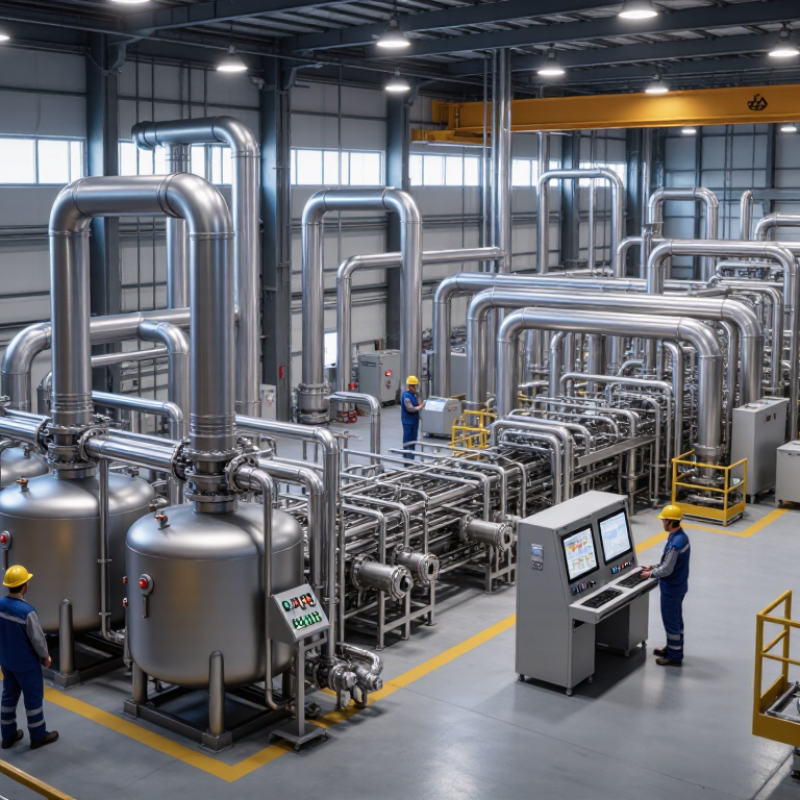
Define Production Goals, Process Requirements, and Material Needs
Before comparing industrial processing solutions, define the output your operation actually needs. Record typical and peak production per shift, acceptable product variation, and how often the line may stop for cleaning or changeovers. A machine’s stated capacity may not reflect real throughput when feeding, cooling, or packaging becomes the bottleneck. Measure what matters.
Tip 1: Map the process from raw material to finished product. Note required temperatures, mixing speeds, pressure, residence time, and cleaning steps. Use actual operating data where available, but mark estimates clearly. A spreadsheet will not capture every awkward transfer point; walk the floor and watch a full production cycle.
Tip 2: Describe the materials in practical terms. Include particle size, moisture, viscosity, abrasiveness, and sensitivity to heat or shear. Ask how these properties change between batches, because they often do. Then check which equipment surfaces contact the product and whether the design supports thorough cleaning. Leave room for uncertainty: a sample may behave differently at full scale, so arrange a controlled trial before committing to a process that is difficult to adjust.
Assess Automation, System Integration, and Ease of Operation
When comparing industrial processing solutions, assess automation against the actual work, not just the equipment’s maximum speed.
A sensor that detects a missed container or an automatic shutoff that responds to a jam can reduce routine operator intervention. Ask how settings are changed, and whether authorized staff can adjust recipes without calling a specialist. Watch a full cycle. Observe startup, normal production, and a minor fault. A polished demonstration may not reveal how often operators must clear alarms or repeat steps.
System integration deserves the same attention. Confirm that the equipment can exchange useful data with existing controls, production records, and quality checks. Request a practical test using your own process signals, including what happens when communication drops. Compatibility on paper is not always smooth in operation. Ease of use matters during shift changes and cleaning, too. Check screen labels, access to maintenance points, and whether instructions are clear with gloves on. Small details matter. A touchscreen may look simple until an operator needs to find a rarely used setting under time pressure. Ask operators to try common tasks, then note where they hesitate; their feedback may expose gaps a specification sheet misses.
Verify Safety Standards, Regulatory Compliance, and Supplier Support
When comparing industrial processing solutions, treat safety and compliance as operating requirements, not paperwork. Ask for current declarations, test records, and the exact standards applied to each machine. Match these against process hazards, site rules, and destination-market requirements; a generic certificate may not cover a modified line. During a walkthrough, inspect guards, emergency stops, interlocks, and cleaning access. Small details matter.
The U.S. Bureau of Labor Statistics reported 2.6 million nonfatal workplace injuries and illnesses in private industry during 2023, in its Survey of Occupational Injuries and Illnesses. That figure cannot predict a machine’s risk, but it reminds buyers that equipment decisions affect real shifts, not just audits. Invite operators to assess reach, noise, and changeover steps. Ask for evidence.
Supplier support deserves the same scrutiny as specifications. The 2024 True Cost of Downtime report estimated that unplanned downtime costs major industrial companies about $1.4 trillion annually, or roughly 11% of revenue. Ask suppliers to document response times, spare-parts availability, commissioning, and operator training. One uncomfortable question: who responds when a fault occurs outside normal hours? Get the escalation path in writing. A smooth demonstration is not a service plan.
Calculate Total Ownership Costs, Efficiency, and Long-Term Value
A low purchase price can hide expensive operating realities. Compare each industrial processing solution across a realistic service life, including installation, energy, labor, consumables, maintenance, downtime, and disposal. Use your own production data where possible: kilowatt-hours per finished unit, reject rates, changeover time, and output at normal—not ideal—shift conditions. Price spare parts and specialist service, too. The small items add up.
Energy deserves close attention. The U.S. Department of Energy reports that motor-driven systems account for about 54% of electricity use in U.S. manufacturing (Improving Motor and Drive System Performance: A Sourcebook for Industry). The International Energy Agency estimates that industry uses roughly 37% of global energy (Energy Efficiency 2023). These figures are broad, not a forecast for one facility. Still, they show why even modest efficiency gains can matter. Ask for measured energy use under comparable loads, then check the assumptions behind any projected savings.
A discounted system may cost more over time if it runs below capacity or needs frequent service. Conversely, an efficient machine may not repay its premium in a lightly used line. That is easy to overlook. Build low, expected, and high-utilization scenarios, and include the cost of lost production during repairs. A spreadsheet can still mislead when downtime estimates are optimistic. Review the model with operators and maintenance staff; they know which bottlenecks rarely appear in a supplier’s calculation.