Important Notice: Amprod Acquires Simmtech

Industry InSights

What Is the Best Industrial Processing Equipment in 2026?

Choosing the best industrial processing equipment in 2026 is less about buying the newest machine and more about matching equipment to the process. A mixer that performs well with powders may struggle with sticky pastes. A high-speed line can also create bottlenecks if upstream feeding or downstream packaging cannot keep pace. Details matter.

This guide compares equipment by practical criteria: throughput, product consistency, sanitation access, energy use, maintenance needs, controls, and operator safety. It considers how these factors differ across food, chemical, pharmaceutical, and materials processing, where requirements and operating conditions vary. Buyers should check performance data against their own product, batch size, shift schedule, and facility layout. Ask suppliers how quoted capacity was measured, what routine parts require replacement, and how quickly service support is available. Not always.

No single machine is best for every plant, and a polished specification sheet cannot replace a production trial. Some recommendations will depend on information that is easy to overlook, such as cleaning time, changeover frequency, or the cost of unplanned downtime. Those trade-offs deserve scrutiny. The sections ahead offer a grounded framework for comparing common equipment types, assessing automation without assuming it always pays, and identifying questions to raise before purchase. The goal is not to promise a perfect choice, but to help teams make a defensible one using reliable evidence and their own operating experience.

What Is the Best Industrial Processing Equipment in 2026?

What Industrial Processing Equipment Includes in 2026

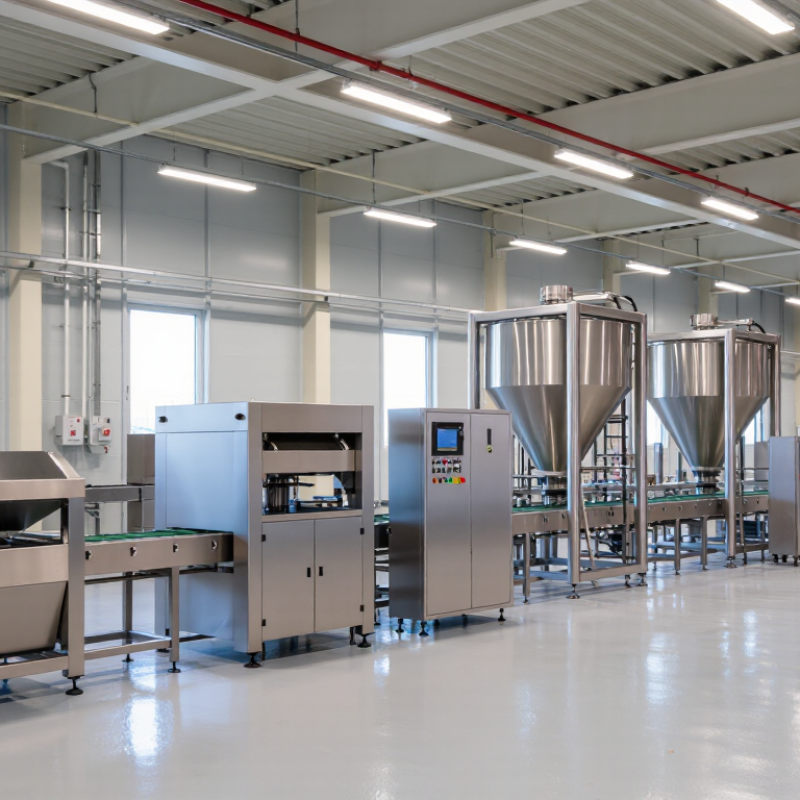
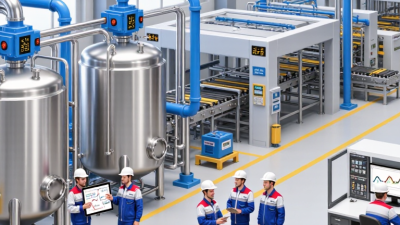
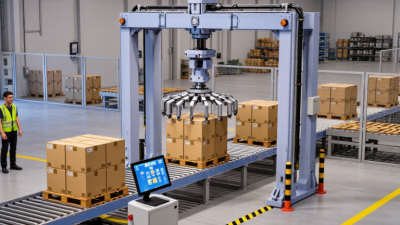
Industrial processing equipment in 2026 includes the machines and systems that move, transform, treat, and package materials. The full line can start with conveyors, feeders, and crushers, then continue through mixers, pumps, heat exchangers, dryers, and filtration units. Packaging machines, cleaning systems, sensors, and process controls also matter. They affect how reliably each stage runs.

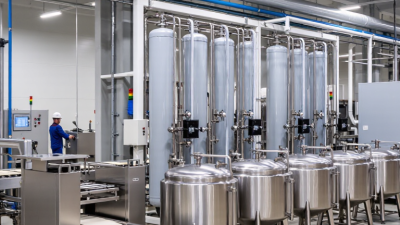
Tips: Map the material’s path before choosing equipment. Check capacity, temperature range, cleaning needs, and available floor space. A stainless-steel mixing tank may suit a corrosive liquid, while a gentle conveyor can protect fragile products. Verify that components connect safely and can be maintained without lengthy shutdowns.

The best setup depends on the material and the required output, not on how advanced a machine looks. For example, a heating system must match both the product and the desired temperature profile. A control panel can record pressure and temperature, but readings are only useful when sensors are checked and calibrated. Smaller operations may need flexible, easy-to-clean machines; larger plants may prioritize continuous throughput. There is no perfect line. Even a well-planned system can develop bottlenecks when one machine runs more slowly than the rest.

How Major Equipment Types Serve Different Production Needs

What Is the Best Industrial Processing Equipment in 2026?

The best equipment depends on the production task, not a single ranking. A mixer helps distribute ingredients evenly, while a grinder reduces particle size for a consistent downstream process. Thermal equipment suits products that need controlled heating or cooling. Separators remove unwanted liquid or solids, and conveyors keep materials moving between stations. Each choice affects product quality, line speed, cleaning time, and operating cost.

Look closely at the material and the actual production conditions. A sticky mixture may cling to surfaces; a fragile ingredient may break under aggressive handling. Match capacity to real demand, not just the largest forecast. Check access points, washdown needs, spare-part availability, and changeover time. Small details matter. A narrow chute can slow an otherwise fast line. No equipment choice is perfect, and assumptions about future production often deserve another review.

Tips: Ask operators to observe a full production run before selecting equipment. Record bottlenecks, product loss, and cleaning time. Test representative materials when possible, since a sample batch may behave differently at scale. Keep a little flexibility in the layout; production needs change.

Industrial Thermal Processing: Typical Operating Temperatures

There is no single best processing machine: the right choice depends on the product, required throughput, and desired outcome. These representative food-processing temperatures illustrate how equipment serves different production needs.

Ranges are representative operating temperatures, not universal specifications. Pasteurization schedules and commercial sterilization processes must be validated for the specific product and process; actual settings vary by equipment and production requirements.

Which Criteria Determine the Best Equipment for an Operation

The best industrial processing equipment is not simply the machine with the highest rated capacity. It must match the operation’s materials, output targets, and working conditions. Fit matters. A pump handling a thin liquid may perform poorly with a viscous mixture, even if its advertised flow rate looks impressive. Consider feed variation, batch size, temperature, and the quality standards each product must meet.

A practical evaluation starts with measurable requirements: hourly throughput, product consistency, changeover time, and acceptable waste. Ask operators how often settings need adjustment and how long routine cleaning takes. Small delays add up. Check whether parts that wear, such as seals or cutting surfaces, are accessible and replaceable. Controls should give clear readings and useful alarms, not just a crowded screen. Energy use, noise, floor space, and ventilation also affect daily performance.

Compare total operating costs, not only the purchase price. Include installation, training, spare parts, maintenance labor, and expected downtime. Request test results using material that resembles the real feed; a polished demonstration with ideal samples can mislead. A short trial may reveal inconsistent output or awkward cleaning steps. No specification sheet captures every shift, and that uncertainty deserves attention before a final choice.

What Is the Best Industrial Processing Equipment in 2026? - Which Criteria Determine the Best Equipment for an Operation

There is no single best machine for every operation. The right choice depends on the material, process requirements, operating conditions, safety needs, and whole-life cost. This comparison is a general selection guide; final sizing and suitability should be confirmed with process data and qualified engineering review.

Equipment type Often suited to Key selection criteria Main advantages Important limitations Useful performance measures
Centrifugal pump Moving relatively low-viscosity liquids in continuous-flow services, such as water and many process liquids. Required flow and total head; liquid viscosity, temperature, and solids content; suction conditions; materials compatibility; and the pump’s operating point relative to its performance curve. Continuous flow; simple, widely used design; available in a broad range of sizes and materials. Performance can decline with high-viscosity liquids; operation far from the best-efficiency region can increase vibration, wear, and energy use. It may require priming depending on the installation and design. Flow rate, total head, efficiency, absorbed power, and operation relative to the best-efficiency point.
Positive-displacement pump Metering or transferring viscous liquids and other services requiring controlled flow, subject to the pump design and material compatibility. Viscosity and temperature; required flow and pressure; fluid abrasiveness and lubricity; pulsation tolerance; and pressure-relief provisions. Delivers a defined volume per cycle or rotation; can handle higher-viscosity fluids than many centrifugal pumps. Must be protected against overpressure because a blocked discharge can create dangerous pressure. Some designs produce pulsating flow, and clearances or internal parts may be sensitive to abrasive solids. Flow rate, differential pressure, speed, volumetric efficiency, and pulsation where relevant.
Belt conveyor Continuous transport of bulk solids over moderate or long distances, including routes with changes in elevation. Throughput; particle size and bulk density; moisture and abrasiveness; route length and incline; loading and discharge points; dust control; and guarding requirements. Suitable for continuous material movement and can cover long routes; capacity can be adapted through belt width, speed, and system design. Requires space and correctly designed transfer points, tracking, and belt cleaning. Spillage, dust, belt wear, and entanglement hazards need to be managed. Mass throughput, belt speed, availability, spillage, and energy use per unit of material moved.
Screw conveyor Enclosed or controlled transfer of many powders, granules, and bulk solids over relatively short distances. Material flowability, abrasiveness, moisture, particle size, required capacity, incline, and whether mixing or metering is also needed. Compact layout; can contain material during transfer; can be integrated with feeding and metering operations. Capacity and energy demand depend strongly on material and configuration. Abrasive or sticky material can cause wear or buildup, and excessive breakage may occur with fragile solids. Mass throughput, power draw, feed consistency, wear rate, and material degradation.
Batch mixer Mixing recipes or product lots where formulation changes, batch traceability, or discrete production runs are required. Ingredient properties; batch size; target uniformity; mixing time; heat or cooling needs; cleaning requirements; and risk of segregation or product damage. Flexible for different formulations and batch sizes; supports clear lot identification and recipe-based production. Production is interrupted between batches for charging, discharge, and cleaning. Scale-up can change mixing behavior, so performance should be validated at the intended scale. Mixing time, blend uniformity, batch-to-batch variation, usable fill range, and cleaning time.
Continuous mixer High-throughput processes with steady feed streams and a relatively consistent product formulation. Feed-rate accuracy; ingredient dosing range; residence-time distribution; flowability; required uniformity; and tolerance for formulation changes. Can support steady production and reduce repeated batch handling when feed streams are stable. Changes in feed rate or ingredient properties can affect product consistency. Startup, shutdown, and formulation transitions require careful control and may create off-spec material. Throughput, blend uniformity, dosing accuracy, residence time, and transition waste.
Shell-and-tube heat exchanger Heating or cooling process fluids, especially where robust construction, high pressure, or different process-side conditions are required. Heat duty; inlet and outlet temperatures; flow rates; pressure and temperature limits; fouling tendency; corrosion; and cleaning access. Versatile construction options; can be designed for demanding pressure and temperature conditions; tube bundles can often be inspected or serviced. May require more space than compact exchanger designs. Fouling can reduce heat transfer, and cleaning requirements depend on exchanger configuration and process fluids. Heat-transfer duty, pressure drop, temperature approach, fouling rate, and cleaning interval.
Plate heat exchanger Liquid-to-liquid heating or cooling where compactness and efficient heat transfer are priorities and fluids are compatible with the selected design. Heat duty; viscosity and suspended solids; allowable pressure drop; gasket or material compatibility; pressure and temperature limits; and cleaning method. Compact footprint and high heat-transfer effectiveness in suitable services; many gasketed designs can be opened for inspection and cleaning. Narrow flow passages can be vulnerable to plugging in dirty or solids-laden services. Gaskets and pressure-temperature limits must suit the application. Heat-transfer duty, pressure drop, temperature approach, leakage risk, and fouling or cleaning frequency.
Rotary dryer Drying substantial quantities of granular, particulate, or other suitable bulk solids in a rotating drum. Feed moisture and particle properties; required final moisture; heat sensitivity; residence time; exhaust handling; dust generation; and fuel or energy availability. Continuous operation and broad applicability to many bulk-solid duties when correctly configured. Can have relatively high heat demand; product temperature and residence time need control. Dust, exhaust treatment, and material degradation may be concerns. Water removed per unit of time, specific energy consumption, final moisture variation, product loss, and exhaust conditions.
Fluidized-bed dryer Drying suitably sized particles that can be fluidized by an upward-flowing gas without unacceptable carryover or damage. Particle-size distribution, density, moisture, fluidization behavior, heat sensitivity, required throughput, and dust collection needs. Good gas-solid contact can provide relatively uniform drying and effective heat transfer for suitable materials. Not appropriate for every particle shape or size. Fine particles may be carried into the exhaust, and airflow distribution and dust collection are important. Final moisture uniformity, drying rate, gas temperature and flow, particle carryover, and specific energy consumption.
Filter press Batch solid-liquid separation where a relatively dry filter cake and clear filtrate are required for suitable slurries. Slurry solids content; particle size and compressibility; filtration-cycle time; cake moisture target; cloth compatibility; and cake discharge and wash requirements. Can produce a high-solids cake in many applications; filtration area can be configured for the required duty. Batch cycles require filling, pressing, opening, and cake removal. Blinding, difficult cake release, and labor or automation needs affect operation. Filtration cycle time, filtrate clarity, cake solids, throughput, and filter-cloth life.
Industrial centrifuge Separating phases by density difference, including liquid-solid separation or, with suitable designs, liquid-liquid separation. Phase density difference; particle size and concentration; feed variability; required separation quality; material compatibility; and vibration, noise, and maintenance provisions. Can provide continuous separation in suitable applications and may require less floor area than some settling-based systems. Performance depends on feed properties and machine design. Abrasive solids, imbalance, and rotating-equipment maintenance require attention. Solids capture, centrate or separated-phase quality, throughput, vibration, and energy use.

How Automation and Energy Efficiency Shape Equipment Performance

In 2026, the best industrial processing equipment will not simply run faster. It will produce consistent output while using less energy per finished unit. The International Energy Agency’s Tracking Industry 2023 report estimates that industry consumes about 37% of global energy. That makes efficiency a production concern, not just a utility-bill issue. A pump, furnace, or conveyor should be assessed under real operating conditions, including changeovers and partial loads.

Automation can help operators control those conditions. The International Federation of Robotics reported 4,281,585 industrial robots operating worldwide in 2023. Sensors and automated controls can adjust motor speed, feed rates, and heating cycles as demand changes. For example, a variable-speed pump can reduce flow instead of repeatedly throttling a valve. Small gains add up. But automation alone does not guarantee lower energy use; poorly tuned equipment can still run empty or overheat.

Buyers should compare energy per good unit, downtime, maintenance needs, and process quality—not just rated capacity. Track electricity, fuel, and compressed-air use alongside output. A meter reading during a quiet shift may look excellent, yet conceal waste during peak production. I would also ask suppliers for performance data across several load levels, then verify it on site. That takes time. Still, a tidy specification sheet is not proof of efficient operation.

How to Match Equipment to Industry, Materials, and Output Goals

Choosing industrial processing equipment starts with the material, not the catalogue. A wet, abrasive mineral needs different contact surfaces and wear allowances than a sticky food mixture. Map feed variation, moisture, particle size, temperature, and cleaning needs before comparing machines. IEA’s Energy Efficiency 2023 report estimates industry uses about 37% of global energy. That makes motor load, heat recovery, and idle-time controls practical selection criteria, not small extras.

Output goals need equal care. Specify usable product per hour, operating shifts, changeover time, and acceptable reject rates—not just a machine’s maximum rated capacity. FAO’s 2023 report on SDG food-loss indicators estimated that 13.2% of food was lost between harvest and retail in 2021. For processors, that figure reinforces the value of gentle handling, accurate dosing, and storage-compatible throughput. Fit beats scale.

A common planning mistake is sizing for peak demand while overlooking everyday operation. A line that runs half-empty may consume energy and labor without improving delivery. Request material trials using representative samples, then inspect product consistency, cleaning access, and maintenance points. A few awkward questions now can prevent expensive rework later. I would still treat trial results cautiously: real feedstock varies, and one test rarely captures a full production season.